Most construction companies we work with at adding technology know their revenue, but they can’t tell you their actual profit on a specific job. That’s the gap between running a business and running it well.
Construction financial literacy isn’t complicated-it’s about tracking the right numbers and understanding what they mean. When you know your job costs, your margins, and your cash flow, you stop guessing and start deciding.
Why Contractors Can’t See Their Real Profit
Most construction companies operate without the systems that reveal the truth about their money. We at adding technology see this constantly: contractors with millions in revenue who can’t explain why their bank account feels empty, or worse, why a job that looked profitable turned out to be a loss. The problem isn’t the work itself-it’s the financial blindness that comes from disconnected processes and delayed information.
The Cash Flow Trap Between Projects
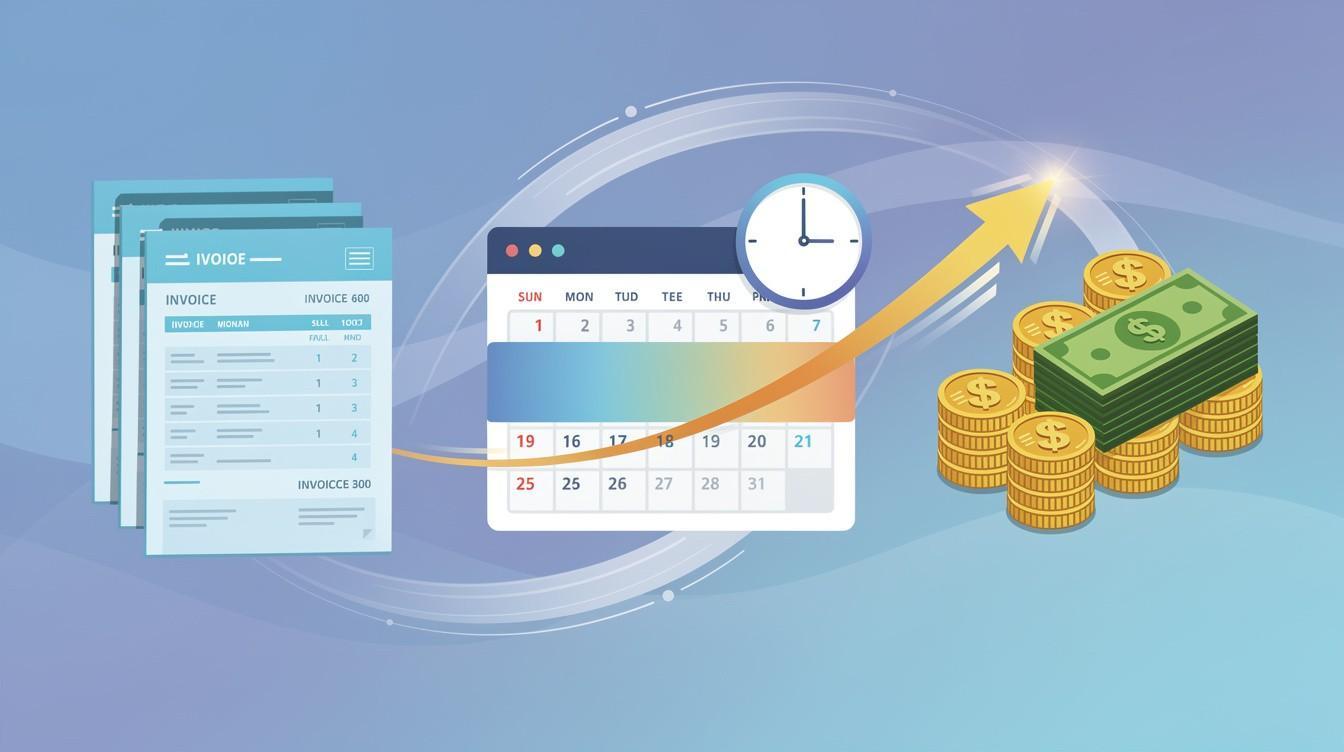
Cash flow collapse happens when money moves in one direction while obligations move in another. A contractor completes a major project and invoices the client for $500,000, but that payment arrives 45 days later. Meanwhile, labor costs on the next project are due in two weeks, material suppliers want payment in 30 days, and equipment rental bills keep coming. According to the National Foundation for Credit Counseling, 56% of American adults don’t have a personal budget-and many construction owners operate the same way at the company level, reacting to cash shortfalls instead of forecasting them.
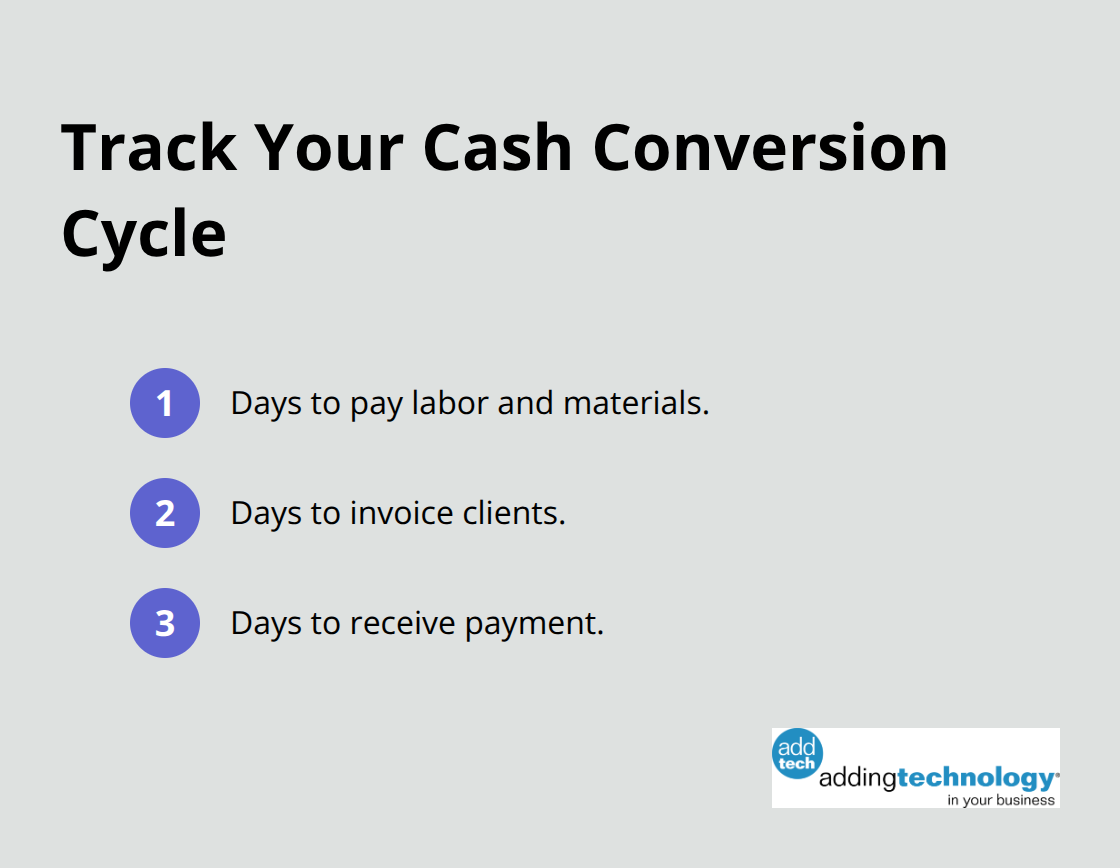
The cash conversion cycle-the time between paying for materials and labor versus receiving payment from clients-can stretch 60 to 90 days in construction. During that gap, you fund operations from your own pocket. Retainage withholds another 5% to 10% of final payments until project completion, creating a secondary cash drain that catches contractors off guard if they haven’t budgeted for it explicitly. Without a clear picture of when money comes in and when it goes out, you end up choosing between paying your crew on time or paying material suppliers, and that choice erodes trust and crushes morale.
Hidden Costs Compound Faster Than You Think
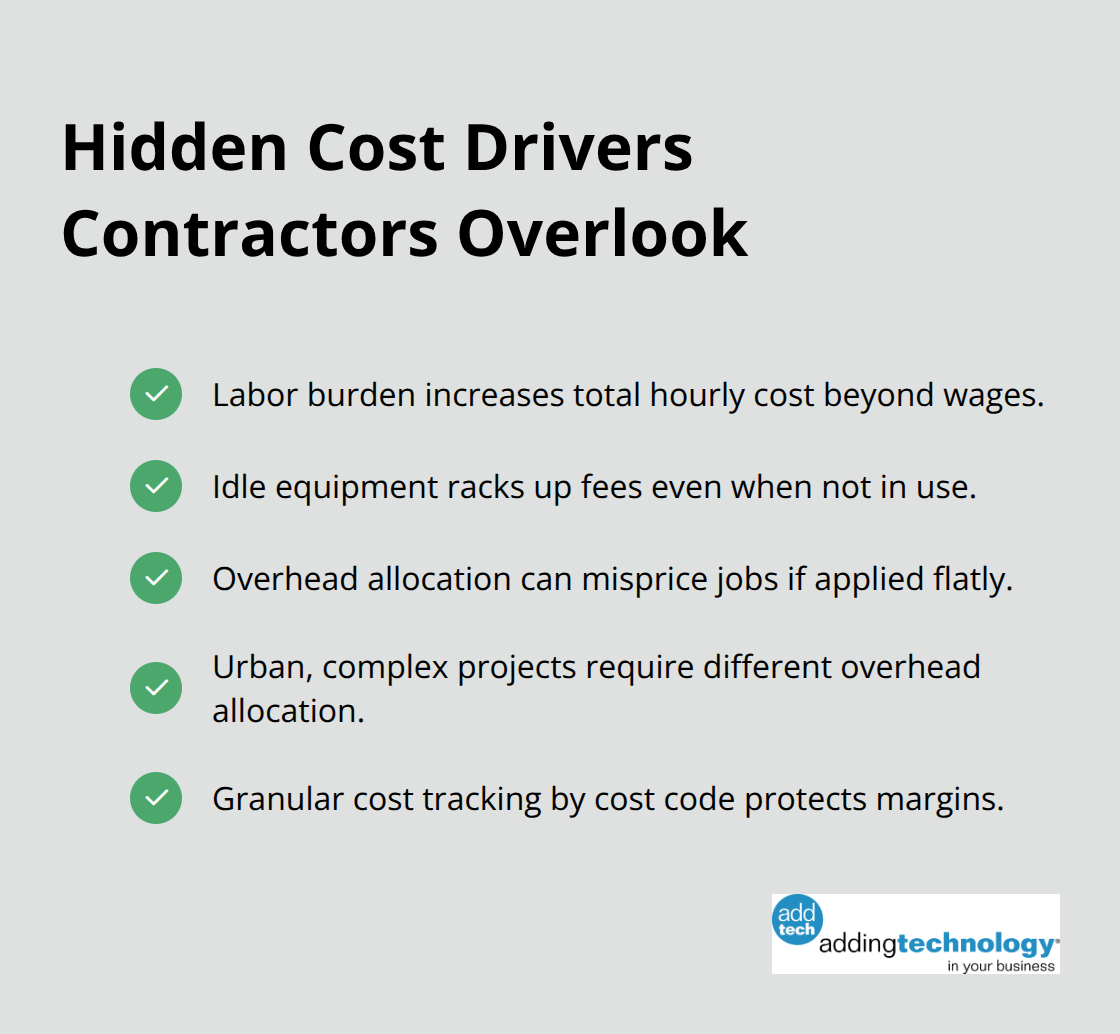
Labor burden represents the added expense a company pays on top of employee wages to cover benefits, taxes, and other employment-related costs. The base wage you pay your crew covers only part of the true cost. Payroll taxes, workers’ compensation insurance, health benefits, and paid time off add another 40% to 70% on top of base wages.
If a carpenter earns $50 per hour, the real cost to your company reaches closer to $70 to $85 per hour.
Equipment sitting idle on a job site costs money every single day-rental fees, transportation, insurance-yet many contractors don’t track utilization rates or know which projects drain equipment budgets the worst. Overhead allocation creates another invisible leak. Salaried staff, office rent, insurance, and administrative expenses get distributed across projects, but if you use a flat percentage across all jobs, you systematically underbid some work and overprice others. A complex renovation in a congested urban area requires different overhead allocation than a straightforward residential job in the suburbs. Without granular cost tracking tied to specific projects and cost codes, these hidden expenses quietly eat margins until the year-end financial statement reveals a profit that feels half what you expected.
Real-Time Visibility Changes Everything
The contractors who know their actual profit on every job make better decisions. They know which project types and regions generate the strongest margins. They catch cost overruns while there’s still time to adjust. They bid future work with confidence because their estimates rest on actual data, not guesses.
Construction management software that integrates time tracking, expense capture, and accounting eliminates the manual data transfers and delays that keep information stale. When a crew member logs hours with the correct cost code in the field, and that data flows directly into your accounting system, you see real-time costs without waiting for timesheets to be entered, reviewed, and processed. Digital expense capture-photographing receipts and assigning them to projects and cost codes on the spot-prevents materials from being allocated to the wrong job or disappearing into general expenses where they can’t be traced.
Monthly financial reviews with your team transform into conversations about strategy instead of confusion about numbers. You answer the question every contractor should ask: which jobs made us money, and which ones didn’t? This clarity sets the stage for understanding the specific metrics that separate profitable contractors from those who struggle to see where their money actually goes.
What Numbers Tell You About Real Profit
Job Costing Reveals Which Projects Actually Made Money
Job costing is the only way to know which projects actually made money. You track labor, materials, subcontractors, and overhead allocated to each specific job, then compare actual costs against your estimate. If you estimate a kitchen remodel at $35,000 in labor and it costs $42,000, that $7,000 difference doesn’t disappear-it comes straight out of your profit. Most contractors discover that one or two project types consistently underperform once they see the real numbers. A framing contractor might find that residential additions generate 18% gross profit margins while commercial tenant improvements deliver only 8%, even though both look profitable at first glance. This insight forces a hard question: do you raise prices on low-margin work, change your process to reduce costs, or stop bidding that type of work altogether? Without job costing data, you make these decisions in the dark.
The Cash Conversion Cycle Exposes Your Working Capital Problem
The cash conversion cycle measures how many days elapse between paying your crews and suppliers versus collecting payment from clients. Construction projects typically stretch this cycle because invoicing delays, payment terms, and retainage all extend the gap. Track three specific numbers: days to pay labor and materials, days to invoice clients, and days to receive payment. If you pay crews every two weeks, invoice 10 days after project completion, and wait 45 days for client checks, your cycle runs roughly 45 to 60 days.
Shorten this by invoicing immediately when milestones complete, offering 2% discounts for payment within 10 days, and requesting progress payments upfront rather than waiting for project completion. Some contractors reduced their cycle from 75 days to 45 days simply by invoicing weekly instead of monthly-that change freed up tens of thousands in working capital.
Gross Profit Margin by Project Type Shows What Actually Sustains Your Business
Gross profit margin by project type reveals which work actually sustains your business. Calculate this for each project: take total revenue minus direct costs (labor, materials, subcontractors, equipment), then divide by revenue. A $100,000 project with $65,000 in direct costs generates a 35% gross margin-but that margin must cover overhead, administrative costs, and profit. If your overhead runs 20% of revenue, you net only 15% profit before taxes. Compare margins across residential versus commercial work, new construction versus renovation, or projects in different regions. Geography matters because prevailing wage requirements, union labor, and local material costs vary dramatically. A general contractor pricing jobs without understanding regional labor burden rates will systematically underbid certain markets. Knowing your margins across different work types gives you the resilience to walk away from unprofitable bids and invest confidently in the work that actually pays.
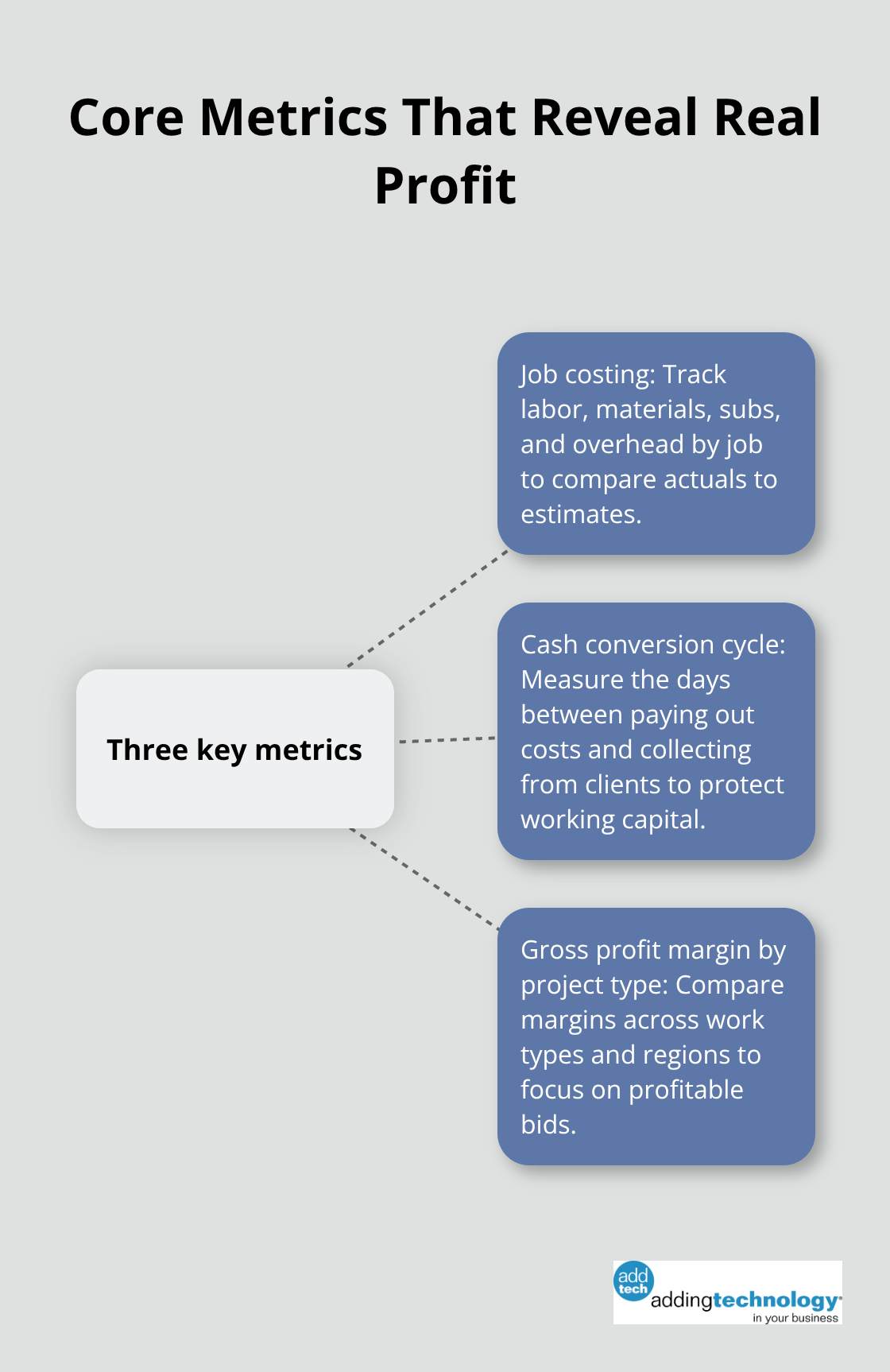
These three metrics-job costing, cash conversion cycle, and gross profit margin by project type-form the foundation for understanding where your money actually goes. Once you track them consistently, you shift from reacting to cash shortfalls and surprise losses to making strategic decisions about which work to pursue and how to price it.
The next step is building the systems that capture this data automatically, so you spend less time chasing numbers and more time running your business.
How to Turn Data Into Decisions Without Drowning in Spreadsheets
The gap between knowing you need better financial systems and actually implementing them stops most contractors cold. You already understand that job costing, cash conversion cycles, and margin analysis matter. The real challenge is capturing accurate data in the field, organizing it so it tells a story, and using that story to make decisions faster than your competition. Contractors attempt this three different ways: the spreadsheet route (which fails within six months), the expensive enterprise software route (which nobody actually uses because it’s built for corporations, not construction), and the integrated approach (which works because it meets contractors where they already are).
Time Tracking That Works in the Field
Start with time tracking that lives in the field, not in an office spreadsheet. Your crew enters hours with cost codes directly on their phones or tablets as they work, not from memory at the end of the week. Paper timesheets introduce delays before data reaches accounting, and mistakes get buried in that gap. Data flowing from the field to accounting in real time means labor costs flow to the correct job and cost code accurately. When workers see their hours tagged to specific cost codes instantly, they understand how their time connects to project profitability.
Expense capture works the same way. A crew member photographs a receipt and assigns it to the project and cost code on the spot. That purchase gets allocated correctly instead of disappearing into a general supplies category. This eliminates the accounting nightmare of trying to figure out whether a $3,000 lumber purchase belonged to the kitchen remodel or the deck project six weeks after the purchase.
Monthly Reviews That Drive Strategy
Monthly financial reviews transform from painful number-chases into strategic conversations. Schedule 90 minutes with your operations manager, your lead estimator, and your bookkeeper. Pull a report showing actual costs versus estimates for every active project, organized by cost code. Discuss three questions: which projects are tracking ahead of estimate and why, which ones are behind and what’s driving the overrun, and what patterns emerge across project types or regions.
A contractor discovered that their exterior trim work consistently ran 18% over estimate, while framing work stayed within 2%. That single insight led them to hire a specialized trim crew and adjust pricing on future bids. Without monthly reviews, that pattern would have stayed hidden until year-end, and the damage would have been done. Real-time visibility into project costs prevents a single unprofitable project from destroying your annual profit.
Integration Eliminates Data Silos
Construction management software that integrates time tracking, expense capture, and accounting eliminates manual data transfers. When everything flows into one system, you spend 30 minutes pulling reports instead of 8 hours hunting down timesheets, receipts, and cost allocations.
Integration prevents the data silos that kill accuracy. When time tracking, expense management, and accounting operate separately, information gets lost or duplicated in the handoffs. A crew member logs 40 hours in one system, but payroll enters 38 hours in another because someone misread the timesheet. Meanwhile, materials purchased in one system don’t match the accounting records because they were entered under a different cost code. These small errors compound into reports that nobody trusts. A fully integrated system means data enters once and flows everywhere it needs to go.
Choosing Software Built for Construction
Technology selection matters more than most contractors realize. Choose software designed specifically for construction, not general accounting platforms adapted for construction. The software must support cost codes tied to your work breakdown structure, handle prevailing wage and union reporting if you do government work, and sync with your payroll system so labor burden calculations stay accurate. Software like Contractor Foreman integrated with QuickBooks handles all three without forcing you to re-enter data multiple times.
The contractor who invests in proper systems spends 15 hours per week on financial administration instead of 40, and their numbers are actually accurate.
Final Thoughts
Construction financial literacy transforms how you operate your business. When you understand your job costs, track your cash conversion cycle, and know which projects actually generate profit, you stop managing by crisis and start managing by strategy. The contractors who implement these systems report faster decision-making, fewer surprises at year-end, and the confidence to bid work they know will be profitable.
Taking the first step requires choosing one metric to track first-start with job costing if you want to understand which projects make money, start with cash conversion cycle if cash flow keeps you awake at night, or start with gross profit margin by project type if you need to know which work sustains your business. Within 90 days of implementing integrated software that captures data in real time and running monthly reviews with your team, you’ll see patterns that change how you bid and operate. The contractors we work with at adding technology often tell us the same thing: they wish they’d implemented these systems five years earlier.
Adding Technology specializes in streamlining financial processes for construction companies, offering real-time job costing, integrated accounting systems, and compliance support so you can focus on projects instead of spreadsheets. The contractors who invest in proper financial systems spend less time chasing numbers and more time running their business. That’s the difference between surviving and thriving in construction.