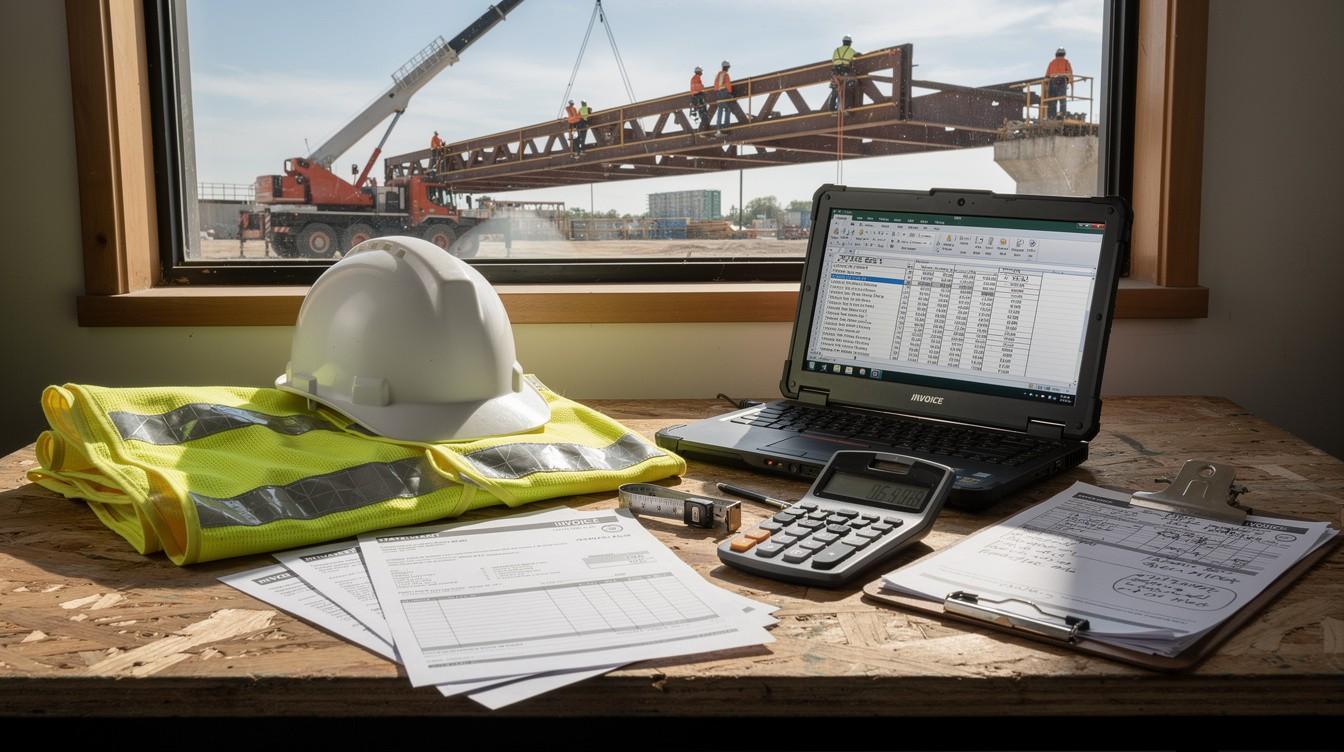
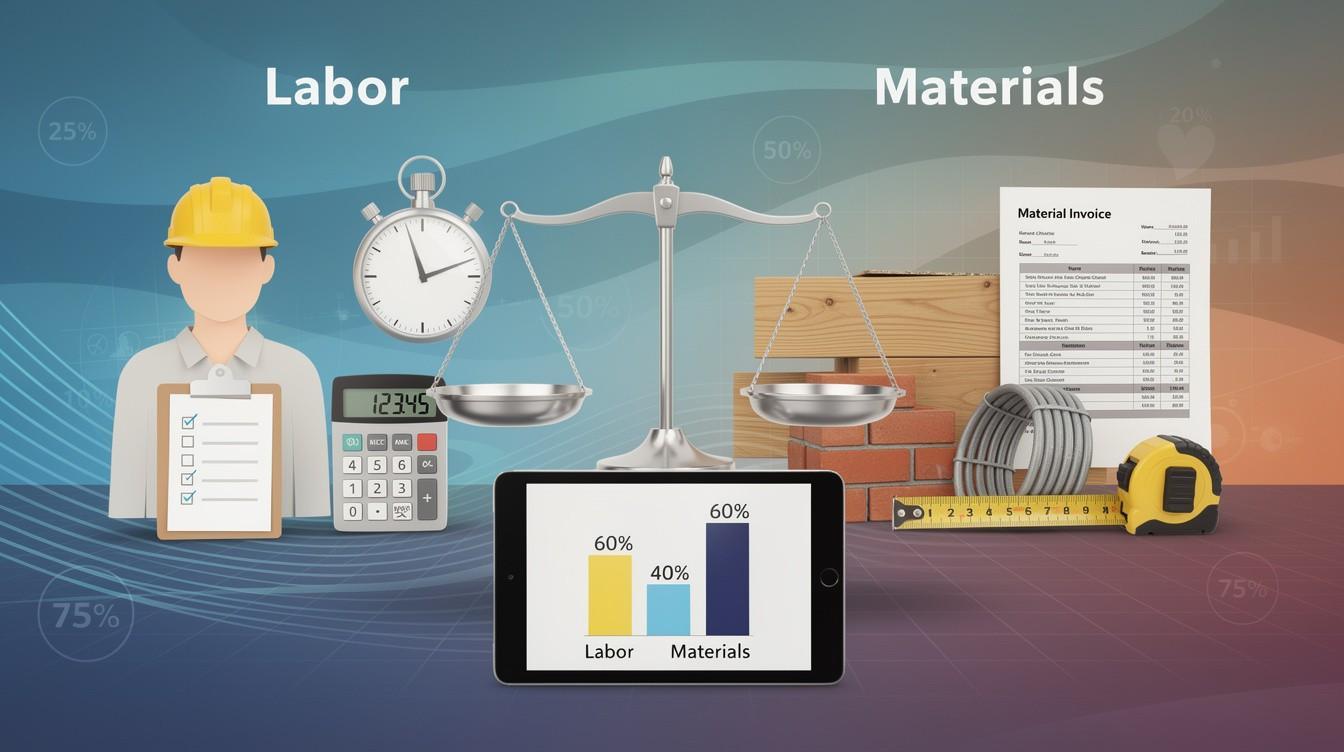
Most contractors we work with at adding technology discover the same painful pattern: projects that looked profitable on paper drain money in the field.
The gap between your estimate and actual costs is where profit disappears. Without real-time visibility into what you’re spending on labor, materials, and equipment, you won’t know a job is in trouble until it’s too late.
Project profitability tracking isn’t optional anymore-it’s the difference between thriving and barely surviving.
Why Contractors Lose Money on Projects
Labor Burden Catches Everyone Off Guard
Labor burden sneaks up on most contractors, and it’s the first reason jobs go sideways. A crew member costs 50 dollars per hour, but the actual burden-payroll taxes, workers’ compensation, benefits, and PTO-adds another 20 to 35 dollars on top. That’s 40 to 70 percent more than the base wage.
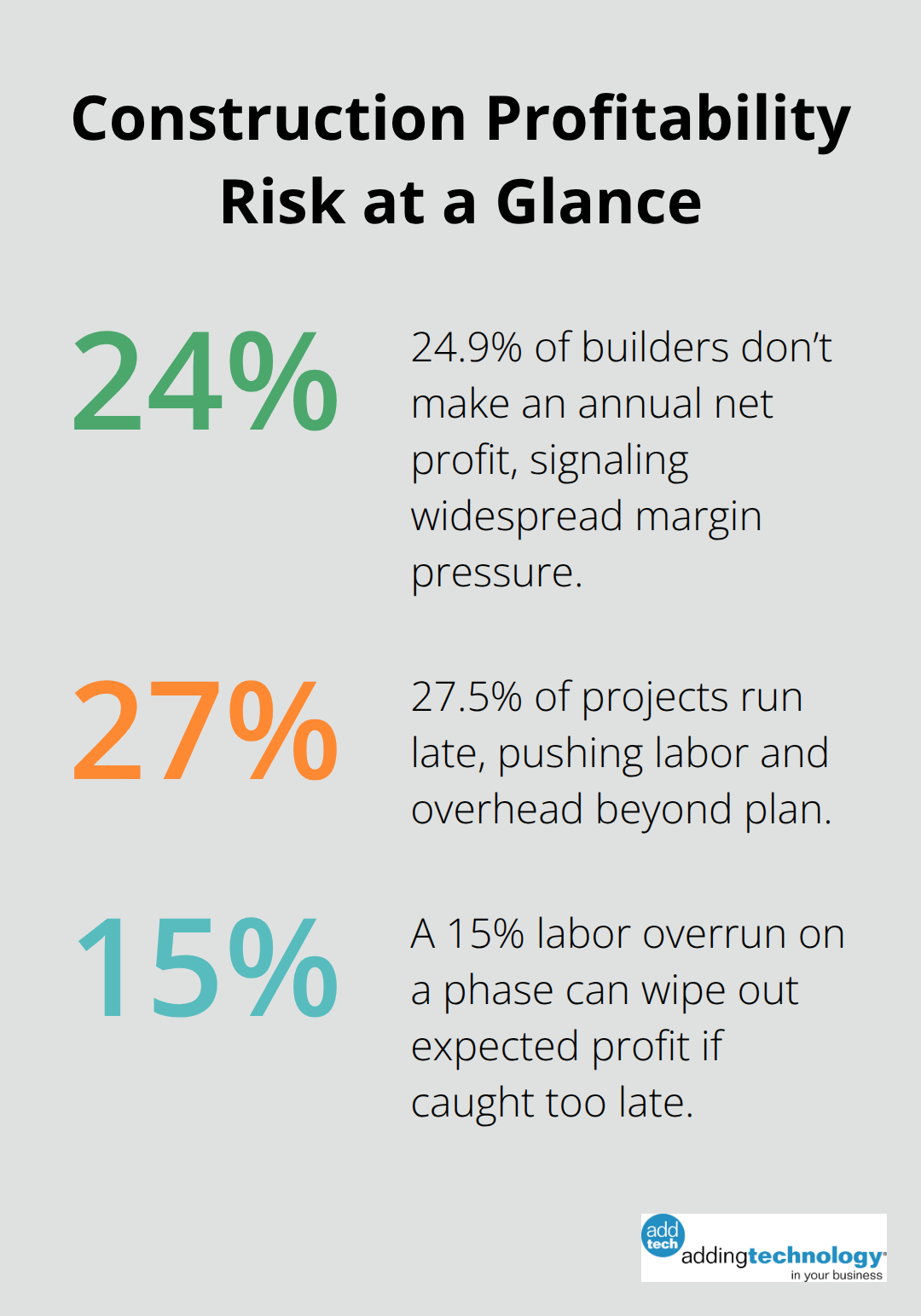
According to the APB State of Residential Construction Industry report from 2025, about 24.9 percent of builders don’t make an annual net profit, and underestimating labor burden is a primary culprit. When you bid a job at 50 dollars per hour and don’t account for the full 70 to 85 dollars cost, you’re already underwater before the first day of work.
Equipment and Materials Slip Through the Cracks
Equipment utilization compounds the problem. Renting a piece of equipment for a single job without tracking whether it’s actually being used means you pay for idle time. Materials purchases scattered across multiple employees and multiple jobs create another blind spot-a crew member buys supplies on Tuesday, another on Friday, and nobody knows what actually belongs to which project until months later when the invoice arrives. Without real-time expense management tools to capture and allocate these purchases, costs drift to the wrong jobs or disappear entirely.
Poor Visibility Kills Margins Fast
The real damage happens because most contractors don’t see costs until they’re final. Weekly job reports transform profitability tracking, yet many contractors wait until project completion to reconcile actual spending against estimates. That delay means you discover a labor overrun three months late, when the job is already done and the profit is already gone. The APB report also found that 27.5 percent of projects run late, which directly inflates labor costs and overhead allocations.
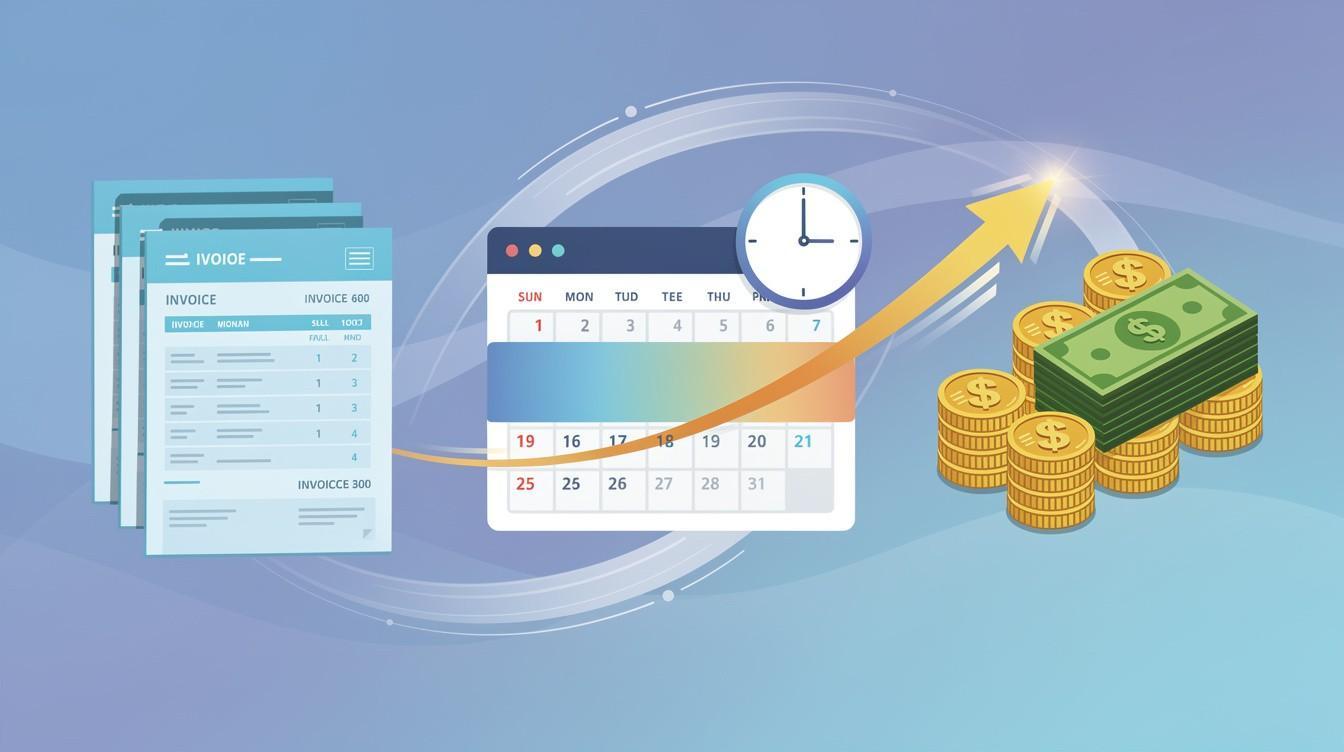
If you don’t track costs at the cost-code level-separating foundation work from framing from finish carpentry-you can’t spot which phases bleed money. Billing delays compound the cash-flow hit: if you don’t invoice promptly or if payment takes 60 days, you finance the job yourself. A 200,000-dollar project that sits unpaid for two months while overhead and indirect costs keep accumulating will crush your working capital.
Change Orders Vanish Without Documentation
Weak systems also mean change orders either never get documented or get documented too late to recover the cost impact. Field decisions happen every day-rework, scope creep, out-of-sequence work-but without a formal process to capture and price these changes, you absorb the cost instead of passing it to the client. Real-time job costing systems eliminate these blind spots by connecting time tracking, materials, and equipment costs directly to each project phase.
How Real-Time Job Costing Stops Profit Leaks
Capture Costs as Work Happens, Not Weeks Later
The moment labor hits the job site, costs start accumulating across multiple cost codes. A real-time job costing system captures these expenses as they happen, not weeks later when invoices land on your desk. Integration between time tracking, payroll, and accounting means hours flow directly to the correct job, phase, and cost code without manual data entry or spreadsheet transfers. This direct connection eliminates the lag that lets overruns hide. When a crew member clocks 45 hours on foundation work instead of the estimated 40, you see it that week, not at project closeout. Materials purchases integrate the same way, whether a crew member buys supplies or a vendor invoices directly. Equipment utilization becomes visible too, showing which jobs are using rented equipment efficiently and which are burning money on idle time.
Stop Flying Blind on Spreadsheets
The APB State of Residential Construction Industry report found that builders still rely on spreadsheets for estimating, which means they’re flying blind on actual costs. A construction-specific accounting platform connects these data streams so you spot budget overruns while you can still adjust schedules, reallocate crews, or negotiate with suppliers to recover margin. Real-time visibility transforms how you manage each project from week to week.
Run Weekly Job Cost Reports to Catch Problems Early
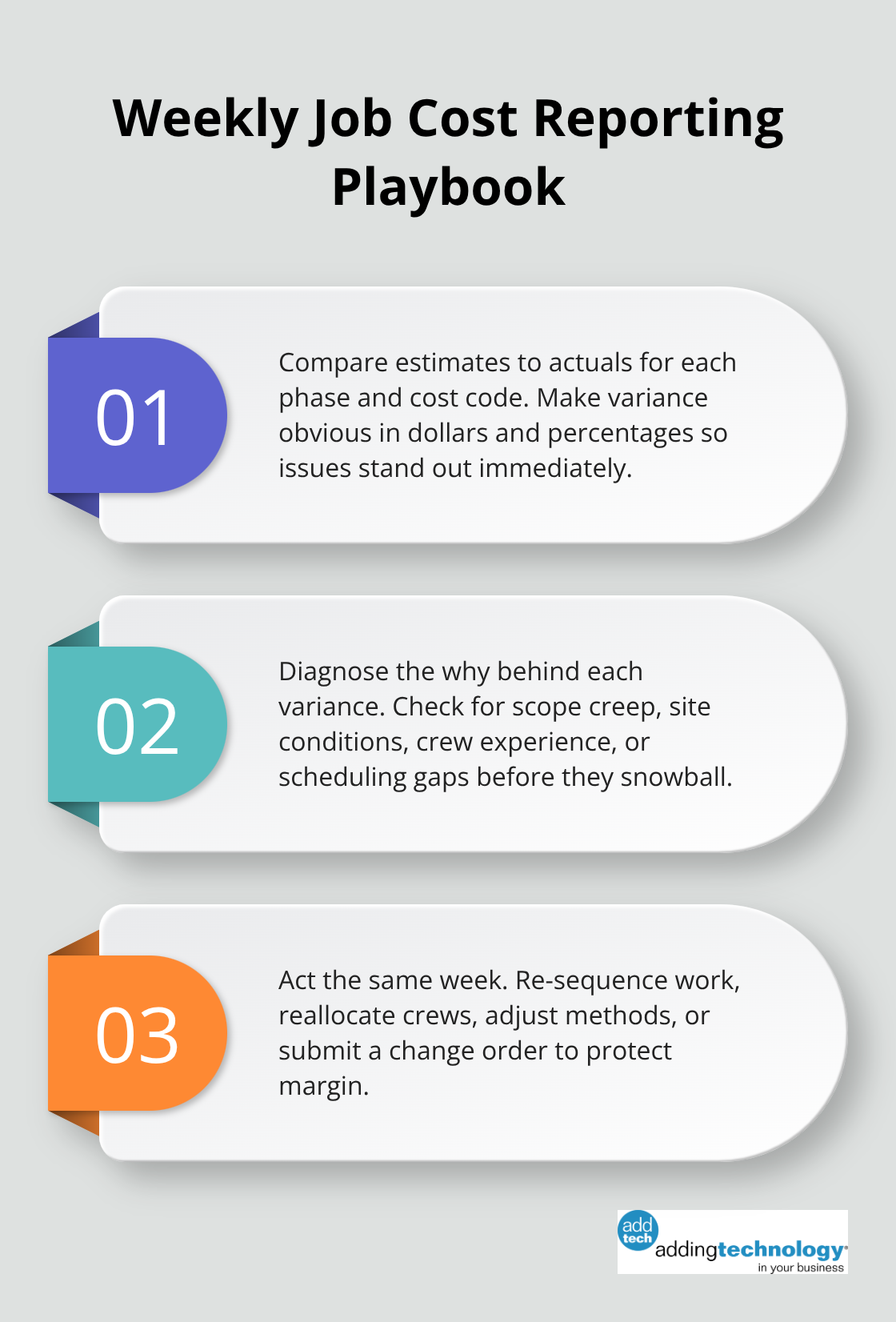
Comparing actual spending against estimates weekly is where the real power emerges. Set a discipline to run job cost reports every Monday morning, not quarterly or at year-end. These reports should show estimated costs versus actual costs for each phase and cost code, with variance highlighted. If foundation labor was estimated at 8,000 dollars and you’re already at 9,200 dollars halfway through, you know immediately that labor productivity is lower than expected.
This triggers a conversation: Is the scope creeping? Are crews less experienced than anticipated? Is the site condition worse than bid? The answer determines your next move, whether that’s adjusting future estimates, changing work methods, or submitting a change order.
Allocate Overhead Proportionally, Not Flat
Overhead allocation also becomes precise at this frequency. Instead of applying a flat percentage to every job, track actual labor hours and allocate overhead proportionally. A 200,000-dollar project that runs 500 labor hours should carry proportional overhead; a job with 1,000 hours carries twice as much. Weekly visibility prevents one unprofitable project from draining the entire portfolio margin before you notice.
Act on Problem Jobs While You Still Have Time
When you spot a problem job early, you have options. You can tighten scheduling, reduce scope, or document change orders before the damage compounds. Waiting until project completion to analyze profitability means the profit is already gone. This early-warning system sets the stage for the next critical step: turning weekly data into concrete action through structured cost codes and reporting workflows.
How to Build a Cost Code System That Actually Works
Create Cost Codes That Separate Every Dollar
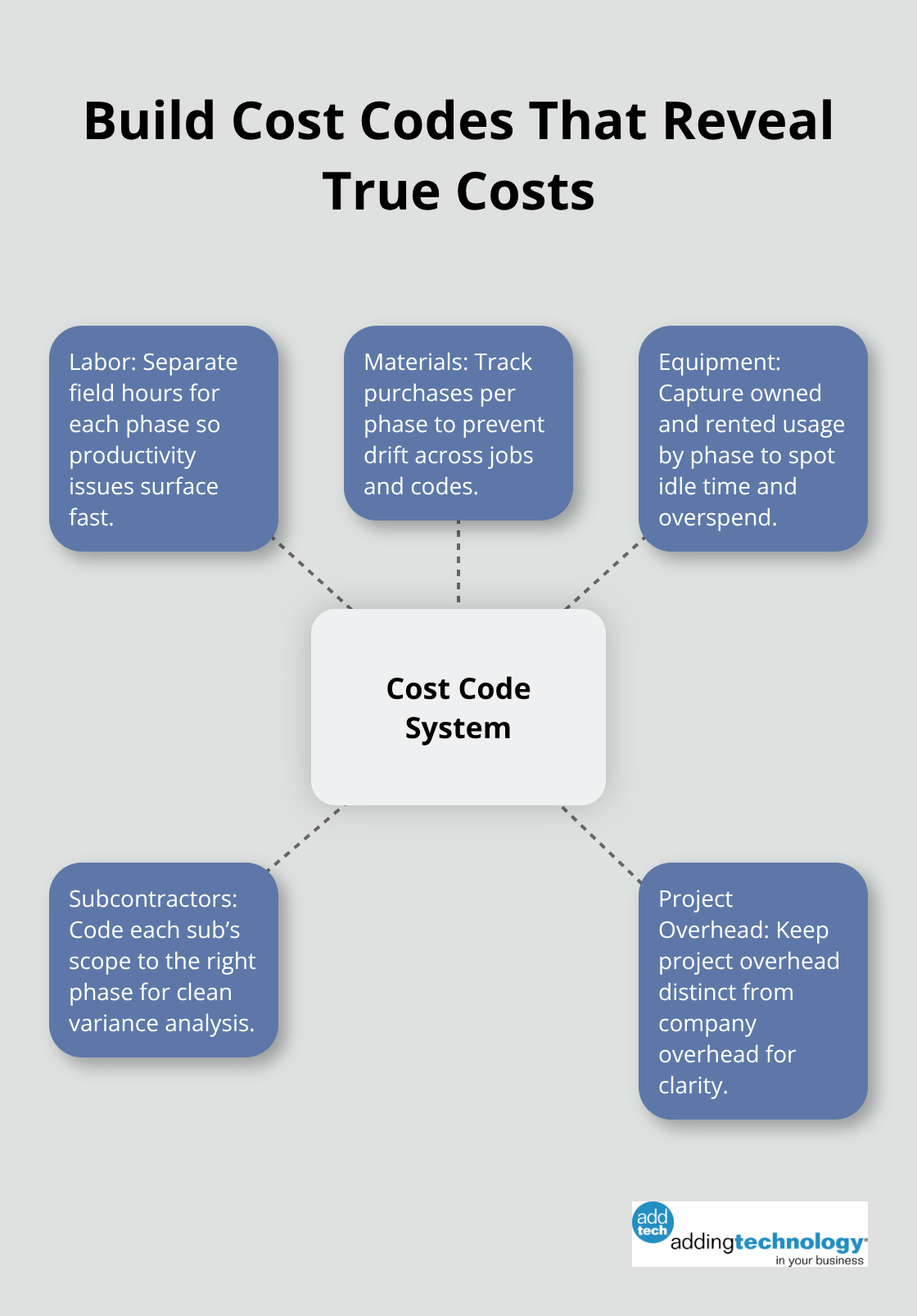
The foundation of project profitability tracking is a cost code structure that maps every dollar spent to the right phase and work type. Most contractors either skip this entirely or create codes so vague that they’re useless. A foundation cost code shouldn’t just say “foundation”-it needs to separate labor, materials, equipment, and subcontractor costs so you see exactly where money goes. When labor runs 15 percent over estimate on foundation work, you need to know if it’s the concrete placement that’s slow or the excavation and prep. Generic codes hide the problem. Start with your typical project phases-site prep, foundation, framing, mechanical, finish-then break each into labor, materials, equipment, and subs. Add a code for project overhead too, separate from company overhead. This granular approach takes an hour to set up in your accounting software but saves hundreds of hours of confusion later.
Enforce Cost Codes Strictly From Day One
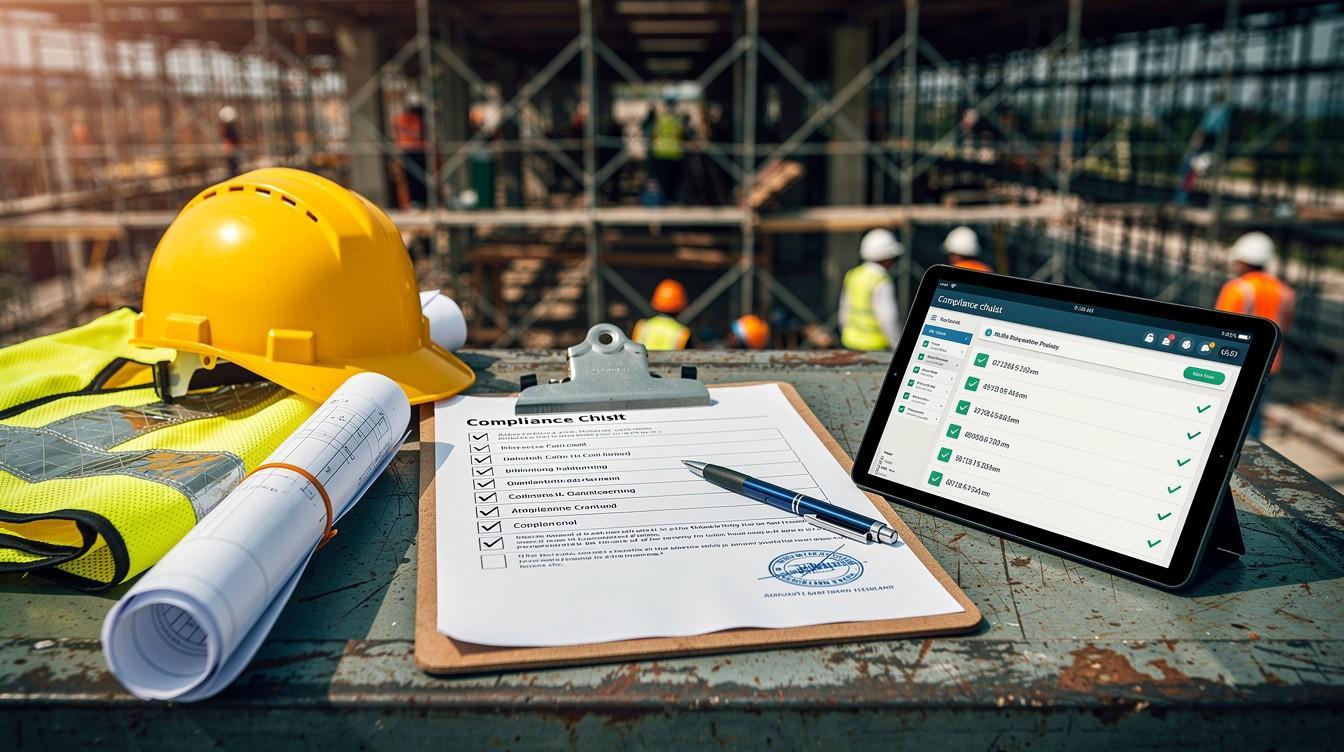
Once codes are live, enforce them strictly. Every time entry, material purchase, and equipment charge must land in the correct code. Spot-check entries weekly to catch misallocations before they compound. When a crew member clocks hours or a vendor invoice arrives, the person entering that data needs to know exactly which code applies. Sloppy code assignment early on creates a cascade of reporting errors that no amount of analysis can fix later.
Run Weekly Reports to Spot Overruns While You Can Act
Weekly job cost reports separate contractors who stay profitable from those who watch margins erode. Run reports every Monday that compare estimated costs to actual costs for each phase and code, with variance flagged in dollars and percentages. If foundation labor was estimated at 8,000 and you’re at 9,200 halfway through, that 15 percent overrun demands immediate attention. Ask your crew lead or project manager: Is scope creeping? Are site conditions worse than expected? Is productivity lower than assumed? The answer determines action-adjust future estimates, change work methods, or document a change order with the client. This weekly discipline prevents surprises at closeout.
Learn From Every Project to Improve Future Bids
After each project completes, compare final actuals against the original estimate and store that data. Over time, these post-project reviews reveal patterns: maybe your framing estimates are consistently tight, or material costs for electrical work spike in certain seasons. Construction companies that track this data improve bid accuracy because they’re pricing based on real historical performance, not guesses. Use this pattern data to refine future estimates and build contingency where your track record shows it’s needed.
Final Thoughts
Project profitability tracking transforms how you run your business because it shifts you from reacting to problems to preventing them. When you see costs in real time, compare actuals against estimates weekly, and act on variances while you still have control, profit stops leaking away on every job. The contractors who thrive aren’t the ones with the biggest crews or the most projects-they’re the ones who know exactly where their money goes and adjust before damage happens.
Building these systems now protects your future projects because you capture real data that feeds into better estimates. Each completed job teaches you something about labor productivity, material costs, and overhead allocation in your market and region (and that knowledge compounds over time, making your bids sharper and your margins healthier). About 24.9 percent of builders don’t make an annual net profit, and most of them don’t realize it until year-end when it’s too late to adjust. The contractors who stay profitable measure what matters every single week.
Start measuring what matters today by setting up cost codes that separate labor, materials, equipment, and overhead. Run your first weekly job cost report this Monday and compare actual spending against estimates for each phase and cost code. We at adding technology help contractors build the financial systems that make project profitability tracking stick, and our real-time job costing and accounting services streamline the process so you’re not drowning in spreadsheets or manual data entry. Contact adding technology to build your financial foundation.