Labor and material costs are eating up your profit margins, and most contractors don’t have real visibility into where the money actually goes. These two expense drivers can make or break a project, yet many owners still rely on spreadsheets and guesswork to track them.
At adding technology, we’ve seen firsthand how contractors who master labor vs material cost control transform their bottom line. The good news is that controlling these expenses doesn’t require reinventing your operation-it requires the right systems and discipline.
Labor vs Material Cost: Controlling the Biggest Project Expense Drivers
Labor Costs Consume Your Largest Budget Share
Labor typically consumes 20 to 60 percent of your project budget, making it your single largest controllable expense. Wages, overtime, benefits, and payroll taxes add up fast, especially when crews sit idle waiting for materials or permits. Most contractors track labor in fragments-some in payroll systems, some in timesheets, some in project management software-so nobody sees the full picture. When a crew of five sits on a job for two hours because materials didn’t arrive on schedule, that’s roughly $500 to $1,000 in unproductive labor that vanishes into your overhead.
Field labor costs often include significant unproductive time due to inefficiencies and workflow disruptions. If you’re spending $500,000 annually on labor, even modest productivity losses can drain $55,000 to $75,000 or more. The real leverage isn’t cutting wages-it’s eliminating idle time, reducing rework, and scheduling crews so they work continuously on tasks that generate revenue.
Material Price Volatility Hits Your Margins Hard
Material costs swing wildly based on commodity markets, supply chain disruptions, and supplier pricing. Concrete, steel, lumber, and insulation are sensitive to global price swings and inventory shortages, sometimes shifting 10 to 20 percent month-to-month. If you bid a job six months out, you’re gambling on material prices holding steady.
Contractors who lock in material prices early through bulk purchasing agreements and supplier negotiations often save 5 to 15 percent compared to spot-market buying. Material price volatility forces you to either absorb cost overruns or delay projects waiting for price drops, both of which squeeze profitability. Late-stage design changes amplify this problem because material takeoffs change, suppliers reset pricing, and lead times shift. A small change-swapping one insulation type for another-can ripple through your budget and timeline, adding weeks of delay and thousands in unexpected costs. The best contractors lock design decisions early, negotiate supplier contracts before breaking ground, and build 5 to 15 percent contingency funds specifically for material price swings.
Labor and Material Costs Move Together, Not Separately
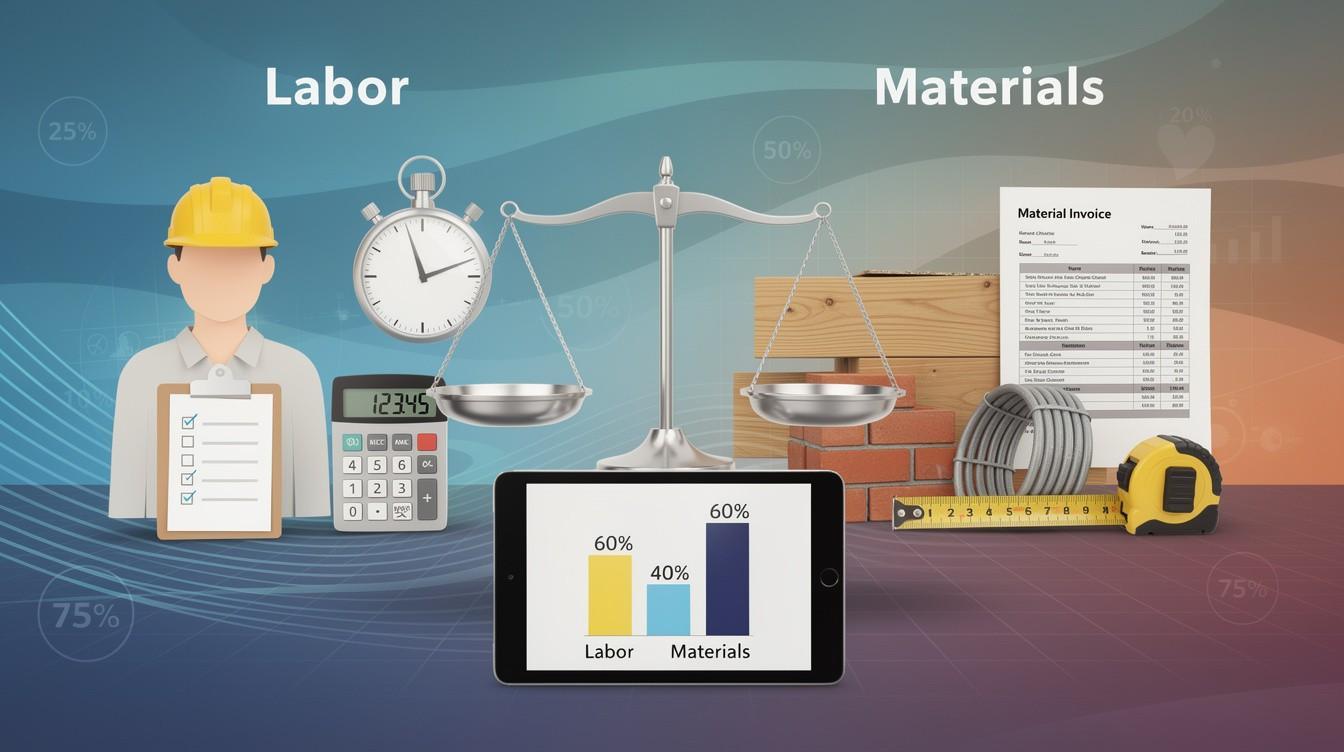
Your labor and material costs are deeply intertwined. Simple, standard designs reduce both material waste and labor hours, improving your cost ratio. Prefabrication and modular components can cut on-site labor significantly, but they require upfront planning and material commitments. Energy-efficient systems and better insulation may raise upfront material costs but lower long-term operating expenses, which matters when you’re selling lifecycle value to clients.
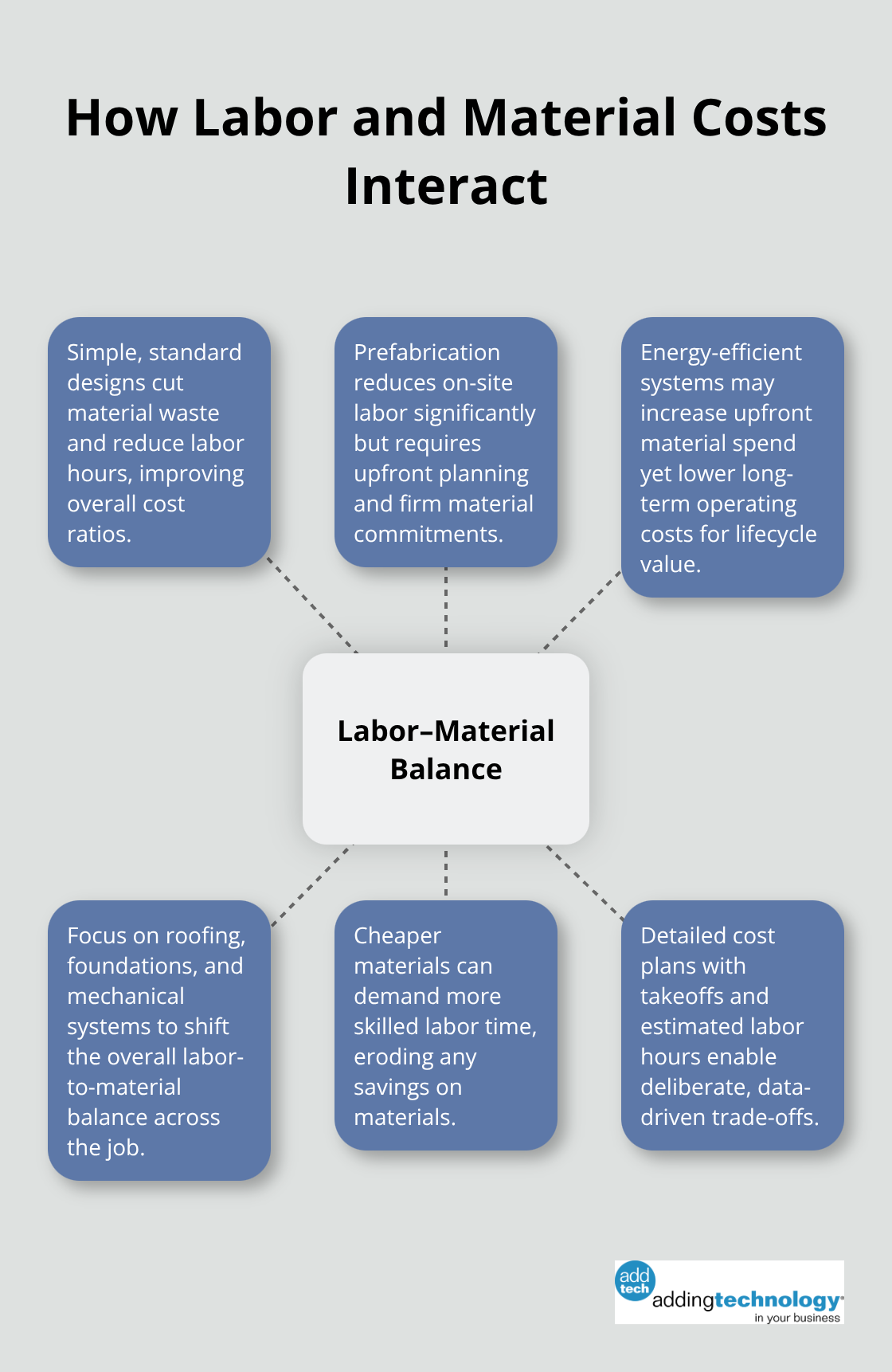
The real insight is that optimizing roofing, foundations, and mechanical systems-often your three biggest cost drivers-can shift your entire labor-to-material balance. If you reduce labor hours on the mechanical system through better prefab coordination, you free up crew time for other tasks and lower overall project cost. Conversely, if you choose cheaper materials that require more skilled labor to install correctly, you may save on materials but blow your labor budget. Contractors who build detailed cost plans with material takeoffs and estimated labor hours pinpoint exactly where the biggest expense drivers sit, then make deliberate trade-offs instead of guessing.
Where to Focus Your Attention First
The path forward requires visibility into both labor and material spending across every project. You need systems that capture actual labor hours and material costs in real time, not weeks after the fact. Without that visibility, you’re making decisions based on incomplete information, which leads to the same cost overruns and margin erosion you’re trying to fix. The next section shows you exactly how to track and control labor costs before they spiral out of control.
Stop Wasting Labor Hours on Idle Time and Rework
Capture Real-Time Labor Data Before It’s Too Late
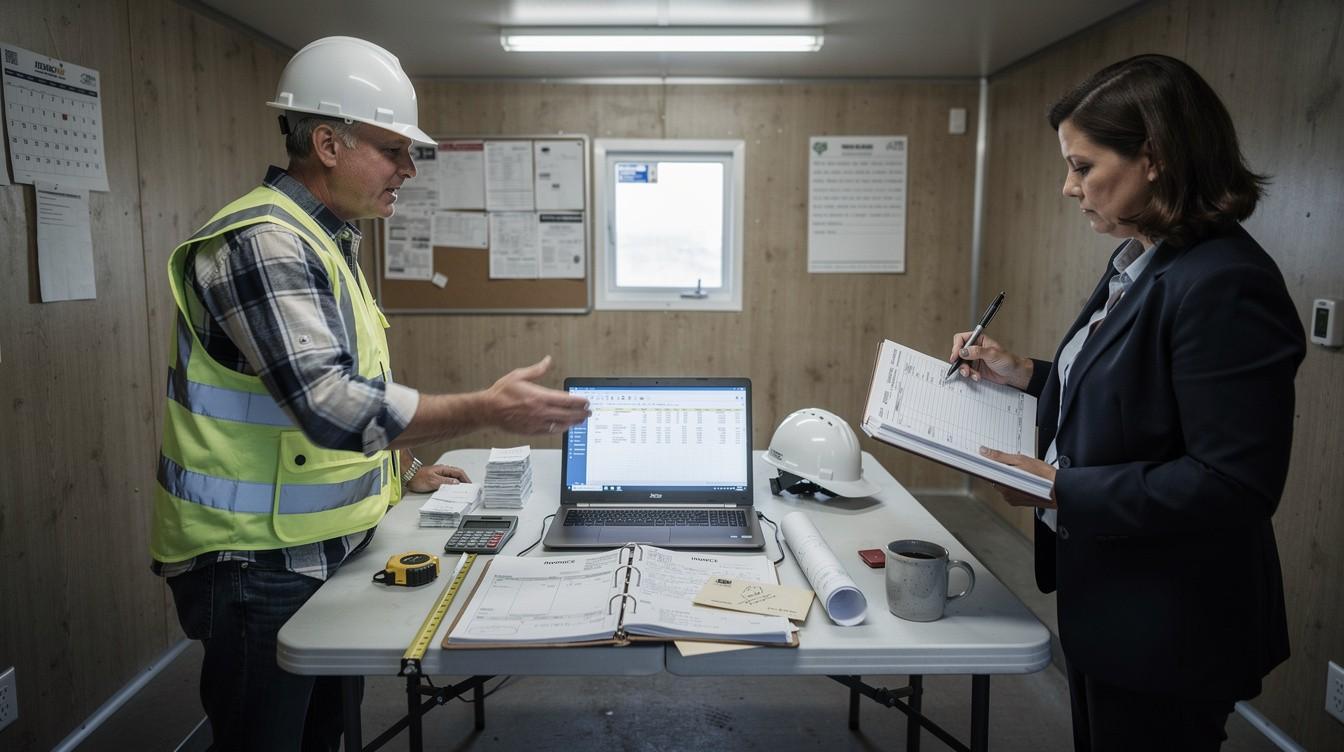
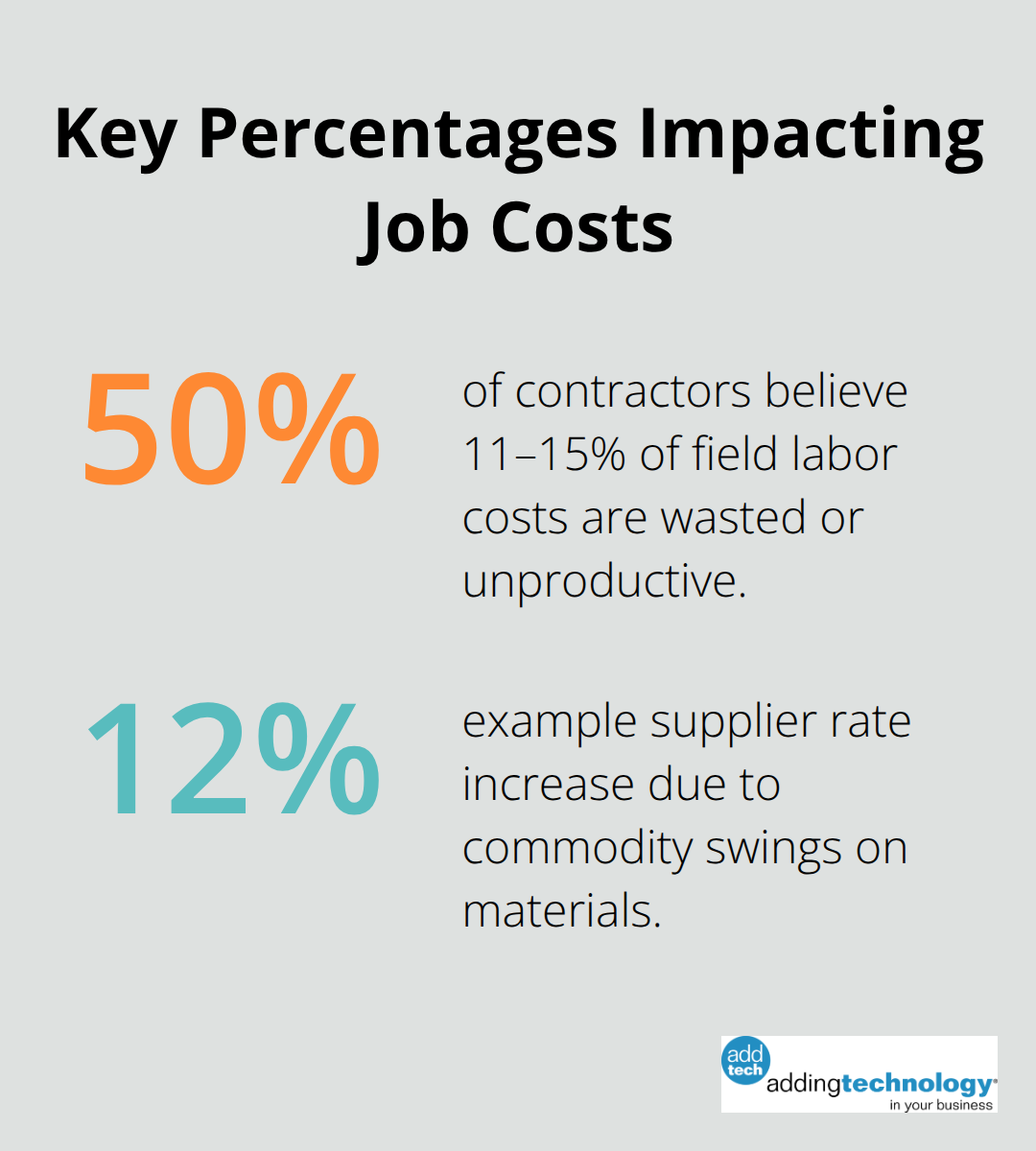
Visibility into labor costs means capturing actual hours worked on each job, broken down by task and crew member, then comparing that data against your estimates. Most contractors still rely on timesheets filled out days or weeks after work happens, which means you don’t see labor overruns until the job is nearly finished. That’s too late to correct course. Construction accounting software that integrates with payroll and project management gives you real-time labor tracking, so you can spot when a crew spends twice as long on framing as estimated, or when a subcontractor’s crew pads hours. FMI Corporation reports that 50 percent of contractors believe 11 to 15 percent of field labor costs are wasted or unproductive, yet most lack systems to identify where that waste occurs. Once you start tracking labor productivity by task and crew, you can pinpoint which activities drain the most time and which crews deliver the best output.
This data becomes your competitive advantage because you’ll bid future jobs more accurately and schedule crews more efficiently.
Eliminate Idle Time Through Better Scheduling and Coordination
Crew scheduling directly impacts your labor costs because idle time kills profitability. If your crews wait for material deliveries, inspections, or permit approvals, they’re still on the clock but not generating revenue. The solution involves building realistic schedules with buffers for permits and inspections, coordinating material deliveries so they arrive when crews need them, and staggering tasks so crews move continuously from one job phase to the next. Some contractors use digital project management tools to visualize task dependencies and flag scheduling conflicts before they happen on site, which prevents the two-hour waits that drain thousands monthly.
Negotiate Subcontractor Rates with Data and Leverage
Subcontractor negotiation is where many contractors leave money on the table. You have leverage if you can offer consistent work, early payments, or multi-project contracts. Lock in subcontractor rates rather than negotiating on a per-job basis, which reduces their pricing uncertainty and often yields discounts. Request detailed breakdowns of labor hours and rates when subcontractors bid, then compare those numbers against your historical data and regional benchmarks. If a subcontractor’s bid runs 30 percent higher than your last similar project, ask why. Sometimes the answer reflects legitimate scope differences, but often it signals padding that you can negotiate down. Paying subcontractors on time, even a few days early, builds loyalty and can lower their rates because they face less cash flow pressure.
The contractors who control labor costs most effectively treat labor data like a financial asset, using it to improve estimates, tighten schedules, and hold subcontractors accountable to performance benchmarks. Material costs present a different challenge altogether-one that requires a completely different strategy to lock in pricing and prevent waste.
Control Material Costs Before They Control Your Profit
Material costs hit differently than labor costs because they’re less visible until the invoice arrives. You order concrete in January at one price, but by March the supplier raises rates 12 percent because of commodity swings. You bid a job assuming lumber at $800 per thousand board feet, then prices spike to $950 two months later. Unlike labor, where you can see idle crews immediately, material cost overruns often hide in your accounting system until month-end when you reconcile invoices against estimates. Contractors lose 5 to 10 percent of project margin to material price creep alone, simply because they didn’t lock in pricing early or track spending in real time. The contractors winning right now treat material cost control like a strategic advantage, not an afterthought. They know that concrete, steel, lumber, and insulation often represent 30 to 50 percent of total project costs, so even modest price reductions compound across multiple jobs.
Get Real-Time Visibility Into Material Spending
Real-time job costing gives you the visibility that spreadsheets never will. Construction accounting software tracks material purchases against job estimates and shows you immediately when a supplier invoice exceeds budget or when a material type costs more than estimated. You see the variance the day the invoice arrives, not weeks later when the job is nearly complete. This matters because you can adjust material choices on future phases, switch suppliers, or negotiate credits with your current vendor while the job is still active. Construction accounting software that integrates material tracking with your project management system eliminates the manual data entry that creates errors and delays visibility.
Lock in Supplier Pricing Before Work Starts
Lock in material pricing through written supplier agreements before you break ground, not through verbal conversations that evaporate when prices shift. Request firm quotes for the materials you’ll need over the entire project timeline, then commit to volume in exchange for locked-in rates. If a supplier won’t lock pricing for six months, find one who will or negotiate a price-escalation clause that caps increases at 3 to 5 percent. This single discipline eliminates the guesswork that inflates your contingency budgets. Suppliers respect contractors who plan ahead and commit to volume, which gives you negotiating leverage that spot-market buyers never have. A locked supplier agreement protects you from the commodity swings that destroy margins on longer projects.
Eliminate Waste Through Better Planning and Inventory Control
Waste reduction through better planning and inventory management sounds simple, but most contractors still order materials inefficiently. Late-stage design changes force you to reorder materials at premium prices because suppliers charge rush fees, and you often end up with excess stock from the original order that you can’t use. The contractors who minimize waste lock design decisions before material orders ship, use digital takeoffs instead of manual estimates to reduce ordering errors, and implement just-in-time delivery so materials arrive when crews need them instead of sitting on site for weeks. Storing excess materials costs money through damage, theft, and the capital you’ve tied up in inventory that could work elsewhere. Site-level accountability for material tracking prevents the small leaks that add up to significant losses across multiple projects.
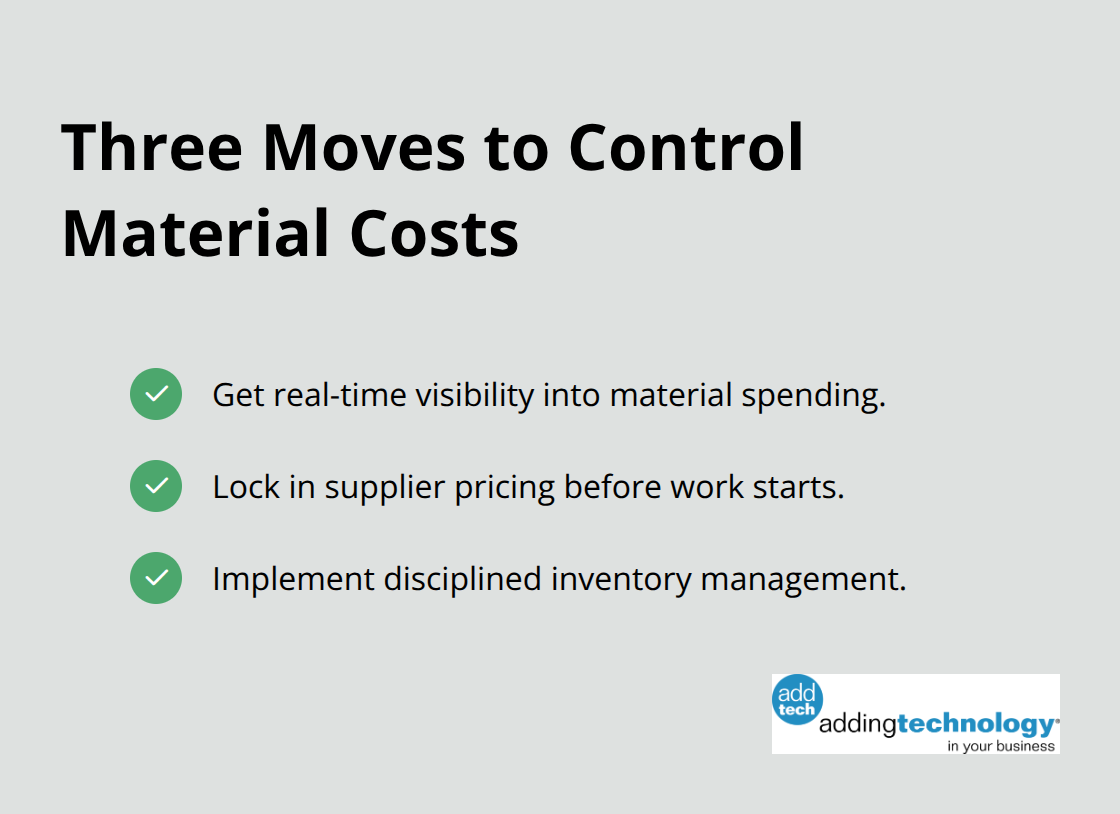
These three moves-real-time visibility, locked supplier pricing, and disciplined inventory management-eliminate the material cost surprises that destroy project profitability.
Final Thoughts
Controlling labor versus material costs requires you to see both clearly and make deliberate trade-offs that protect your margins. The contractors who win capture real-time data on where money actually goes, lock in pricing before surprises hit, and eliminate the waste that hides in spreadsheets and fragmented systems. You now know that labor typically consumes 20 to 60 percent of your project budget, material prices swing 10 to 20 percent month-to-month, and unproductive labor alone drains 11 to 15 percent of your field costs-that’s happening on your jobs right now.
The path forward requires three concrete moves. Implement construction accounting software that tracks labor hours and material spending in real time, so you see overruns the day they happen, not weeks later. Lock in supplier pricing through written agreements before you break ground, which eliminates the commodity swings that destroy profitability. Build detailed cost plans with material takeoffs and labor estimates, then compare actuals against plan every week to transform labor vs material cost control from a guessing game into a competitive advantage.
We at adding technology help contractors build the financial foundation that makes this possible. Our services streamline your accounting systems, deliver real-time job costing visibility, and integrate the technology that connects your payroll, project management, and supplier data into one clear picture. Start by auditing where your labor and material costs actually sit today, then reach out to adding technology to discuss how real-time visibility can transform your project profitability.