Most construction owners we work with at adding technology can tell you their revenue, but few can explain where their profit actually went. Cash flow surprises, hidden costs, and unclear job profitability are the silent killers of construction businesses.
Construction financial literacy isn’t about becoming an accountant. It’s about having clear numbers that let you spot problems early, price jobs correctly, and make decisions with confidence.
Why Construction Owners Lose Control of Their Numbers
Cash Flow Chaos Across Project Phases
The preconstruction phase feels manageable. You land a client, collect a deposit, and plan the work. Then active construction hits, and suddenly materials arrive, crews clock hours, subcontractors submit invoices, and progress payments trickle in on different schedules. Most construction owners see cash moving in multiple directions at once and lose track of where it actually goes. The problem isn’t that the money disappears-it’s that you can’t see it clearly enough to manage it.
When a project shifts from active work to closeout, expenses drop but retainage sits unpaid for months. Meanwhile, your next project ramps up with new material purchases and payroll obligations. This phase transition is where many contractors hit their first real cash crisis: they’re profitable on paper but cash-poor in reality.
Hidden Costs That Erode Profitability
Hidden costs are the second culprit. A subcontractor’s invoice arrives weeks after work completion, revealing a change order you didn’t fully account for. Equipment rental invoices keep flowing even after the job wraps. Permitting fees, site cleanup, and safety compliance costs scatter across multiple expense accounts and never get traced back to the specific job that caused them.
Construction job costing tracks actual costs against estimated costs across all cost categories: labor, materials, and equipment. Open purchase orders and field expenses sit in limbo, unposted to job accounts, so your actual project cost is always weeks behind reality. Labor costs compound this problem. Unposted payroll-time entries that haven’t been processed into your accounting system-creates a blind spot where you think a job is on budget when it’s actually over. Once payroll posts, the job is complete and the opportunity to adjust pricing or reduce scope is gone.
The Real-Time Visibility Problem
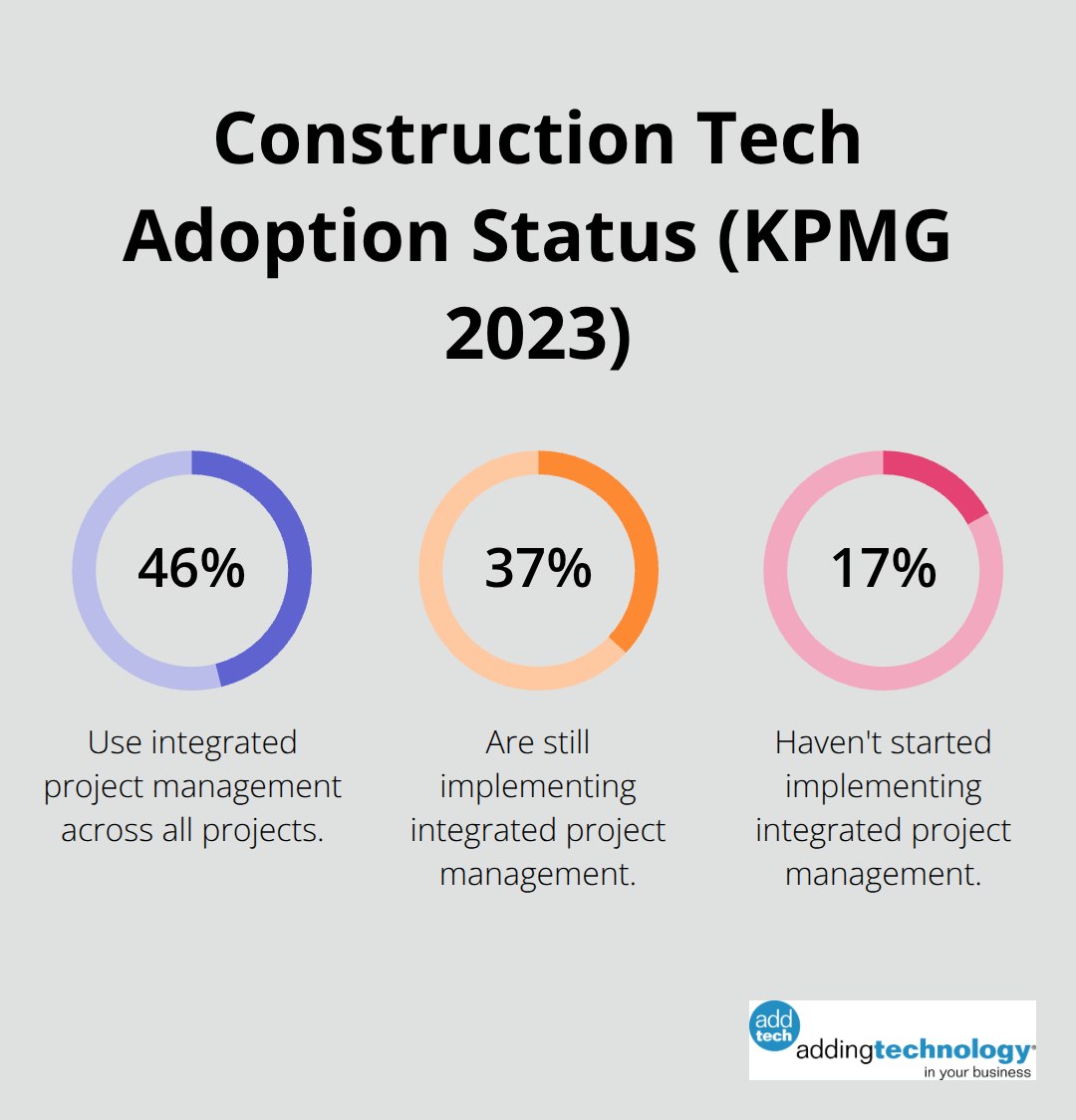
Tracking job profitability in real time requires systems that most contractors still don’t have. You can run a profit-and-loss statement at month-end, but that tells you what happened 30 days ago, not what’s happening on your jobs today. A KPMG 2023 Global Construction Survey showed that 46% of firms use integrated project management across all projects, while 37% are still implementing and 17% haven’t started.
Without integrated systems, job data lives in spreadsheets, field notebooks, and your estimator’s memory. Labor hours get entered into time-tracking software, materials go into a separate accounting system, and subcontractor costs land in accounts payable-none of it connects to show you whether a job is actually making money. Work-in-progress reporting, which compares what you’ve billed against what you’ve actually spent, becomes guesswork instead of precision. You might underbill a job by thousands because you didn’t track all costs, or you might overbill and face pushback from your client. Either way, you’re flying blind until the project closes and your accountant finally reconciles everything months later.
This visibility gap is exactly what prevents you from making the adjustments that protect your bottom line. The good news is that the right systems and processes can close it-and that’s where real financial control begins.
Building Systems That Show You Real Numbers
The gap between knowing your revenue and understanding your profit starts with how you organize financial data. Most contractors mix job costs with overhead, ignore unposted expenses, and wonder why their profit vanishes. The fix is straightforward: separate what each job actually costs from what it takes to run your business.
Assign Every Dollar to a Job or Overhead
Start by assigning every expense to a specific job or to overhead. Materials, labor, subcontractors, equipment rentals, permits, and site cleanup belong to the job. Office rent, insurance, administrative salaries, and vehicle maintenance belong to overhead. This separation sounds simple, but it requires discipline. When an invoice arrives, your team must know whether it’s a direct job cost or overhead before it enters your accounting system.
A KPMG 2023 Global Construction Survey found that 46% of firms use integrated project management across all projects, meaning they track costs this way in real time. The remaining 54% are either still implementing or haven’t started, which explains why so many contractors can’t answer basic questions about which jobs actually made money.
Capture Costs in Real Time, Not Weeks Later
Real-time job costing means capturing labor hours daily through field-to-office tools or mobile time-tracking apps, not waiting for payroll processing. Post purchase orders and subcontractor invoices to job accounts as soon as they arrive, not weeks later. Work-in-progress reporting should happen monthly, comparing what you’ve billed against what you’ve spent to catch underbilling or overbilling before a job closes. This visibility transforms your ability to adjust pricing, reduce scope, or stop cost overruns while there’s still time to act.
Three Metrics That Control Your Profitability
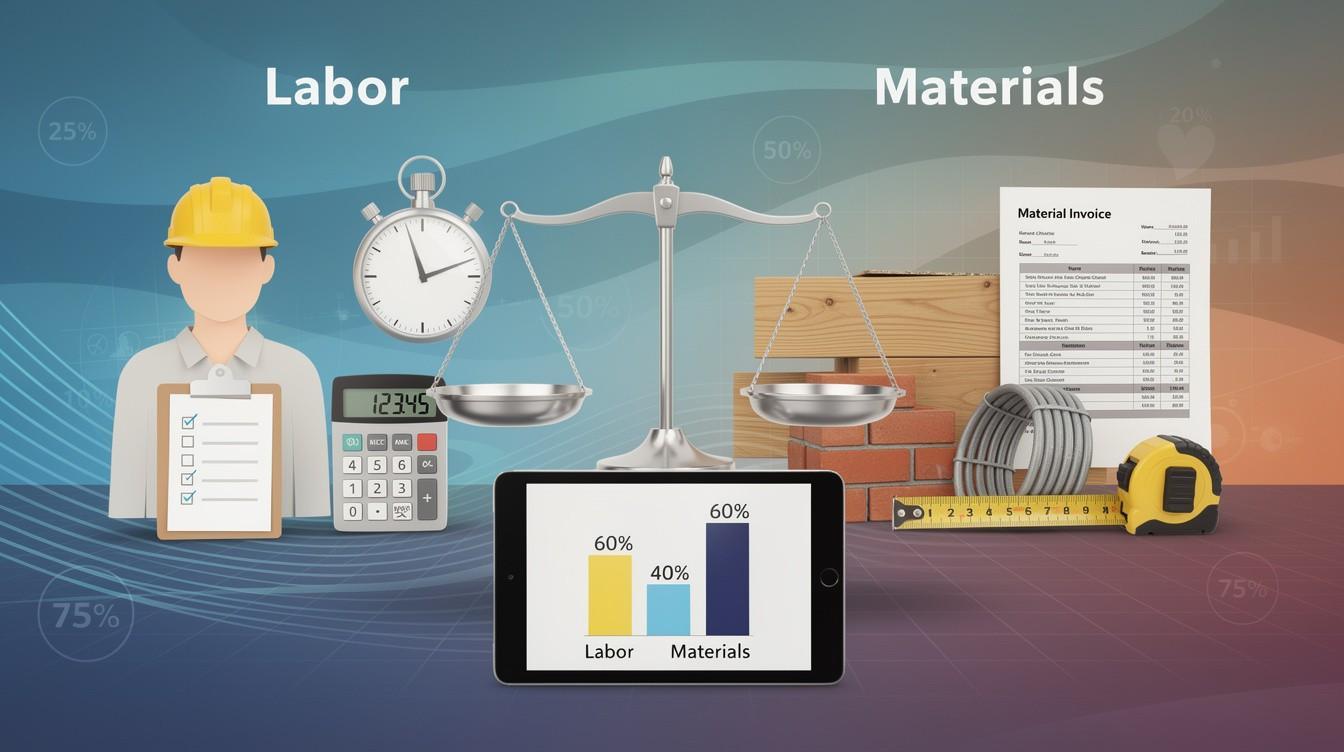
Labor cost percentage tells you what percentage of your job revenue goes to wages and payroll taxes. If your estimate assumes 35% labor cost but actual projects run 42%, you’re underpricing labor or managing field crews inefficiently. Calculate it monthly per job to spot trends.
Overhead ratio measures your fixed costs as a percentage of revenue. If your office and management costs run 15% of revenue and you’re pricing jobs with only 10% overhead built in, you’re losing money systematically. Track this quarterly to see whether your overhead is growing faster than revenue-a warning sign that you need to raise prices or cut expenses.
Gross profit margin on each job shows what’s left after direct costs but before overhead. Try for 20% to 30% depending on project type and market conditions. If a job shows 15% margin, you’re underpricing relative to risk.
Monthly Reports That Answer the Right Questions
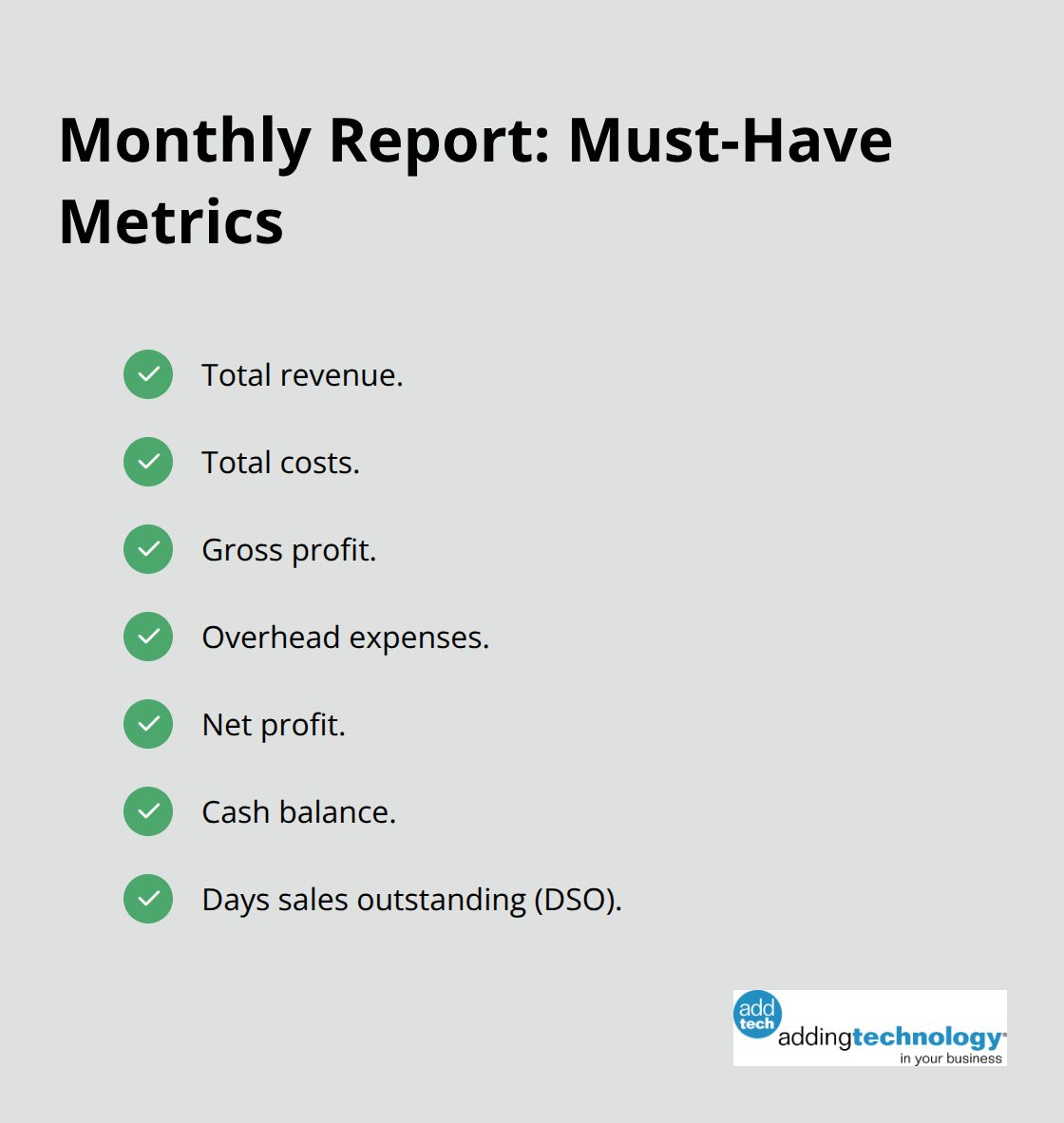
Your monthly financial report should answer three questions: Are we profitable? Do we have cash? Which jobs are making or losing money? A one-page executive summary with five to seven key numbers beats a 20-page statement that nobody reads. Show total revenue, total costs, gross profit, overhead expenses, net profit, cash balance, and days sales outstanding (how long it takes to collect payment).
Then add a brief breakdown of the top three performing jobs and the top three underperforming jobs. This forces you to look at job-level data instead of hiding behind company-wide averages. Include a simple line graph showing revenue and profit trend over the last 12 months so you can see whether the business is moving in the right direction.
Many contractors find that formalizing this monthly review with their accountant or bookkeeper, even for 30 minutes, creates the accountability needed to act on the numbers. The report should arrive within 10 days of month-end, not 45 days later when decisions are already made and problems are locked in place. Once you have these systems and reports in place, the real power emerges: you can identify which projects are actually profitable and spot cash flow problems before they become crises.
How to Spot Which Jobs Are Actually Making Money
Read Your Margins Like a Contractor
Once monthly financial reports arrive on time, the real work starts: reading them like a contractor, not an accountant. Your job profitability data sits right there in front of you, but most owners either ignore it or misread it. Gross profit margin on a job matters most. If you estimated a job at 25% margin and actual results show 18%, that’s a problem worth investigating immediately.
Was labor higher than estimated? Did materials cost more? Did the client approve undocumented change orders? The difference between estimated and actual margin reveals pricing errors, scope creep, or field inefficiency that will repeat on your next similar project unless you fix it now.
Identify Your Winners and Losers
Track the top three profit winners and top three profit losers each month. Winners tell you what your team executes well and what your market will pay. Losers teach you where your estimating breaks down or where your field operations need tightening.
A roofing contractor found that steep-slope jobs consistently underperformed by 8% while low-slope work hit targets. Once he saw the pattern in his monthly reports, he raised pricing on steep work by 12% and stopped bidding jobs that didn’t fit his team’s strength. That one insight, pulled from three months of job-level data, added 6% to his annual profit.
Measure Collection Speed and Cash Timing
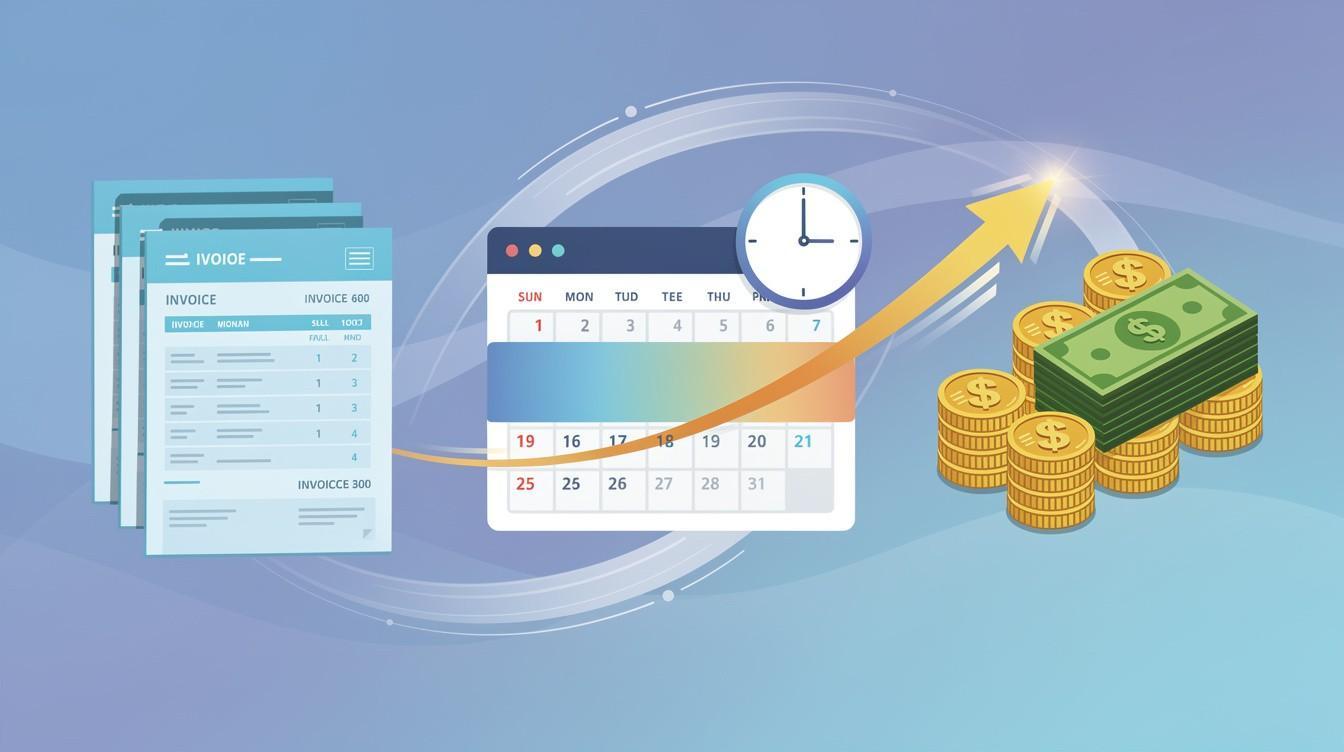
Days sales outstanding (DSO) measures how long it takes to collect payment after invoicing. If your DSO is 45 days but you’re paying crews and suppliers in 30, you’re financing your clients’ projects out of your own cash. Knowing this gap forces you to adjust your pricing or payment terms to match your cash cycle. Some contractors build in a 2% discount for payment within 10 days, which accelerates cash and costs far less than the interest on a credit line.
Catch Cash Flow Problems Early
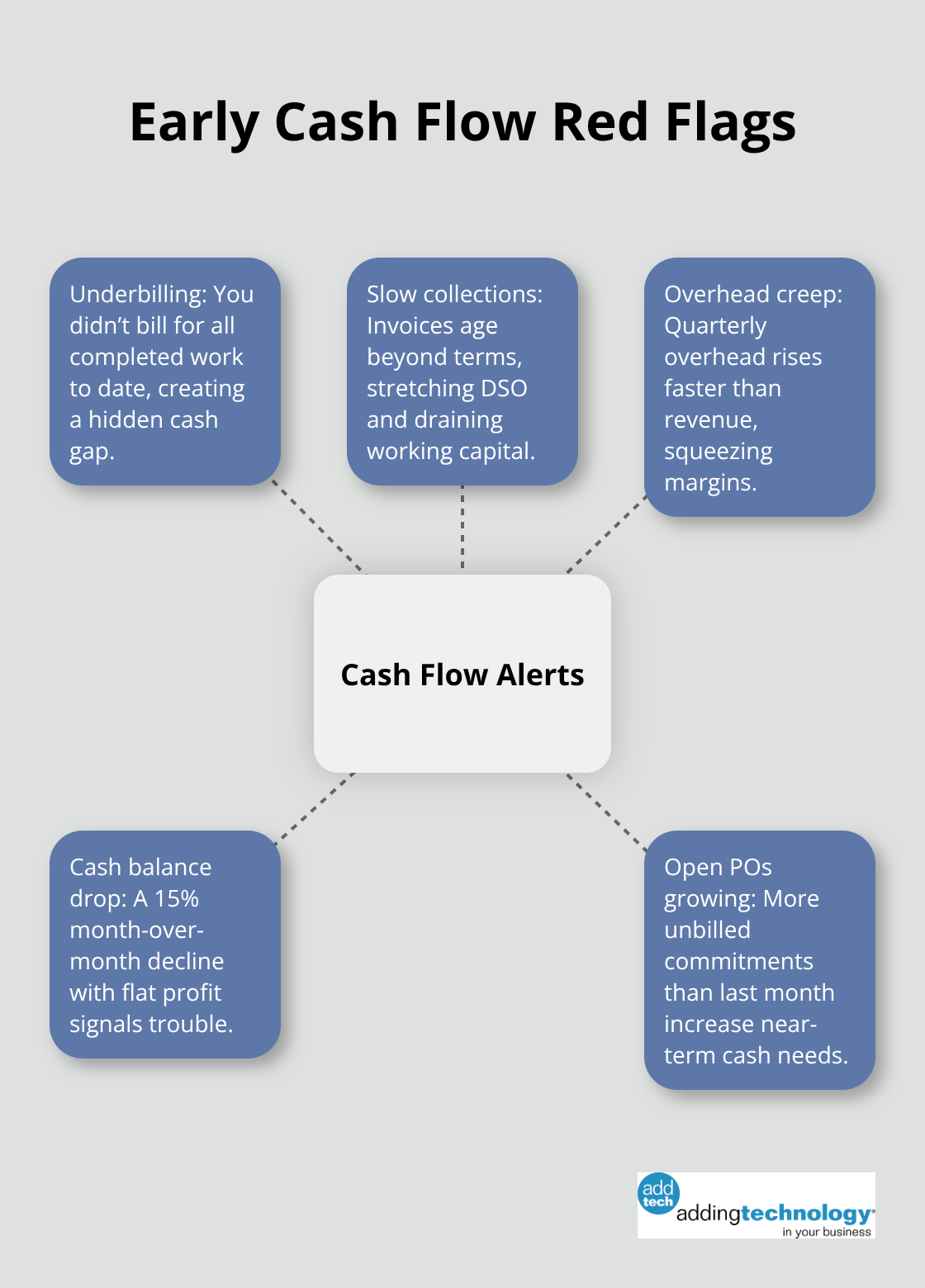
Cash flow problems almost never appear suddenly. They develop slowly through underbilling, slow collections, and overhead that creeps higher each quarter. Monthly reporting catches them early. If your cash balance dropped 15% month-over-month while profit stayed flat, something is wrong.
Most likely, you’re collecting slower or carrying more open purchase orders than last month.
A simple cash flow forecast, built from your job schedule and historical collection rates, shows you whether you’ll have a shortfall in three months. If you will, you can tighten vendor payment terms now, push clients for faster invoicing, or arrange a credit line before you’re desperate.
Control Overhead Before It Controls You
Overhead ratio is the silent killer. If your office and management costs run 18% of revenue but you’re pricing jobs with only 12% overhead built in, you’re systematically underprofitable no matter how well your field teams execute. Track overhead quarterly. If it’s growing faster than revenue, you’ve hired staff, expanded the office, or added insurance without raising prices.
One general contractor found his overhead had climbed to 22% of revenue over three years while his average job margin stayed at 24%. The math was brutal: gross profit 24%, overhead 22%, net profit 2%. He needed to either cut overhead by 8 percentage points or raise prices by 10%. He did both, cutting administrative staff from five to three people through automation and raising pricing on new work. Within 12 months, net profit climbed to 8%. That shift came entirely from reading his numbers monthly and acting on what they revealed.
If a job type consistently underperforms, stop bidding it or raise pricing. If labor costs run higher than estimated, either tighten field supervision or adjust your labor productivity assumptions. If overhead is high, automate or eliminate low-value tasks. These decisions sound obvious in theory, but they require courage when a client is asking for a bid or when a job is already underway. Monthly financial clarity gives you permission to make hard calls because the numbers prove they’re necessary.
Final Thoughts
Construction financial literacy transforms how you run your business. When you know which jobs make money, where cash actually goes, and what overhead costs, you stop guessing and start controlling your operation. The contractors we work with at adding technology who implement monthly reporting and real-time job costing consistently achieve higher profit margins and fewer cash surprises.
Construction financial literacy doesn’t require an accounting degree-it requires systems that capture costs as they happen, reports that arrive on time, and the discipline to read them monthly. Technology makes this accessible: field-to-office tools track labor hours daily, integrated accounting software connects job costs and payroll in one place, and automated reporting delivers the numbers you need without waiting for manual spreadsheet compilation. Start by assigning every expense to a job or overhead, implement real-time cost capture through mobile time tracking, and run monthly reports that show job profitability and cash position.
The contractors who act on their numbers make staffing and pricing decisions based on data, not instinct. If you need help building these systems or renovating your accounting foundation, adding technology specializes in streamlining financial processes for construction companies, ensuring compliance and giving you the visibility to focus on your projects.