Construction expense accounting is a critical aspect of project management that can make or break your bottom line. At adding technology, we’ve seen firsthand how mastering this skill can lead to improved profitability and better decision-making.
In this post, we’ll explore the key components of effective construction expense tracking and share best practices to help you streamline your accounting processes.
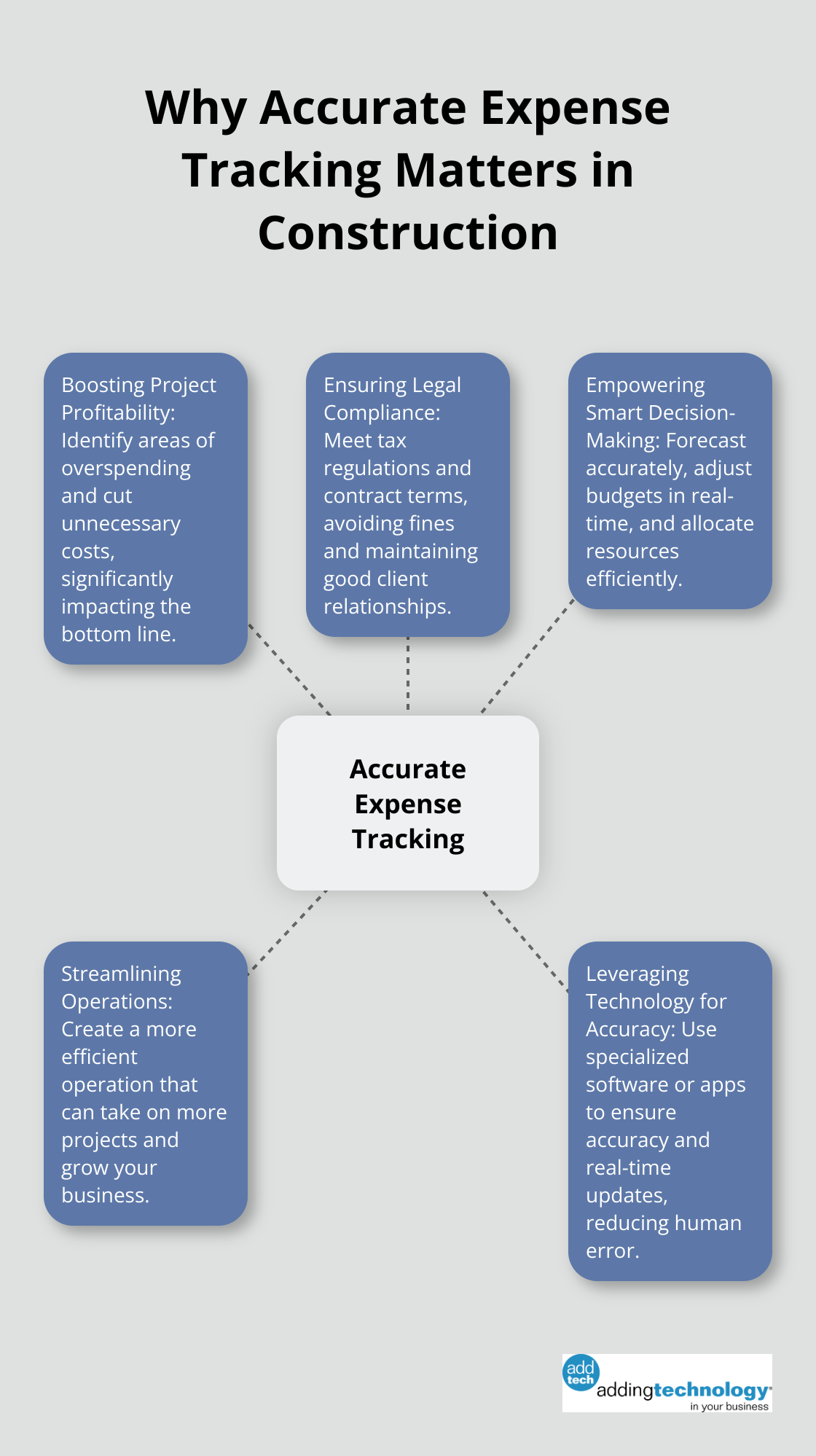
Why Accurate Expense Tracking Matters in Construction
Boosting Project Profitability
Accurate expense tracking forms the backbone of successful construction projects. It’s not just about monitoring cash flow; it’s about making informed decisions that significantly impact your bottom line. Precise expense tracking directly influences project profitability. When you know exactly where every dollar goes, you can identify areas of overspending and cut unnecessary costs. This might seem small, but on a million-dollar project, that’s a significant amount in your pocket.
Ensuring Legal Compliance
Tax regulations and contract terms present complex challenges in the construction industry. Accurate expense tracking isn’t just good business practice; it’s a legal necessity. The Internal Revenue Service (IRS) requires detailed records of all business expenses. Failure to maintain these can result in hefty fines or even audits. Moreover, many contracts stipulate specific expense reporting requirements. Meeting these terms is crucial for maintaining good client relationships and avoiding potential legal disputes.
Empowering Smart Decision-Making
With accurate expense data at your fingertips, you equip yourself to make better decisions. You can forecast more accurately, adjust budgets in real-time, and allocate resources more efficiently. This level of control allows you to take a proactive (rather than reactive) approach to project management.
Streamlining Operations
Implementing rigorous expense tracking systems can lead to significant cost reductions. This isn’t just about saving money; it’s about creating a more streamlined, efficient operation that can take on more projects and grow your business.
Leveraging Technology for Accuracy
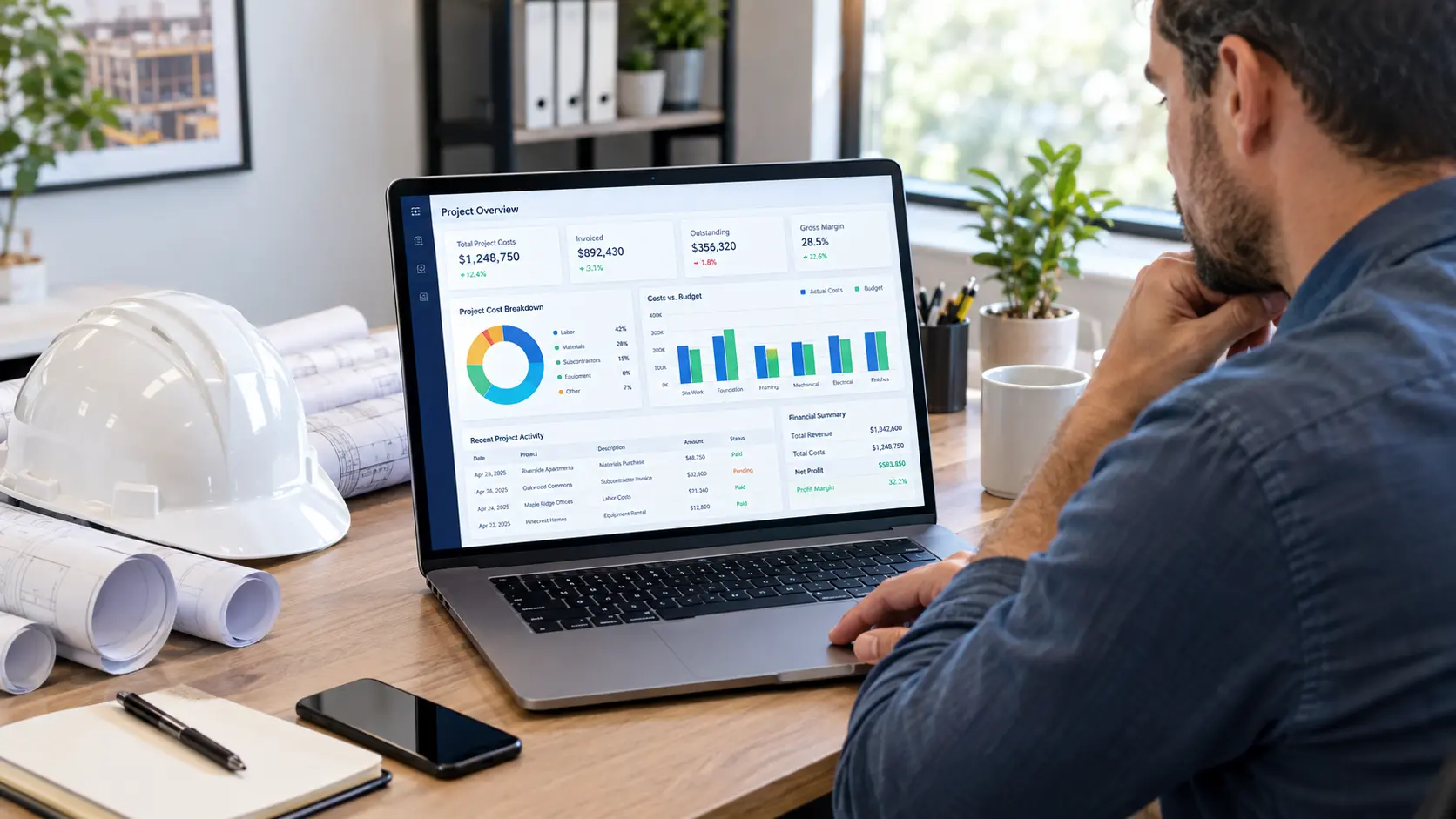
Modern construction expense tracking often involves leveraging technology (such as specialized software or apps) to ensure accuracy and real-time updates. These tools can automate many aspects of expense tracking, reducing human error and providing instant insights into project finances.
In construction, margins can be tight and every dollar counts. Mastering expense tracking doesn’t just keep score; it provides the tools to win the game. As we move forward, let’s explore the key categories of construction expenses that demand your attention for effective cost management.
Breaking Down Construction Expenses
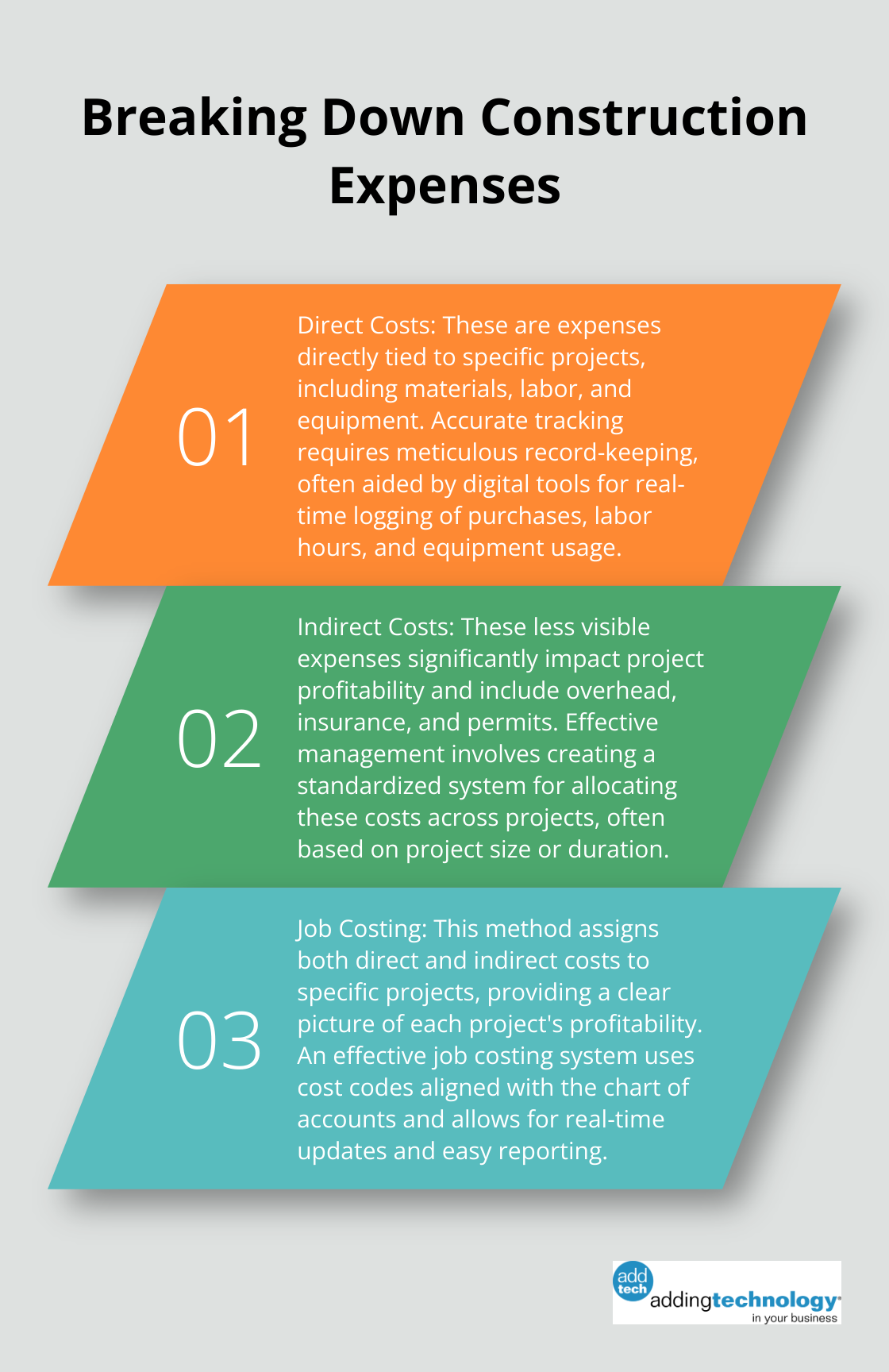
Direct Costs: The Building Blocks
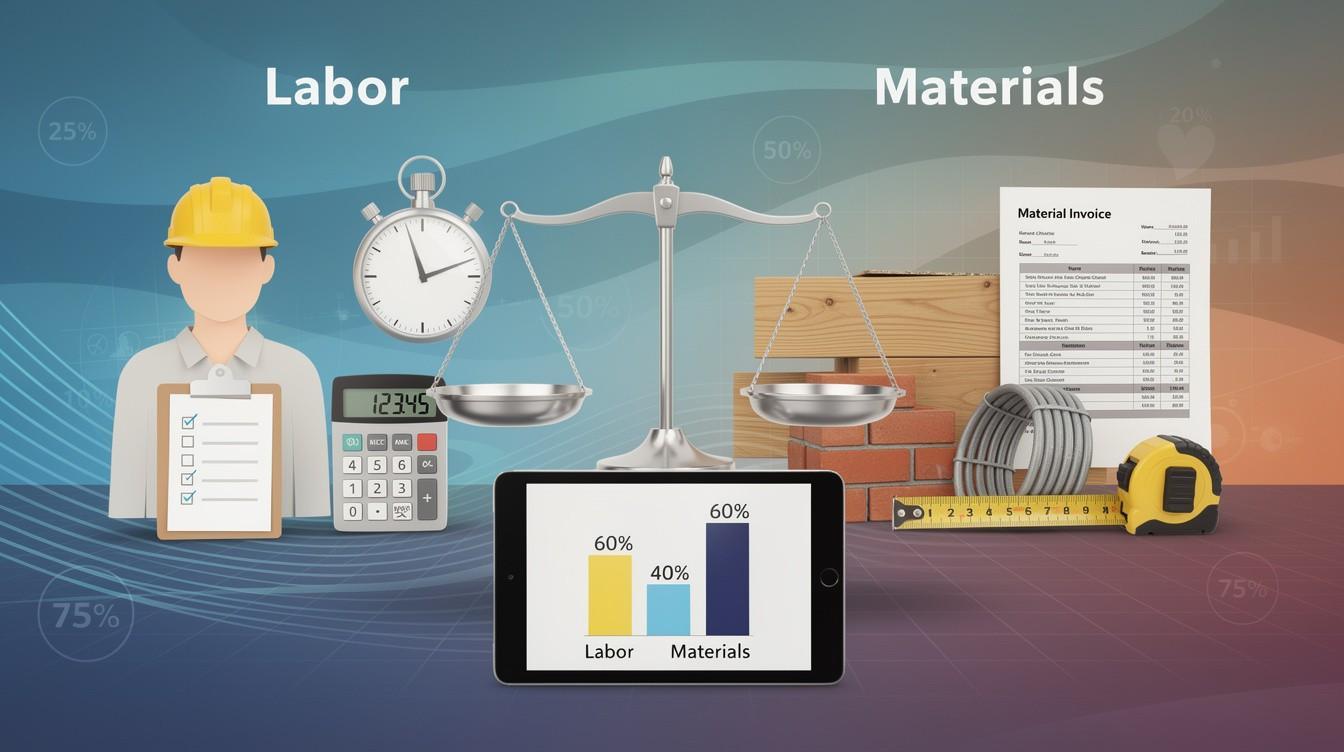
Direct costs form the core of construction expenses. These include materials, labor, and equipment directly tied to specific projects. For example, concrete for a foundation or hourly wages for on-site workers are direct costs.
Accurate tracking of these costs requires meticulous record-keeping. Digital tools can log material purchases, labor hours, and equipment usage in real-time. This approach minimizes errors and provides instant visibility into project expenses.
Indirect Costs: The Hidden Expenses
Indirect costs, while less visible, significantly impact project profitability. These include overhead, insurance, and permits.
To manage these expenses effectively, create a standardized system for allocating indirect costs across projects. This might involve distributing overhead based on project size or duration. Regular reviews of indirect costs can reveal opportunities for efficiency improvements and cost reductions.
Job Costing: Precision in Allocation
Job costing assigns both direct and indirect costs to specific projects. This method provides a clear picture of each project’s profitability. A robust job costing system allows for real-time updates and easy reporting.
One effective approach uses cost codes that align with your chart of accounts. This consistency simplifies reconciliation and reporting. Regular job cost reviews (ideally weekly) can catch discrepancies early and prevent budget overruns.
Common Pitfalls in Expense Categorization
Misallocation of costs is a frequent error in construction accounting. For instance, don’t lump all equipment costs into overhead. Instead, track equipment usage per project for more accurate job costing. This level of detail can reveal which types of projects are most profitable for your business.
Another common mistake is the failure to account for all indirect costs. Some expenses (like administrative salaries or office rent) might seem unrelated to specific projects, but they still impact overall profitability. Proper allocation of these costs provides a more accurate picture of project performance.
Mastering construction expense accounting requires attention to detail, consistent practices, and the right tools. Understanding and effectively managing these key expense categories will improve financial control and project profitability. In the next section, we’ll explore best practices for implementing robust accounting systems and leveraging technology to streamline expense management.
Mastering Construction Expense Accounting
Implement a Comprehensive Accounting System
The foundation of effective expense accounting is a robust, construction-specific accounting system. Generic accounting software often falls short in addressing the unique needs of the construction industry. Look for systems that offer features like job costing, progress billing, and change order management.
CoConstruct and Procore are popular choices among contractors. However, Adding Technology offers customized solutions that often yield the best results. Clients report significant improvements in financial accuracy after implementing tailored accounting systems.
Embrace Real-Time Expense Tracking
Real-time tracking is now essential for staying on top of project finances. Mobile apps and cloud-based solutions allow field teams to log expenses as they occur, providing instant visibility into project costs.
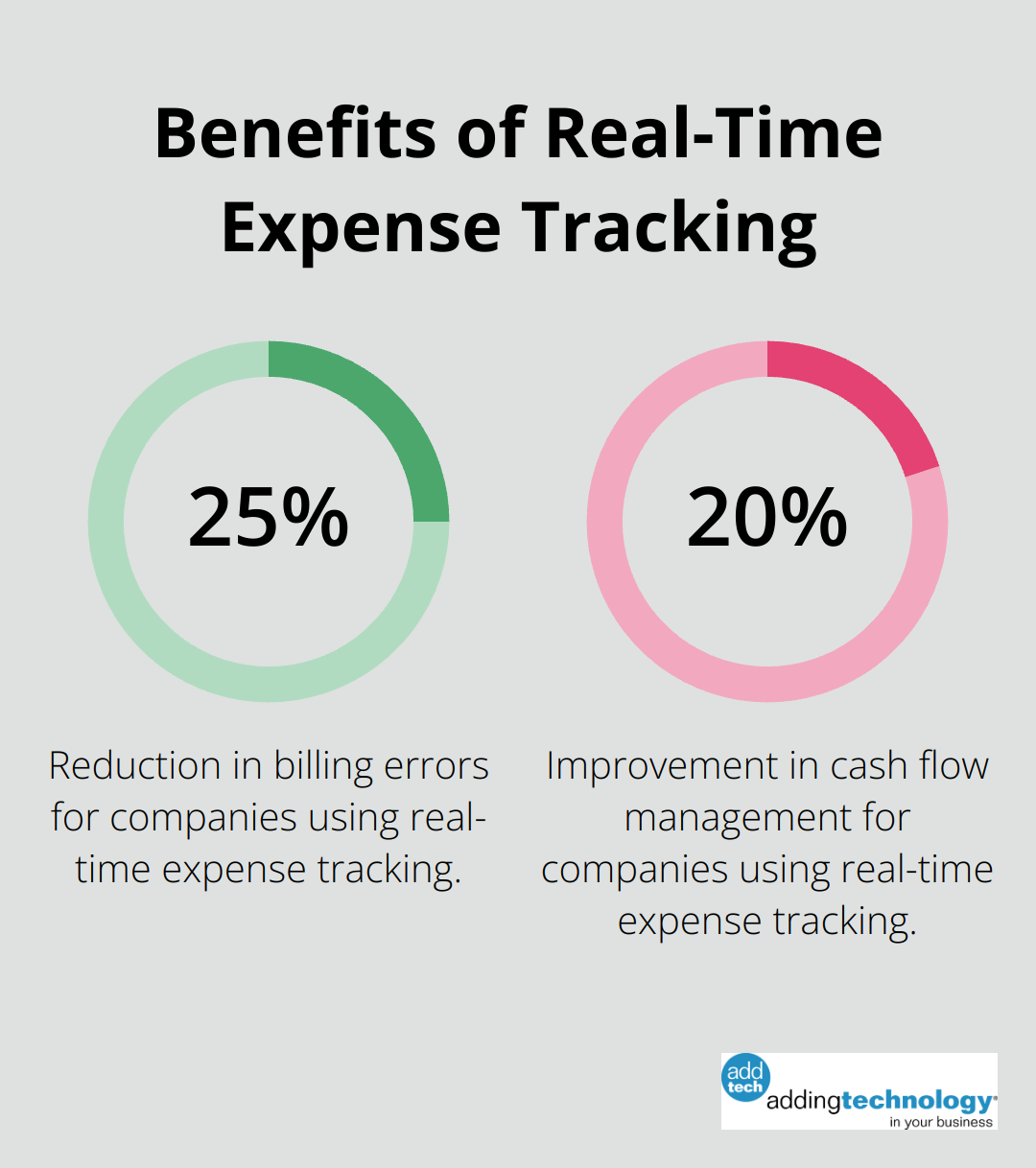
A study by the Construction Financial Management Association shows that companies using real-time expense tracking reported a 25% reduction in billing errors and a 20% improvement in cash flow management.
Standardize Expense Codes and Categories
Consistency is key in construction accounting. Develop a standardized set of expense codes and categories that align with your chart of accounts and job costing structure. This standardization simplifies reporting, improves accuracy, and allows for easier comparison across projects.
Cost codes are significant in construction accounting. Explore common cost coding systems and best practices to maximize their effectiveness.
Conduct Regular Reconciliations and Audits
Frequent reconciliation of expenses against bank statements and credit card reports is crucial for maintaining accuracy. Perform these reconciliations at least weekly (if not daily) for high-volume operations.
Additionally, conduct internal audits of your expense accounting processes to uncover inefficiencies and potential areas for improvement. A survey by the American Institute of CPAs found that companies performing regular internal audits were 60% less likely to experience significant financial discrepancies.
Leverage Technology for Expense Management
Technology plays a pivotal role in modern construction expense accounting. From optical character recognition (OCR) for digitizing receipts to artificial intelligence for expense categorization, these tools can dramatically improve efficiency and accuracy.
One of the most exciting advancements in AI for expense management is the use of smart receipt and document capture. AI-powered mobile apps can transform financial operations in construction firms.
Final Thoughts
Construction expense accounting provides a strategic advantage in the competitive construction industry. Accurate expense tracking impacts project profitability, ensures compliance, and empowers better decision-making. Companies that excel in this area adopt advanced technologies, refine processes continuously, and seek expert guidance when needed.
Adding Technology specializes in tailored accounting and financial management solutions for the construction industry. Our expertise can help streamline financial processes, ensure compliance, and allow you to focus on building great projects. Effective expense accounting goes beyond tracking costs; it provides insights that drive profitability and growth.
Implement these best practices and leverage expert support to build a stronger, more financially sound construction business. Take the next step in mastering construction expense accounting today (and watch your projects and profits soar).