Safety compliance documentation isn’t optional-it’s your proof that you’re running a legitimate operation. Without it, you’re vulnerable to fines, project shutdowns, and damage to your reputation.
At adding technology, we’ve helped hundreds of contractors build systems that make compliance manageable. This guide walks you through organizing your records, staying on top of changing regulations, and protecting your business.
What Standards Actually Apply to Your Contracting Business
OSHA Regulations Form Your Foundation
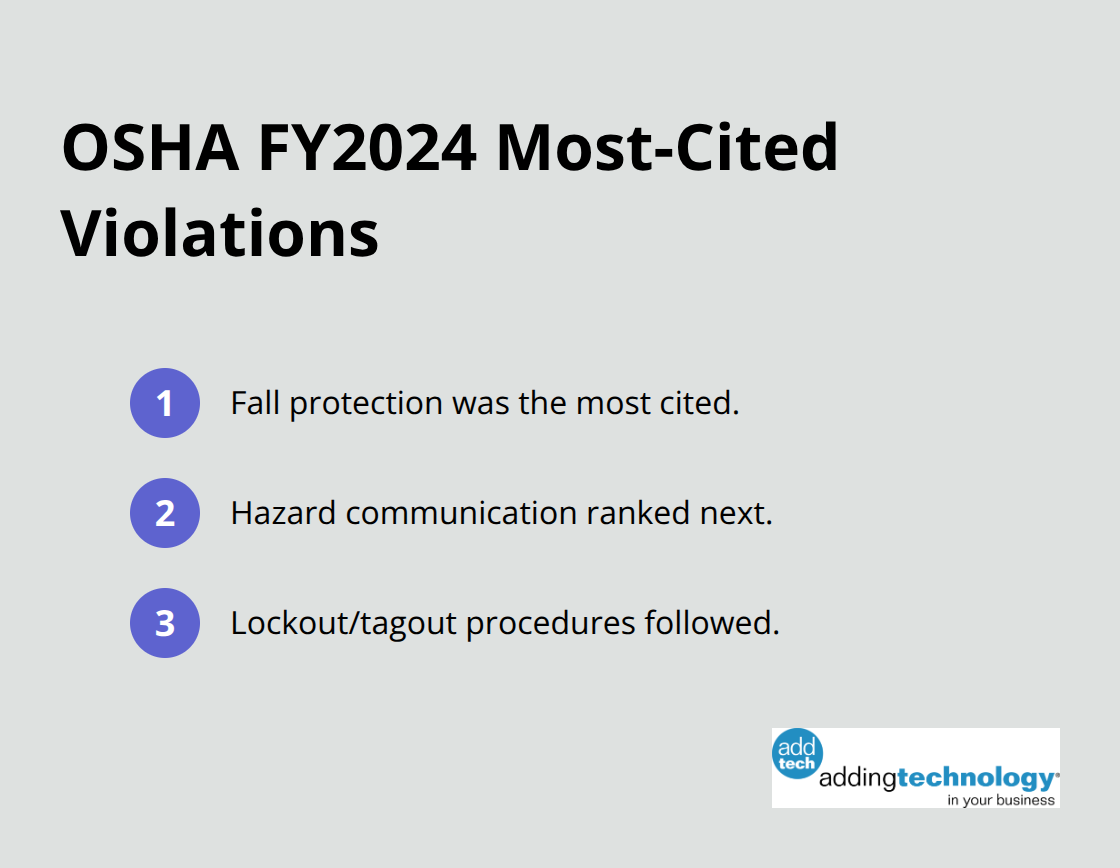
OSHA regulations form the backbone of construction safety compliance in the US, but the specific standards you must follow depend on your trade, project scope, and location. Fall protection stands out as the most cited violation in FY2024, followed by hazard communication and lockout/tagout procedures. If you work in electrical, scaffolding, or heavy equipment operations, you face additional layers of regulation.
State plans like California’s Cal/OSHA impose stricter requirements than federal standards, so contractors operating across state lines must track multiple regulatory frameworks. The UK Health and Safety Executive data shows construction remains the deadliest industry, accounting for more than half of work-related deaths in 2023/24-a reality that explains why regulators scrutinize documentation so heavily.
Client Audits Add Another Layer
Beyond OSHA, you may encounter client-specific requirements through prequalification audits from systems like Avetta and ISNetworld, which demand tailored safety manuals and documented procedures that reflect your actual operations. These audits verify that your written policies match what happens on your job sites, not generic templates copied from competitors. Clients increasingly use these systems to vet contractors before awarding work, making compliance documentation a competitive advantage in winning bids.
Documentation Becomes Your Defense
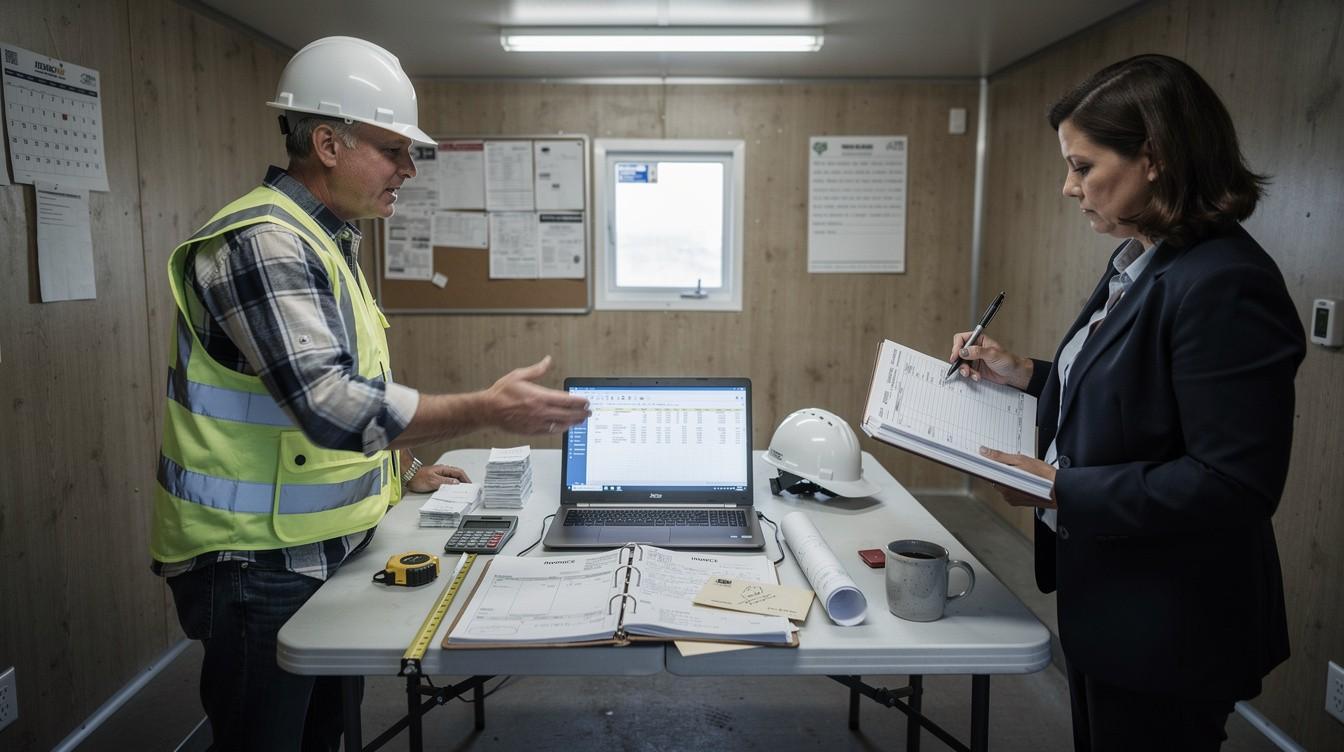
Documentation is not busywork-it is your only defense when OSHA inspectors arrive or a client demands proof of compliance. OSHA operates with a network of inspectors covering millions of workers across worksites, meaning inspections happen on a complaint or random basis. When inspectors arrive, missing records result in immediate citations. A 2016 UK health and safety violation case resulted in a £25 million fine, illustrating the financial devastation non-compliance can trigger.
The Real Cost of Missing Records
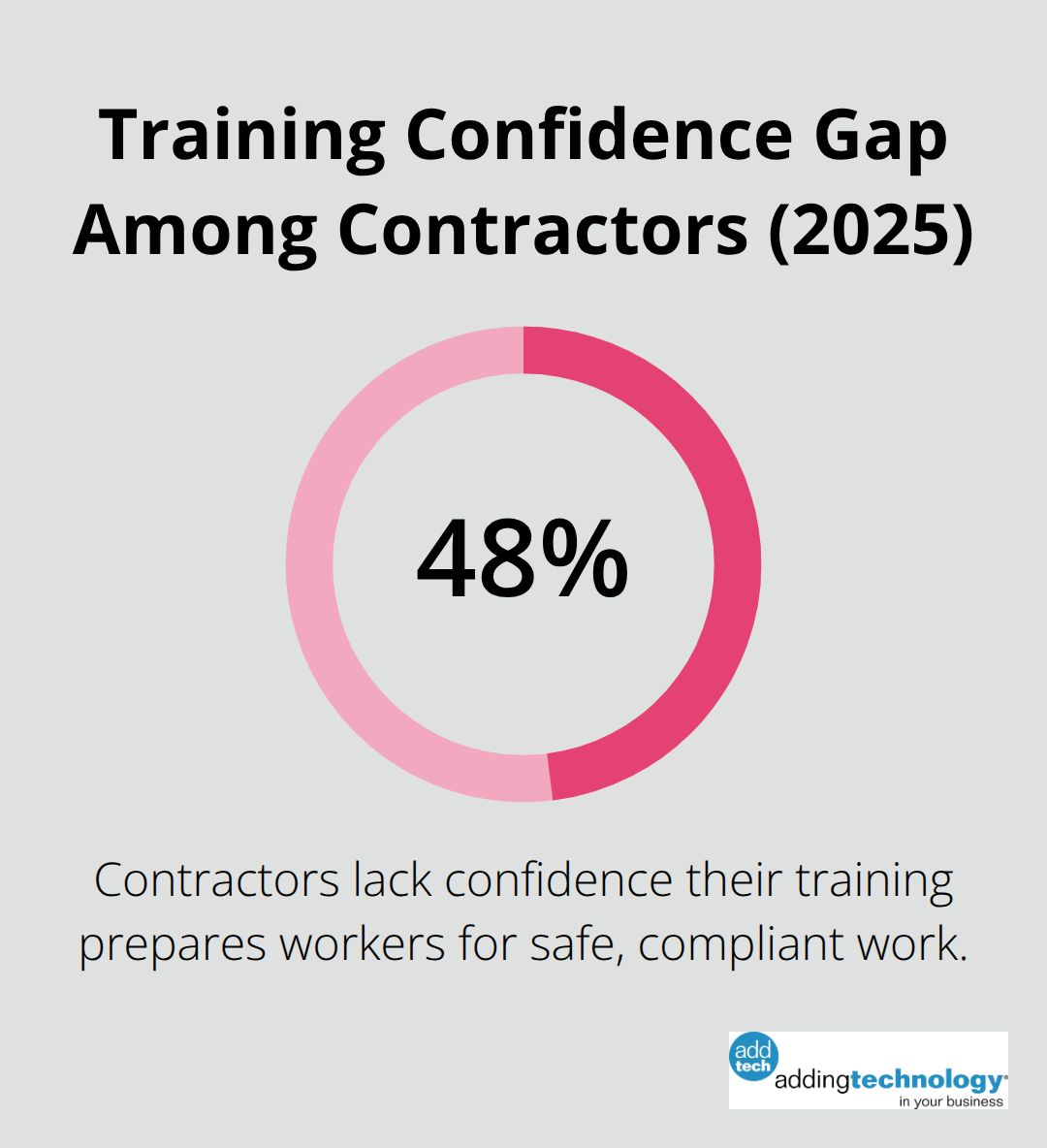
The 2025 Construction Industry Safety Challenges study found that 48% of contractors lack confidence their training prepares workers for safe, compliant work-a gap that documentation fixes by creating a clear record of what you taught and when. Non-compliance carries three distinct penalties: regulatory fines that drain cash flow, project shutdowns that halt revenue, and reputation damage that costs you future bids.
Without documented hazard analyses, training records, and incident logs, you cannot prove you took reasonable precautions, leaving your company fully liable for injuries or fatalities on your sites.
The question shifts now from whether you need documentation to how you organize it so inspectors and clients can find what they need in minutes, not hours.
Building Your Documentation System
Organize Documents to Match How Your Jobs Run
Organizing documents by project and regulation sounds straightforward until you manage 12 active projects, three different client audit systems, and OSHA standards that shift annually. Stop treating documentation as a filing problem and start treating it as a business system. Create a folder structure that mirrors your actual operations: one master folder per project, then subfolders for OSHA recordkeeping, training records, hazard analyses, incident logs, and client-specific requirements like Avetta or ISNetworld sign-offs. Within each folder, label documents with the regulation they satisfy (for example, 1926.501 for fall protection, 1910.1200 for hazard communication) so inspectors or auditors locate proof of compliance without asking questions. This structure forces you to think about what evidence each regulation demands before you need it.
Use Digital Systems to Eliminate Paper Chaos
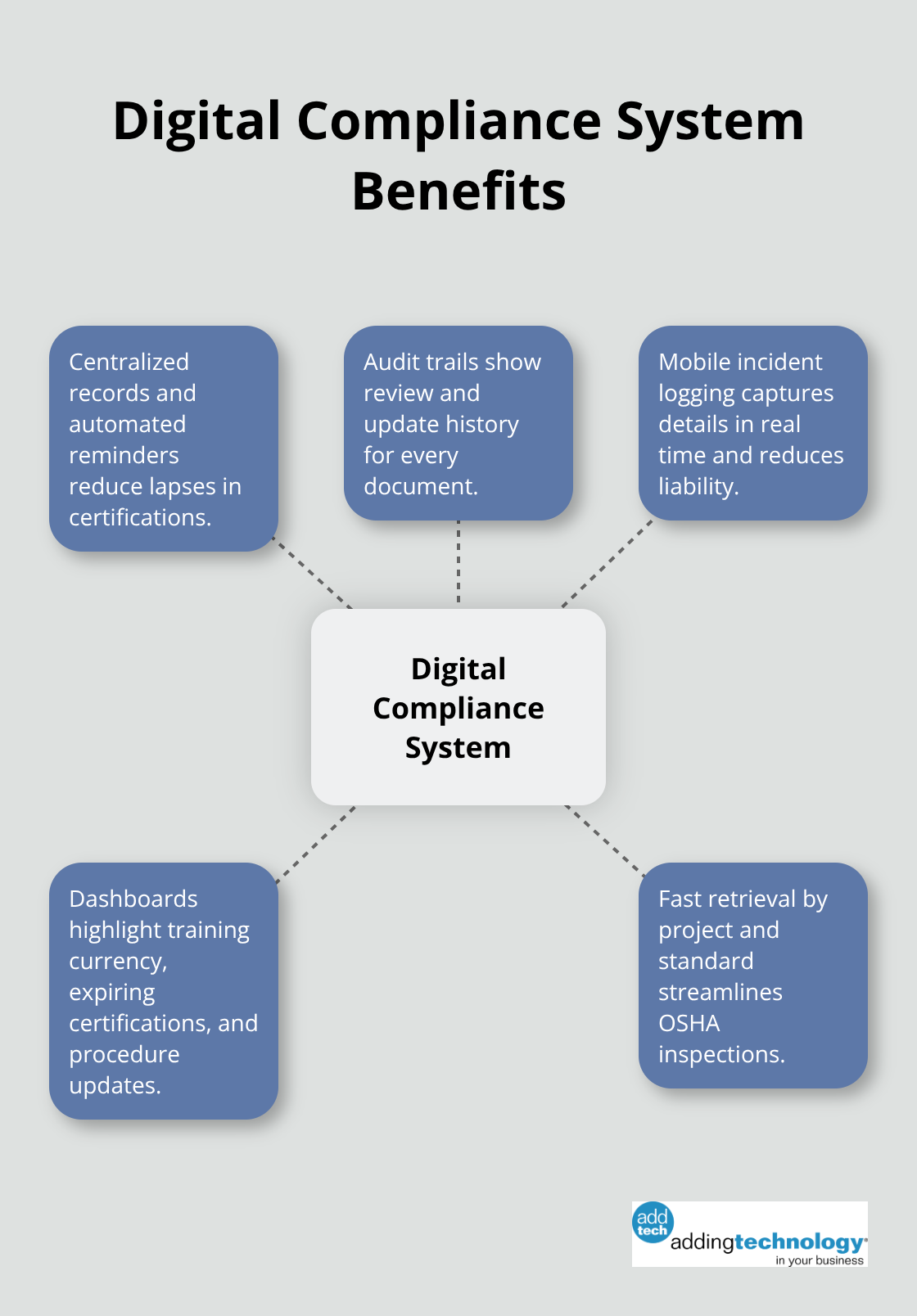
Digital systems eliminate the chaos of paper and outdated spreadsheets. Compliance software centralizes your records, automates reminders when certifications expire, and creates audit trails that prove when documents were reviewed or updated. Mobile apps let field supervisors log incidents in real time rather than reconstructing events days later from memory, which is how details get lost and liability grows.
Real-time dashboards across your projects show you which sites have current training records, which equipment certifications expire soon, and which safety procedures need updating. When OSHA arrives, you pull the dashboard, filter by project and standard, and hand inspectors organized proof that your operation runs with documented controls.
Build Checklists That Standardize Your Processes
Checklists built into your system ensure every hazard analysis includes the same elements, every toolbox talk gets documented with attendee names and dates, and every corrective action includes a deadline and assigned owner. This approach saves hours during audits and eliminates the scramble to find missing records. Set up quarterly reviews to catch gaps before they become liabilities, then update your safety manual and procedures when scope changes, new equipment arrives, or regulations shift (this rhythm keeps documentation current without consuming your week).
Stay Ahead of Regulatory Changes
Staying current with changing requirements demands more than filing documents-it requires systems that alert you when standards shift and help your team adapt quickly.
Staying Current with Changing Requirements
OSHA standards do not stay frozen-they evolve based on injury data, industry feedback, and new hazards that emerge on job sites. OSHA updates its recordkeeping requirements, adds new guidance on emerging risks like heat illness and mental health, and adjusts enforcement priorities annually based on which violations cause the most injuries. In FY2024, fall protection remained the top cited standard, but heat-related illness has climbed the priority list as contractors face longer seasons and climate pressures. State plans like Cal/OSHA often move faster than federal standards, meaning a regulation change in California can hit your operations months before OSHA mandates it nationally. Client audit systems like Avetta and ISNetworld also shift their requirements based on industry trends and insurance data, so a policy that satisfied their audit two years ago may no longer qualify.
Monitor Regulatory Changes Directly
Stop waiting for regulators to notify you and start pulling information yourself. Subscribe to OSHA’s updates directly through their website, which publishes new standards, guidance documents, and enforcement priorities quarterly. Follow your state’s occupational safety agency (Cal/OSHA publishes changes monthly), and if you work with major clients, ask their procurement teams to notify you when audit standards shift. Industry associations like the Associated General Contractors and the Associated Builders and Contractors publish regulatory summaries that flag changes affecting your trade-this approach moves faster than reading federal registers yourself.
Schedule Quarterly Compliance Reviews
Set calendar reminders for quarterly compliance reviews where you spend 90 minutes checking OSHA’s latest enforcement data, your state’s regulatory updates, and your top three clients’ audit requirements. During these reviews, identify which changes affect your operations, update your safety manual accordingly, and schedule training before the deadline hits. This rhythm prevents the scramble that happens when you discover mid-project that a new requirement applies to you. Most contractors discover this gap during an audit or inspection when an inspector asks about a procedure that changed 18 months earlier.
Train Your Team Before New Requirements Take Effect
Training on regulatory changes must happen before workers encounter the new requirement on a job site, not after an inspector cites you. When OSHA adds guidance on a hazard like electrical arc flash or when your client’s audit system adds a new documentation requirement, schedule a toolbox talk that explains what changed, why it matters, and how your team will handle it going forward. Document attendance at these talks with names and dates-this record proves you informed your crew and demonstrates reasonable precautions if an incident occurs. For major changes like a new fall protection procedure or updated lockout/tagout protocol, conduct hands-on training with competency checks, not just a verbal briefing.
Assign Regulatory Monitoring as a Defined Role
Assign one person on your team to own regulatory monitoring, give them time to stay informed, and empower them to flag changes that require action. Contractors who assign this responsibility without protecting the time end up with outdated procedures because the person gets buried in daily operations. Make compliance monitoring a defined role with protected time, and your team stays current instead of perpetually behind.
Final Thoughts
Safety compliance documentation transforms from a burden into a competitive advantage when you treat it as a system rather than a filing task. Contractors who stay ahead of inspections and audits organize their documents by project and regulation, automate reminders for expiring certifications, and assign someone to monitor regulatory changes before they become problems. Your documentation proves you run a legitimate operation, protects your crew from preventable injuries, and positions you to win bids from clients who use prequalification systems like Avetta and ISNetworld.
Start by auditing what you have now and pulling together your current training records, hazard analyses, incident logs, and safety manual into a digital system that mirrors how your projects actually run. Set up quarterly compliance reviews to catch regulatory changes before they hit your operations, and assign one person to own this responsibility with protected time. When you document your procedures, train your team, and keep records current, you eliminate the anxiety that comes with OSHA inspections and client audits.
Documented safety practices lower your Experience Modification Rate, reduce insurance premiums, and make you competitive on bids that require proof of compliance. If managing safety compliance documentation alongside accounting, job costing, and cash flow feels overwhelming, adding technology can help you streamline operations so you focus on your projects instead of administrative chaos.