Most contractors we work with at adding technology tell us the same thing: their bookkeeping feels like it’s always one step behind. Bank statements don’t match records, job costs are scattered across spreadsheets, and tax time becomes a scramble.
Contractor bookkeeping training doesn’t have to be complicated. The right foundation-combined with modern tools-transforms how you see your finances and control your business.
Why Contractors Struggle with Bookkeeping
The construction industry loses money to poor bookkeeping practices faster than most business owners realize. Contractors operate without a clear picture of their cash position until a crisis forces them to look. The problem isn’t laziness or incompetence. Construction finances move differently than retail or professional services. Money flows in chunks tied to project milestones, invoices get disputed, retainage sits uncollected for months, and expenses scatter across job sites, suppliers, and subcontractors. A contractor can be profitable on paper and broke in practice, or vice versa. The accounting software market reached 1.83 billion dollars in 2026 and continues to grow at roughly 7.1 percent annually, according to The Business Research Company, precisely because contractors need tools to manage this complexity.
Expenses Hide Until It’s Too Late
Most contractors track expenses through spreadsheets or memory. A material supplier invoice lands in email. Labor costs sit in a payroll system. Subcontractor invoices arrive weeks after work completes. Each goes into a different system or folder, and nobody connects them to the actual job they belong to. When tax time arrives or a project closes, the scramble begins to figure out what was spent where. Expenses also get coded wrong. A supervisor’s time on a job ends up buried in overhead instead of allocated to that specific project. Materials meant for Project A get classified as general supplies. The result: you don’t know which jobs actually made money and which ones didn’t. Expense tracking by project helps contractors bid future work with reliable historical data instead of guessing. Many contractors discover mid-project that they were already losing money because expenses weren’t tracked against the job from day one.
Cash Doesn’t Match the Numbers
Construction companies often report strong earnings while their bank account tells a different story. You complete work and recognize revenue, but the customer hasn’t paid yet or is holding retainage. Meanwhile, you’ve already paid workers and suppliers. The construction industry starts most projects with negative cash flow, and this gap between when money goes out and when it comes in creates constant pressure. Slow-paying customers rank among the biggest culprits. If you invoice after work finishes and the customer takes sixty days to pay, you fund the project from your own pocket. Change orders compound the problem. A contractor doesn’t get paid for extra work until weeks after the change order receives approval, invoicing, and submission. Without cash flow forecasting into what’s been billed versus what’s been collected, you can’t plan ahead accurately. The construction ERP market exists because contractors need better tools to see cash position in real time, not at month-end when it’s too late to adjust.
Compliance Risks Compound Silently
Construction operates under layers of regulations. Payroll withholding must be correct. Job costing must support prevailing wage compliance on public projects. Retainage must be tracked and accounted for properly under contract law. Tax deductions must be supported by documentation. Many contractors treat compliance as a once-a-year tax problem, but compliance failures create cash flow damage throughout the year. A misclassified worker as independent contractor versus employee can trigger penalties and back taxes. Overhead allocation done wrong distorts project profitability and can create issues during audits. If you can’t produce a detailed audit trail of expenses tied to specific jobs, you lose credibility with lenders, bonding companies, and auditors. A lender or bonding company might restrict your capacity or demand higher rates because they can’t verify your financial data (that restriction costs real money in lost bidding opportunities). These silent compliance risks accumulate until they hit your bottom line, which is why the next section covers the core bookkeeping skills that protect you from these problems.
Building the Right Financial Framework
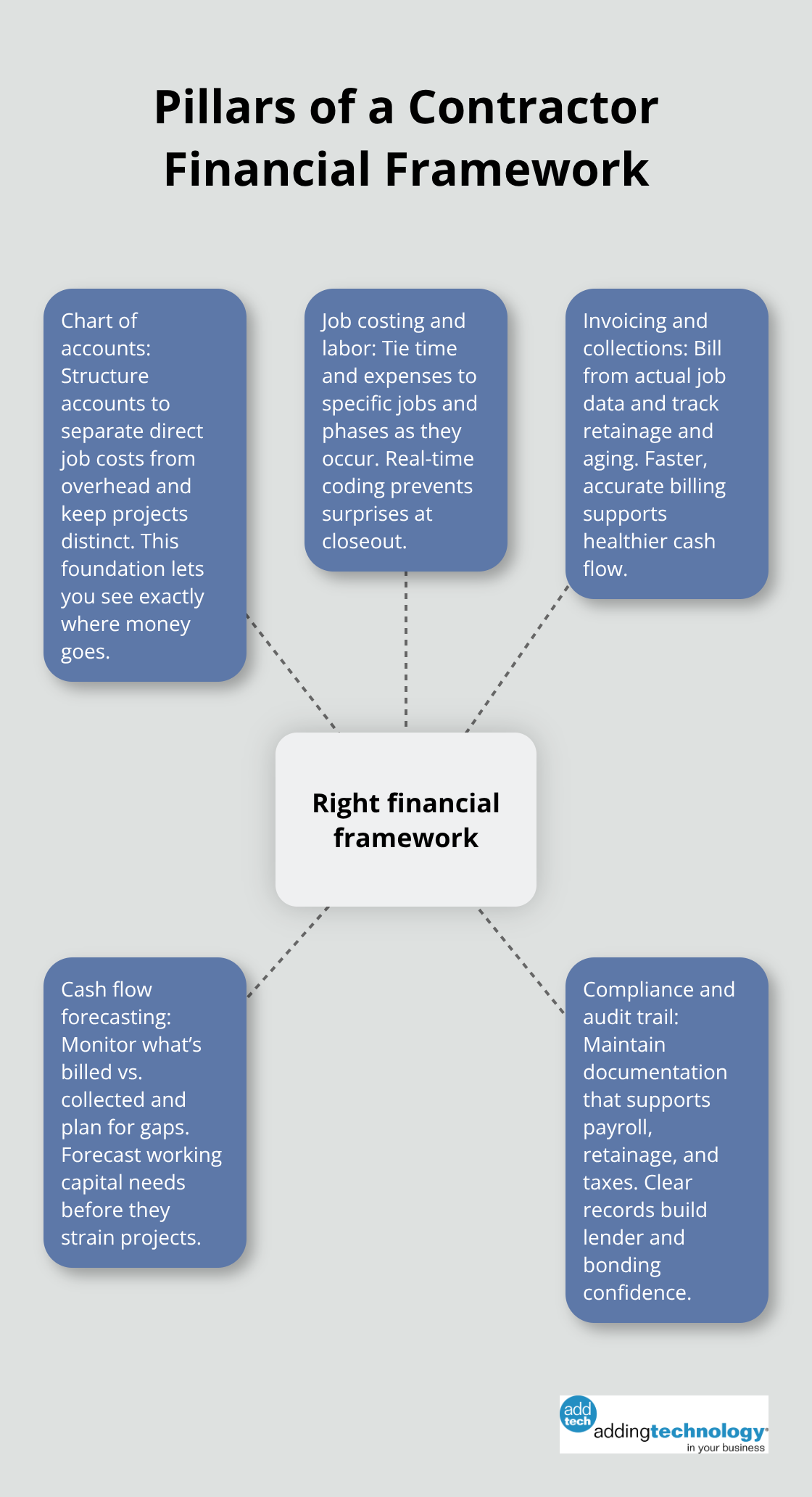
Construction bookkeeping starts with a chart of accounts designed specifically for how your business operates, not a generic template borrowed from retail or services. A proper chart of accounts separates labor from materials, distinguishes between direct job costs and overhead, and creates clear lines between projects. This matters because when tax time arrives or a lender reviews your financials, they need to see exactly where money went. Your chart should include separate accounts for direct labor by trade (carpenters, electricians, laborers), materials by category, subcontractor costs, equipment and rentals, and then overhead broken into subcategories like office salaries, insurance, utilities, and vehicle costs. When every expense lands in the right account from day one, closing the books takes hours instead of weeks, and you spot cost overruns while you can still correct them on the job.
Start Your Chart of Accounts Right
Many contractors rebuild their chart of accounts mid-year because they built it backward initially, which creates duplicate work and confusion. Start right the first time by assigning a specific cost code to every job and every category within that job, then train your team to use those codes consistently. Without this discipline, even the best accounting software cannot fix garbage data flowing in. The Business Research Company reports that construction accounting software adoption continues climbing because contractors finally understand that misclassified expenses hide profitability problems.
Connect Field Time to Job Costs Immediately
Job costing and labor tracking require a real-time connection between the field and your office. When a crew member logs time to a project, that labor cost attaches to the specific job and phase immediately, not weeks later when payroll runs. Subcontractor invoices should reference the job code and phase so they land in the correct place without manual rework. Materials purchased for a project must tie to that job from purchase through delivery. Many contractors still process payroll separately from project costing, which creates a gap that never closes. The result is that project managers think a job stays on budget while the actual labor costs have not been fully captured.
Invoice and Collect Based on Real Job Data
Invoicing customers should pull directly from job costing data so that what you bill reflects what you actually spent plus your margin. When billing lags behind completion, cash flow suffers immediately. Collections matter just as much: if you invoice promptly but customers take sixty or ninety days to pay, you need to forecast that gap and plan working capital accordingly. Track what has been billed against what has been completed, monitor retainage by project, and follow up on invoices past thirty days. The gap between cash collected and revenue recognized is where most contractors discover they are broke despite showing a profit on paper. Accounts payable and receivable management depends entirely on accuracy upstream-if expenses and labor are coded wrong, your payables sit in the wrong bucket and your job profitability becomes fiction.
Moving to Real-Time Financial Management
The jump from spreadsheet-based bookkeeping to cloud-based accounting transforms how quickly you spot problems and fix them. Contractors who move from monthly closings that took weeks to real-time dashboards that update throughout the day see the difference immediately. Cloud-based systems mean your data lives in one place instead of scattered across email, spreadsheets, and individual devices. When a crew member logs time on a job site, that labor cost flows directly into your accounting system within hours, not days. When a supplier invoice arrives, it attaches to the correct project immediately.
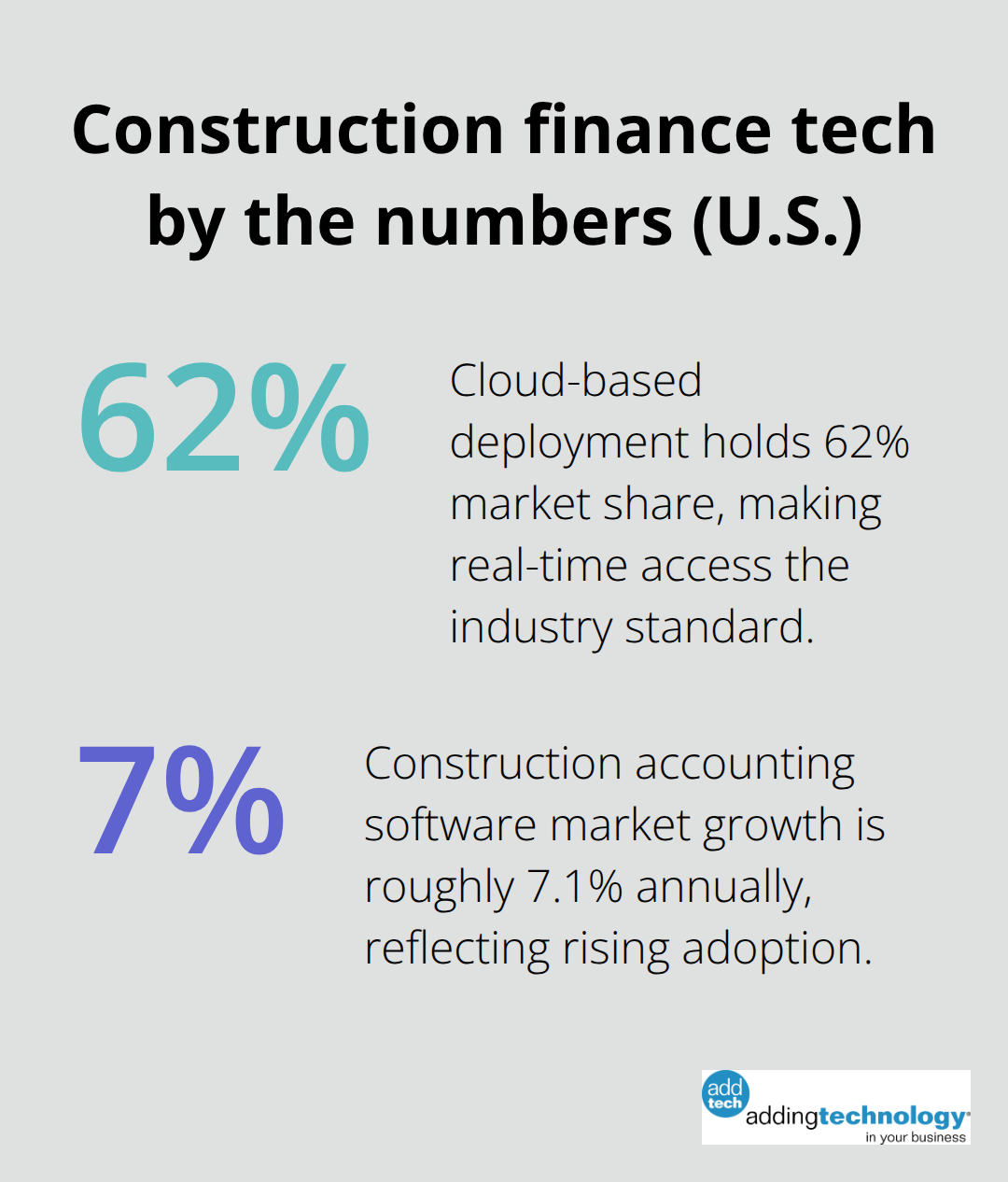
When you invoice a customer, the system pulls actual job costs so you bill accurately without manual reconciliation. Cloud-based deployment holds 62% market share, making cloud the standard for real-time access. This shift matters because real-time data is a baseline expectation in 2026. Live dashboards replace traditional status meetings and spreadsheets. You see cost-to-complete on every active project, spot budget overruns while you can still correct them, and forecast cash position with accuracy instead of guessing.
Automation Eliminates Manual Work and Errors
Automation handles the repetitive work that burns hours and introduces errors. Invoicing should pull directly from your job costing data so billing reflects actual work and expenses. Payment processing should route bills through approval workflows that prevent duplicate payments and ensure the right person approves spending. Subcontractor invoices should flow into your system in seconds rather than requiring manual data entry. These automations compress time and eliminate the transcription errors that plague spreadsheet-based workflows.
Real-Time Visibility Changes How You Manage Projects
The financial visibility that real-time systems provide changes decision-making at every level. Project managers see their job profitability updated daily instead of discovering problems at closeout. You track retainage by project so you know exactly what cash is tied up and when it should arrive. You monitor accounts payable and receivable with enough detail to spot slow-paying customers or unpaid invoices before they become problems. Construction ERP systems emphasize real-time visibility as a core feature because contractors demand it.
Implementation Speed Delivers Results Faster
The implementation timeline matters significantly. A fast, structured implementation can deliver return on investment far sooner than the industry average of six to eighteen months for legacy systems. You do not need to overhaul your entire operation at once. Start with cloud-based accounting and job costing, then layer in subcontractor portals and automated approvals as your team becomes comfortable. The goal is not technology for its own sake but financial clarity that lets you run your business instead of chasing numbers.
Final Thoughts
Contractor bookkeeping training transforms from a compliance checkbox into a competitive advantage when you build the right foundation and commit to real-time practices. The contractors who move from spreadsheets to structured systems with proper charts of accounts, connected job costing, and cloud-based visibility stop fighting their finances and start using them to make better decisions. Your bookkeeping directly controls whether you know which jobs actually made money, whether you catch cash flow problems before they become crises, and whether you can bid future work with confidence instead of guessing.
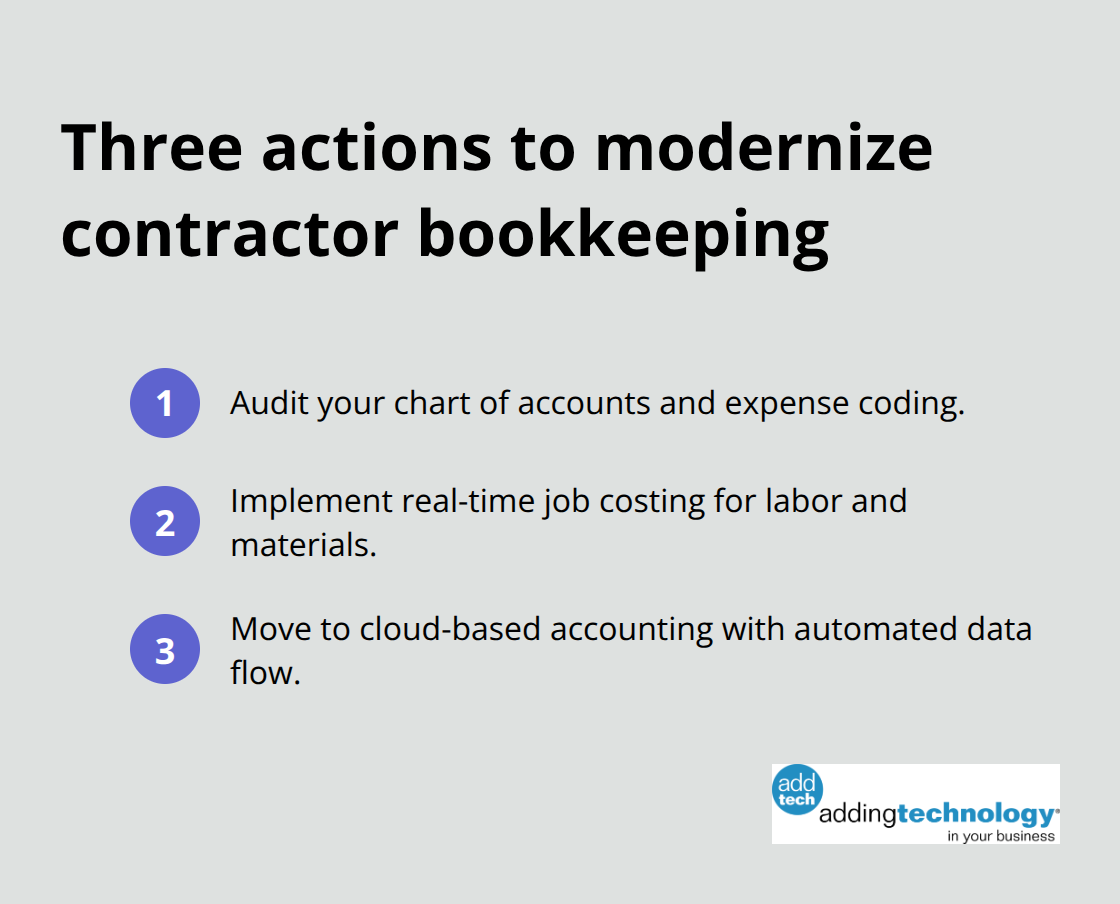
Start with three concrete actions that reshape your financial operations. First, audit your current chart of accounts and expense coding to identify where money gets misclassified or lost in overhead buckets. Second, implement real-time job costing so labor and materials attach to specific projects the moment they occur, not weeks later during closeout. Third, move to cloud-based accounting that connects field data to your office systems so information flows automatically instead of requiring manual entry and reconciliation.
These changes compound over time and deliver measurable results. When your team codes expenses correctly from day one, your month-end close takes hours instead of weeks. When you see project profitability updated daily, you spot overruns while you can still correct them. When cash position updates in real time, you forecast working capital accurately and avoid the trap of looking profitable on paper while your bank account runs dry. We at Adding Technology work with contractors to renovate accounting systems and implement real-time job costing so you gain the financial clarity that drives growth.