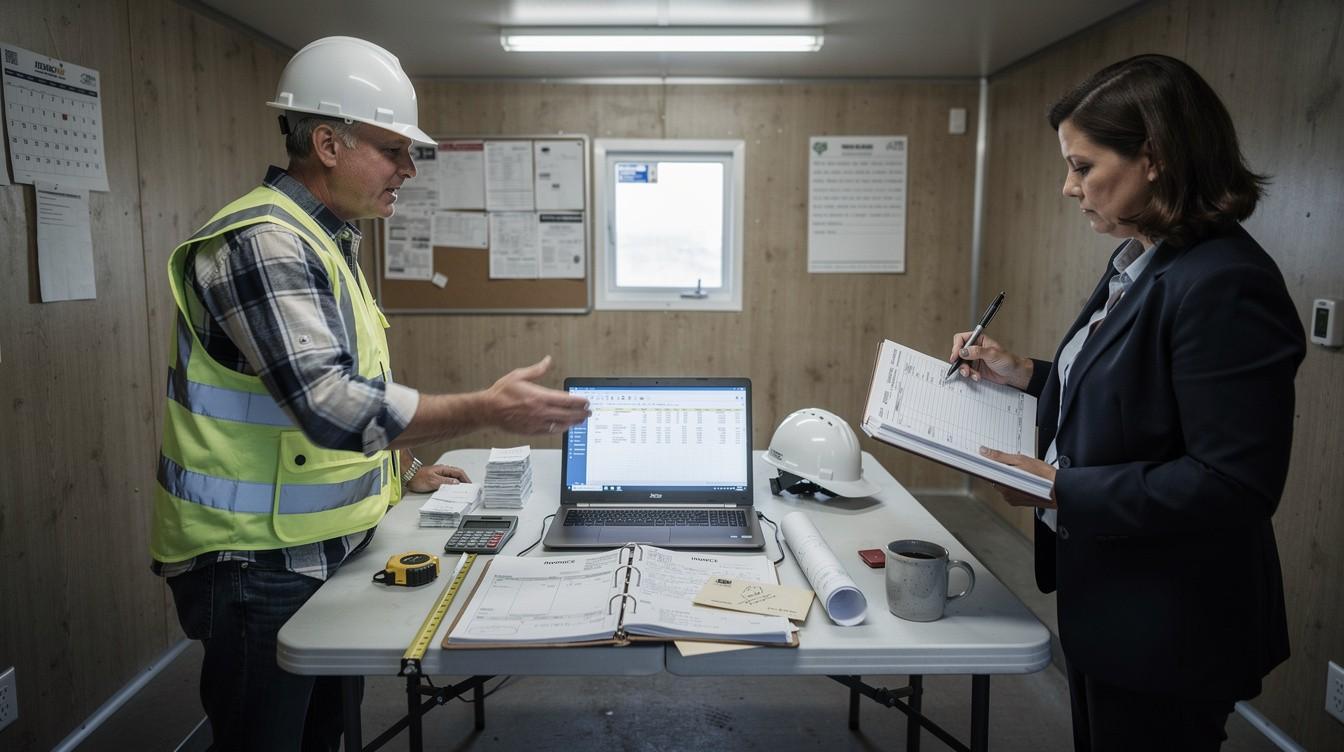
Financial Controls for Builders: Strengthening Governance
Strengthen your construction company with financial controls for builders. Learn governance best practices to prevent fraud and improve accountability.

Compliance training for contractors isn’t optional-it’s the foundation of a sustainable business. Penalties for violations can reach six figures, and a single safety incident can damage your reputation for years.
At adding technology, we’ve seen firsthand how contractors who prioritize compliance reduce risk, win more bids, and build stronger teams. This guide walks you through the regulations that matter most and how to build a training program that actually sticks.
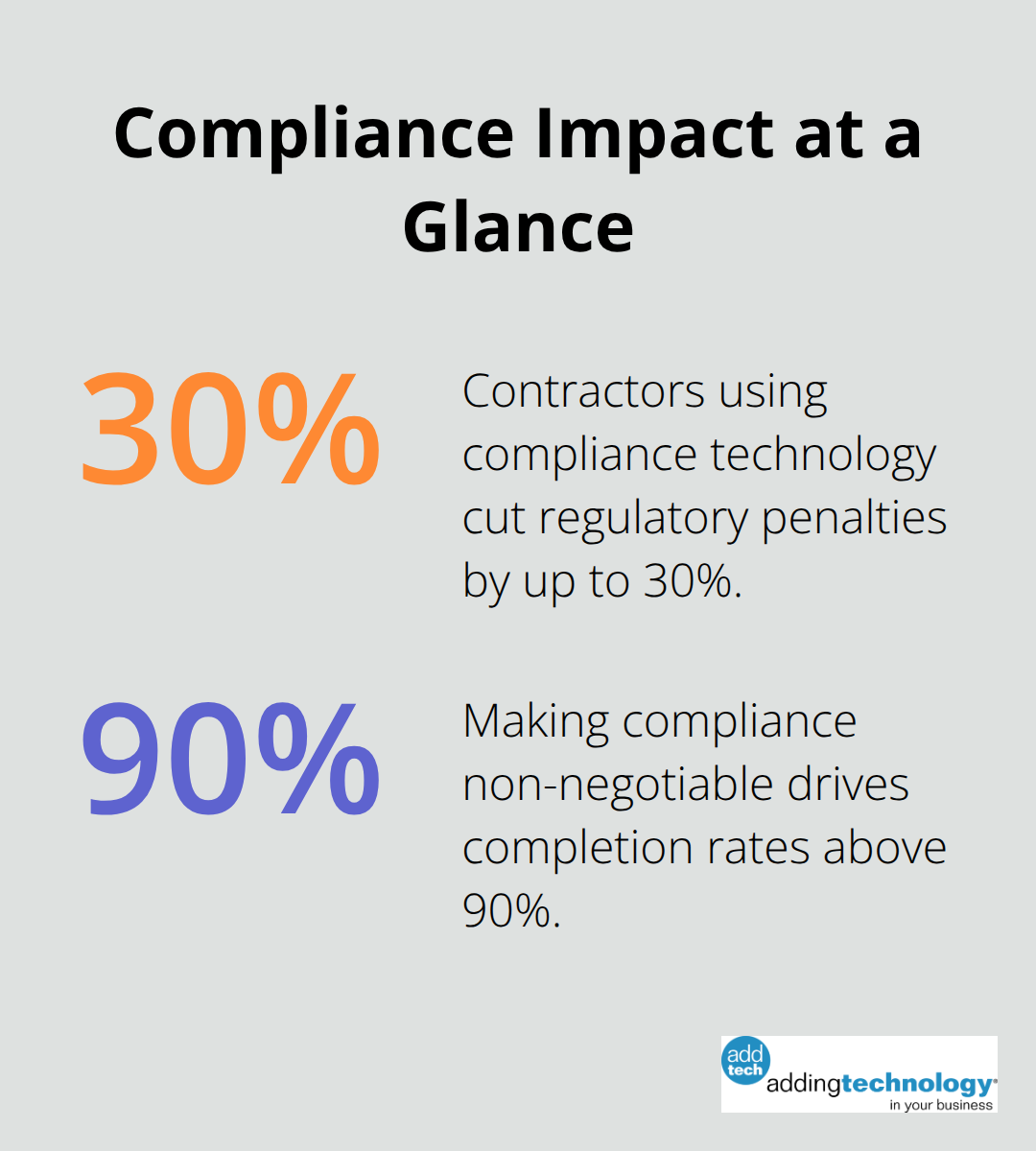
Non-compliance isn’t a minor administrative headache-it’s a financial catastrophe waiting to happen. Contractors using compliance technology cut regulatory penalties by up to 30%, which tells you exactly how expensive staying non-compliant actually is. OSHA violations alone can cost thousands per infraction, and when you multiply that across multiple citations on a single project, you’re looking at six-figure fines that destroy your profit margins. Beyond the immediate financial hit, penalties trigger increased insurance premiums, project shutdowns, and contract debarment that can shut down your business for months.
We at adding technology have worked with contractors who faced six-figure penalties and lost major bids because they couldn’t demonstrate a solid compliance record-that’s not theoretical, that’s what happens when you treat training as optional.
Your workforce represents your most valuable asset, and compliance training protects them. Contractors using structured safety programs cut workplace injuries, which directly translates to lower workers’ compensation costs and fewer project delays from accidents. An injury doesn’t just cost you in medical bills and lost time-it damages crew morale, creates liability exposure, and makes it harder to attract skilled workers to future projects. Your reputation matters too. Contractors with poor safety records struggle to win bids because project owners and general contractors check your compliance history before awarding contracts. Federal contractors face additional pressure: agencies increasingly require digital compliance tools for transparency, and non-compliance can disqualify you from future federal work entirely.
Smaller contractors especially need to understand that staying compliant isn’t a luxury-it’s the minimum price of entry to compete for larger projects. Construction employs approximately eight million workers according to the Associated General Contractors of America, and the market rewards contractors who can prove they meet every regulation. When you bid on projects, owners ask for your safety record, training documentation, and compliance certifications. Contractors with organized, auditable compliance systems win more bids because they demonstrate professionalism and reduce the owner’s risk.
Digital compliance platforms centralize permits, inspection reports, and training records in one place, making audits faster and giving you proof that your team stays current on certifications. That’s not just defensive-it’s offensive positioning. You can bid on higher-value projects that require stricter compliance standards, and you can charge premium rates because you’ve eliminated the owner’s concern about regulatory risk. The contractors who move first on compliance infrastructure gain a significant advantage over competitors still managing spreadsheets and paper files. This foundation of organized compliance data also feeds directly into your financial management-when you track training costs, certification renewals, and compliance-related expenses in real time, you gain visibility into true project costs and can bid more accurately. Understanding which regulations apply to your specific projects and workforce is where the real work begins.
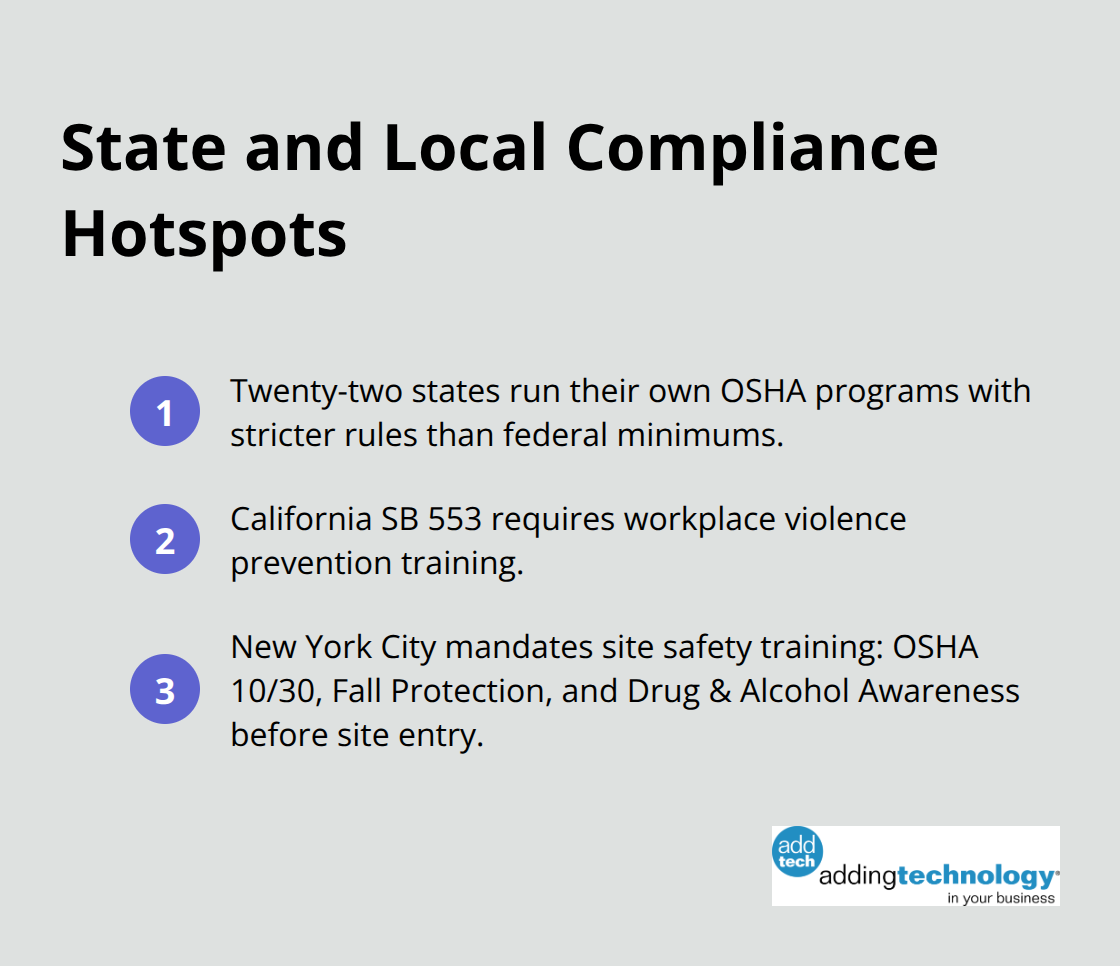
OSHA safety standards form the backbone of construction compliance, but most contractors misunderstand what they actually need to enforce. Core federal regulations include OSHA safety standards, EPA environmental rules, FLSA wage laws, and ADA accessibility requirements. The real complexity lies in state and local variations. Twenty-two states operate their own OSHA programs with stricter rules than federal minimums. California’s SB 553 mandates workplace violence prevention training, and New York City requires site safety training including OSHA 10 or 30 certifications, Fall Protection, and Drug and Alcohol Awareness courses before workers enter sites.
Your training program cannot be one-size-fits-all. You need role-specific, up-to-date content that addresses the actual hazards your crews face on each project.
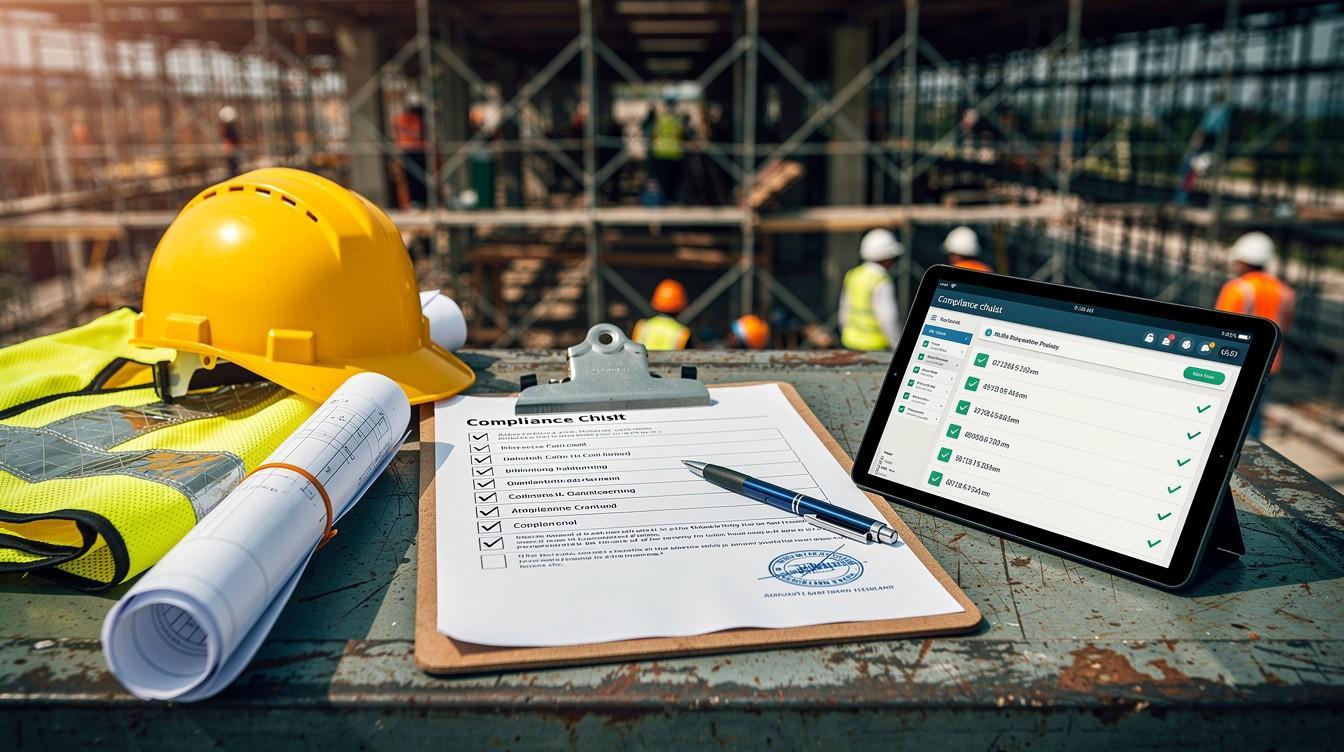
When you select training software, prioritize industry-specific courses aligned with OSHA 10 Construction and OSHA 30 Construction standards. Look for automatic renewal reminders, role-based learning paths, mobile access for field workers, and robust reporting that proves compliance during audits. The right platform gives you visibility into which certifications expire soon and which team members need refresher training before they step onto a jobsite.
Federal contractors must track obligations beyond basic safety. EEO-1 reporting applies to contractors with 100 or more employees. You must report workforce data by race, gender, and job category annually. VETS-4212 reporting kicks in at $150,000 in federal contracts and requires documented veteran hiring and outreach efforts, due every September 30. Section 503 mandates a written Affirmative Action Plan for workers with disabilities if you have 50 or more employees and $50,000 in contracts. VEVRAA requires a separate veteran-specific AAP for similar thresholds.
Non-compliance carries serious consequences: contract suspension, financial penalties, audits, and disqualification from future federal work. These aren’t theoretical risks-they directly impact your ability to bid on and win contracts. Agencies increasingly require digital compliance tools for transparency, and federal contracting officers check your compliance history before awarding work.
Federal contractors should confirm which agencies you report to immediately and designate an internal compliance lead. Start data readiness now by outlining what information you need for EEO-1, VETS-4212, Section 503, and VEVRAA reporting. This upfront planning prevents last-minute scrambles when deadlines approach. Keep records for three years for most federal reports and two years for EEO-4 state and local government reporting. Contractors who treat compliance as an ongoing rhythm rather than a deadline-driven task maintain cleaner records, win audits faster, and qualify for more contract opportunities than competitors still scrambling to gather documentation.
The contractors who organize their compliance data early also gain a critical advantage: they understand their true labor costs, training expenses, and certification-related overhead. That financial clarity feeds directly into accurate project bidding and stronger profit margins. Building this foundation requires the right systems and processes-which brings us to how you actually construct a training program that your team will complete and maintain.
Start by auditing what you already have in place. Walk through your current training records, certification expiration dates, and which team members have completed what. Most contractors discover they have no centralized record at all-certifications live in email inboxes, filing cabinets, or someone’s head. That chaos represents your first compliance gap. Digital platforms eliminate this problem immediately. When you centralize training records in a cloud-based system, you gain real-time visibility into which workers need renewals before they expire and which certifications are missing entirely. The construction industry’s 8.0 million workers move between projects frequently, which means tracking certifications across crews becomes impossible without a system. Once you map your current state honestly, you know exactly what ground you need to cover.
Your training method matters more than most contractors realize. Classroom-style training works poorly for crews that operate in the field-they lose time traveling to sessions and forget content long before they apply it on jobsite. Mobile-first platforms let workers complete micro-learning modules in 10 to 15 minutes between tasks, which dramatically improves retention and completion rates. Include interactive content like quizzes and video tutorials rather than passive reading. Then bring crews on-site for hands-on practice that ties directly to actual hazards they face. This hybrid approach (online modules plus jobsite reinforcement) produces real behavior change rather than box-checking compliance.
Role-specific training also matters tremendously. A concrete finisher needs different hazard awareness than a crane operator, so generic safety content wastes their time and reduces completion rates. Select software that offers role-based learning paths aligned with OSHA construction standards so each crew member receives only the training relevant to their actual work.
Accountability requires a structured schedule with automated renewal reminders and clear ownership. Designate one person as your compliance lead-this could be a safety manager, HR coordinator, or project manager depending on your size. That person owns tracking expiration dates, sending renewal notices 60 days before certifications lapse, and documenting completion.
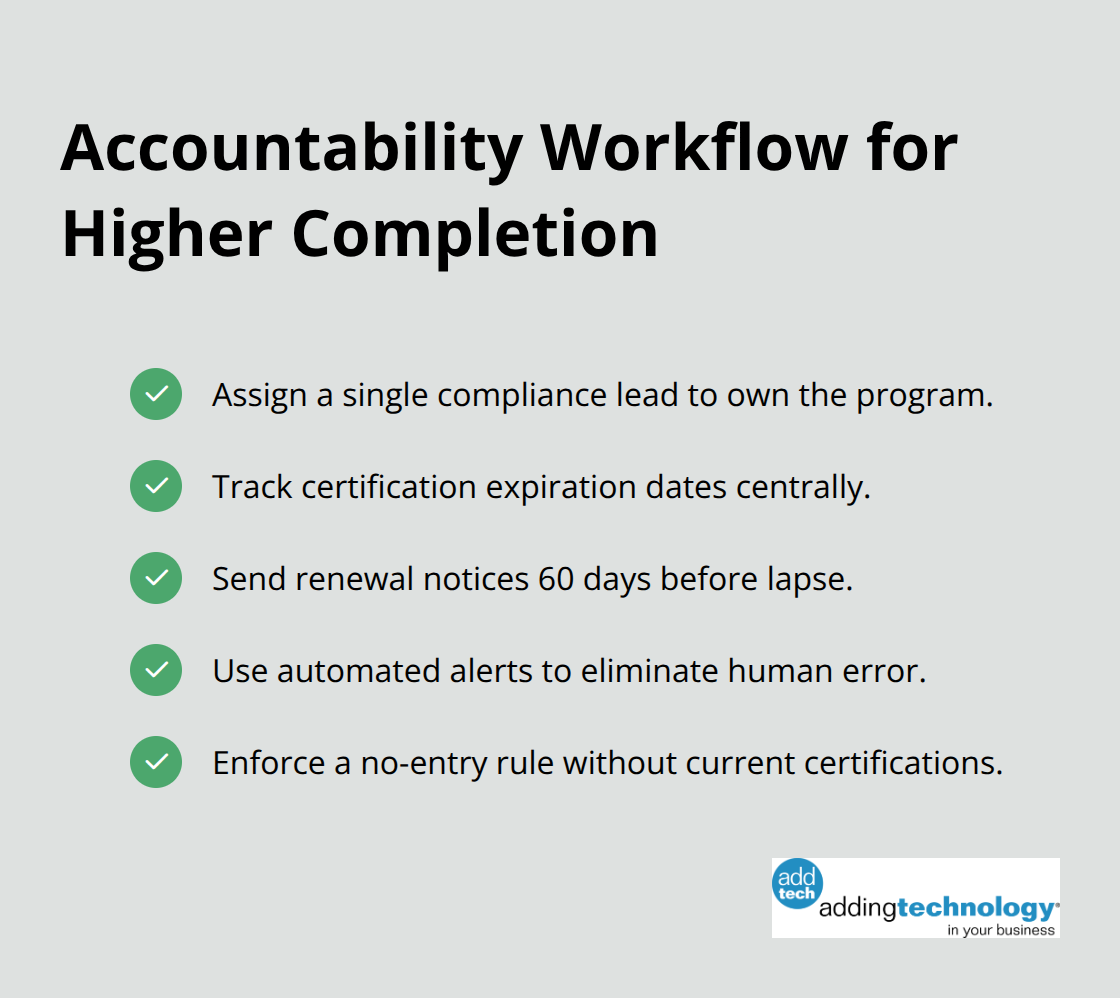
Automated alerts eliminate the human error that causes lapses. Set a company policy that no worker steps onto a jobsite without current certifications, and enforce it consistently. When you make compliance non-negotiable, your team understands it matters and compliance rates climb above 90 percent.
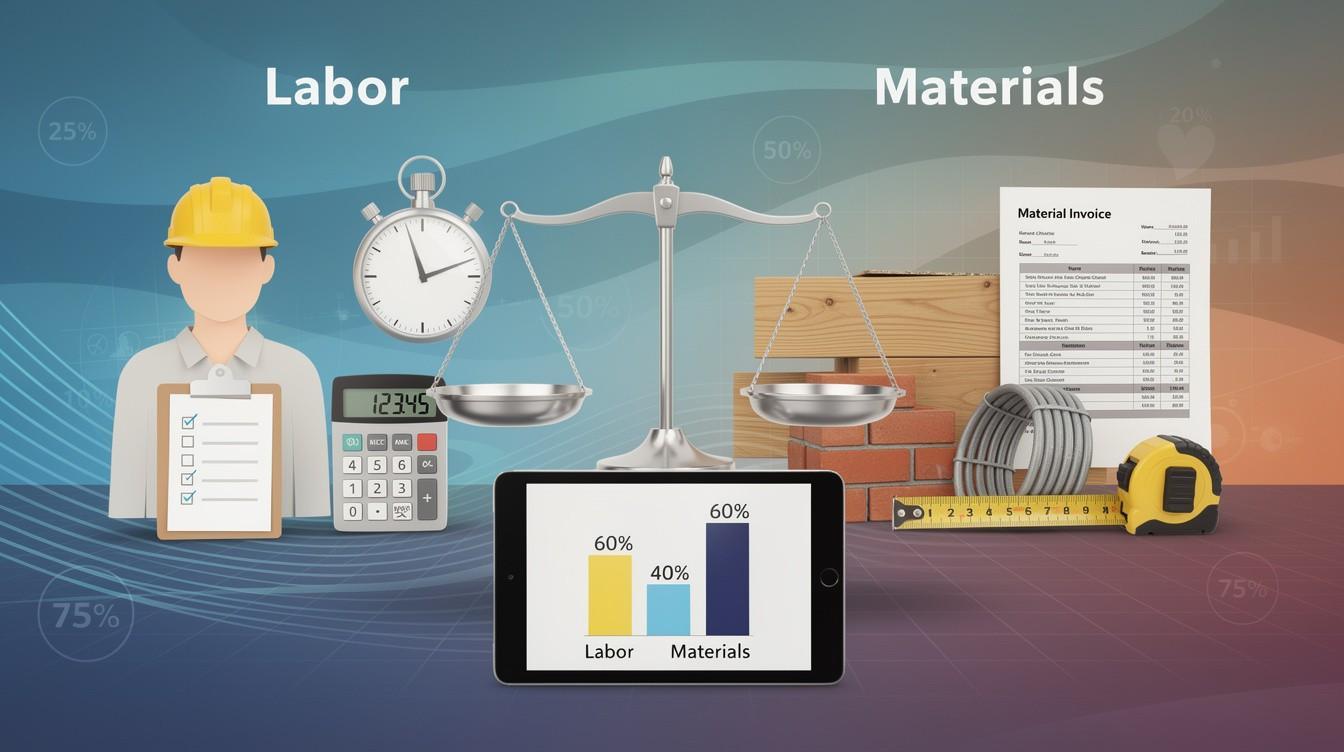
Track completion in your training platform and pull monthly reports showing which certifications expire soon and which team members are behind. This data also feeds into your financial planning-you know exactly how much compliance training costs monthly, which improves your project bidding accuracy and reveals true labor overhead that many contractors miss entirely. When you understand these costs in real time (rather than discovering them after projects close), you bid more accurately and protect your margins.
Compliance training for contractors operates as an ongoing system that protects your crew, keeps your business operating legally, and directly impacts your ability to win contracts. The contractors winning bids today have organized their compliance data, automated their renewal processes, and built training programs that stick with their teams. You now understand which regulations apply to your specific projects, how to structure training that your crew will complete, and why centralized compliance systems give you a competitive edge over competitors still managing spreadsheets.
Start by auditing your current compliance state this week-map which certifications exist, which ones expire soon, and where your gaps are. Then select a training platform that offers role-based learning, mobile access, and automated renewal reminders. Designate one person as your compliance lead and give them ownership of tracking expiration dates and enforcing your policy that no worker steps onto a jobsite without current certifications.
Compliance data connects directly to your financial management because tracking training costs, certification renewals, and compliance-related labor overhead in real time reveals your true project costs and helps you bid more accurately. Adding Technology helps construction companies streamline their financial processes so you can focus on your projects without managing complex accounting systems. Their real-time job costing and advanced technology integration give you the financial foundation you need to bid confidently while staying fully compliant.









At adding technology, we know you want to focus on what you do best as a contractor. In order to do that, you need a proactive back office crew who has financial expertise in your industry.
The problem is that managing and understanding key financial compliance details for your business is a distraction when you want to spend your time focused on building your business (and our collective future).
We understand that there is an art to what contractors do, and financial worries can disrupt the creative process and quality of work. We know that many contractors struggle with messy books, lack of realtime financial visibility, and the stress of compliance issues. These challenges can lead to frustration, overwhelm, and fear that distracts from their core business.
That's where we come in. We're not just accountants; we're part of your crew. We renovate your books, implement cutting-edge technology, and provide you with the real-time job costing and financial insights you need to make informed decisions. Our services are designed to give you peace of mind, allowing you to focus on what you do best - creating and building.
Here’s how we do it:
Schedule a conversation today, and in the meantime, download the Contractor’s Blueprint for Financial Success: A Step by-Step Guide to Maximizing Profits in Construction.” So you can stop worrying about accounting, technology, and compliance details and be free to hammer out success in the field.