Financial Controls for Builders: Strengthening Governance
Strengthen your construction company with financial controls for builders. Learn governance best practices to prevent fraud and improve accountability.

Most construction companies we work with at adding technology are running accounting, payroll, and job costing on separate platforms. That fragmentation costs you time, money, and accuracy.
Integrated financial software brings everything together in one place. When your systems talk to each other, you stop losing hours to manual data entry and start seeing real numbers about what each project actually costs.
Running accounting, payroll, and job costing on separate platforms creates real financial damage that extends far beyond the annoyance of switching between systems. The numbers tell a clear story. Most contractors spend between 10 and 15 hours per week moving data between systems, reconciling discrepancies, and hunting for information that should be instantly available. That adds up to roughly 500 to 750 hours annually per finance person-time that could go toward analyzing profitability or supporting growth instead.
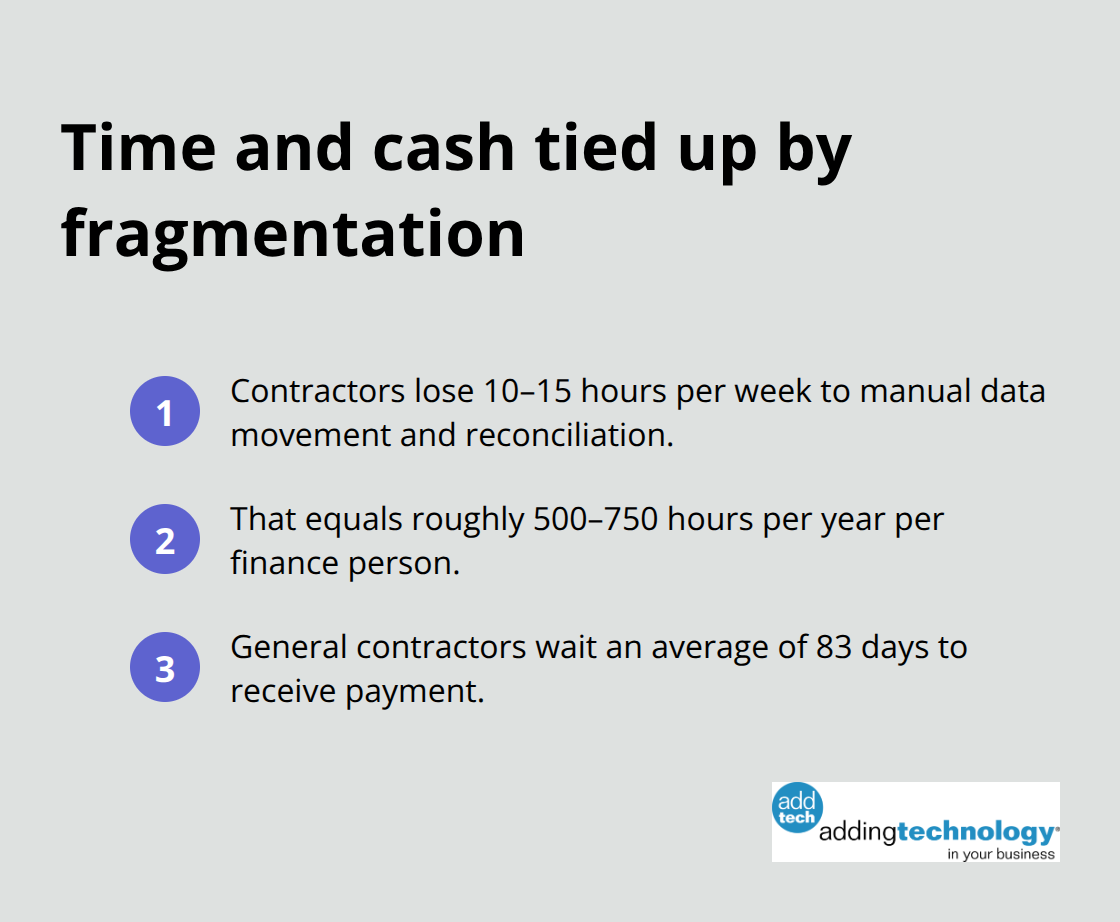
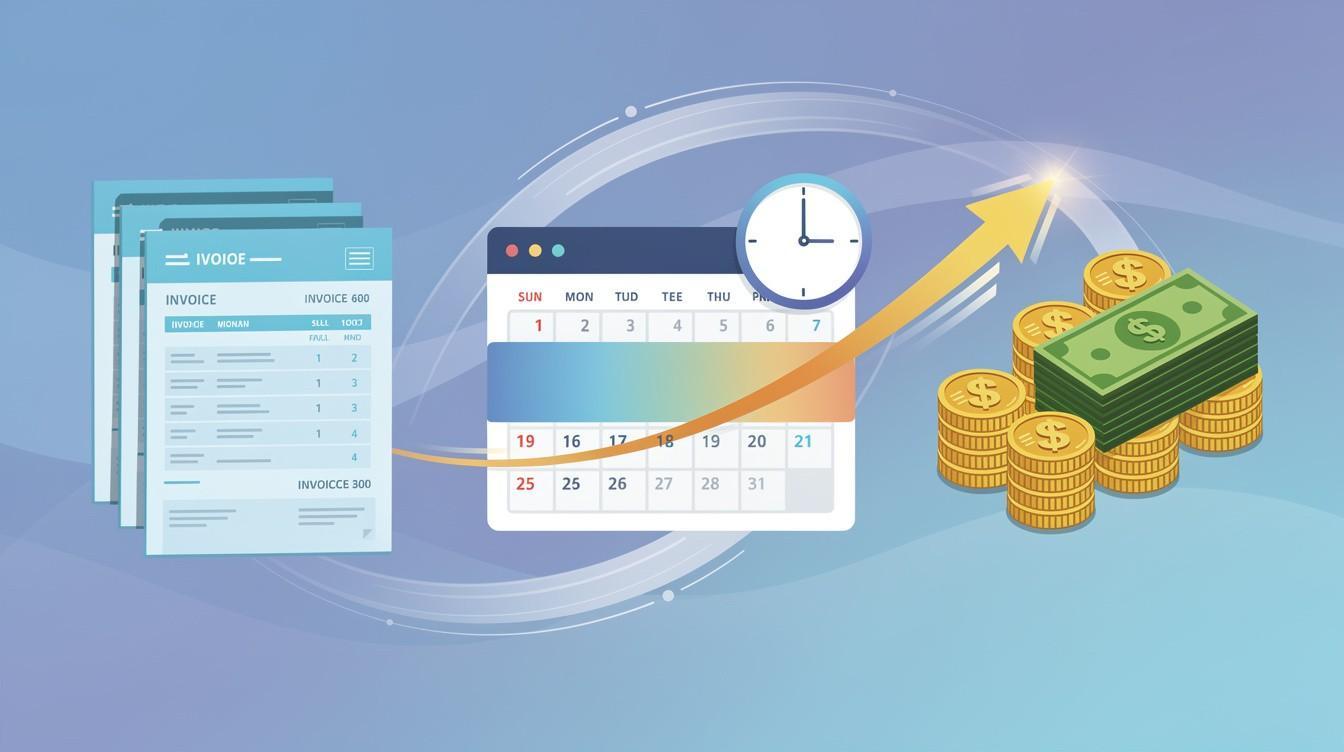
Fragmented systems introduce data errors that directly hit your bottom line. When job costing data lives in one system, payroll in another, and general ledger entries in a third, mismatches become inevitable. A single transcription error in labor hours can throw off your entire project margin calculation. Disconnected accounting and payment systems slow construction cash flow by delaying invoicing, payment application, and financial visibility. When you cannot see real-time labor costs against your budget, or when invoices and payments get stuck in manual workflows, cash flow suffers. General contractors typically wait an average of 83 days to receive payment, and that cycle stretches even longer when your billing process depends on manually compiling data from multiple platforms.
Reconciling accounts between separate systems consumes time that compounds monthly. If your accounting team spends three hours monthly cross-checking payroll records against general ledger entries, that amounts to 36 hours annually on a task that should happen automatically. Multiple software licenses add up quickly too-many contractors pay for accounting software, a separate job costing module, payroll processing, and project management tools that partially overlap in functionality. Consolidating these into a single integrated platform typically reduces your software footprint and eliminates redundant features.
Real-time visibility into project profitability becomes possible only when all financial data flows into one place. When payroll posts automatically to the correct job and cost code, when invoices generate directly from project completion data, and when payments reconcile without manual entry, your team can focus on decisions that matter. Your finance team stops chasing numbers and starts analyzing them. The difference between knowing your margins three weeks after project completion and knowing them in real time determines whether you catch cost overruns early or discover them too late.
Each disconnected system creates friction that slows your entire operation. Your field teams submit timecards that someone manually enters into payroll. Your project managers track costs in one tool while accounting records them elsewhere. Your billing department waits for data from multiple sources before generating invoices. These delays compound into longer cash cycles, delayed decision-making, and missed opportunities to correct course on struggling projects. The construction market is recovering with renewed stability and rising opportunities, but competition is heating up-and well-managed firms with clear financial visibility win more work.
Integrated financial software eliminates these friction points and gives you the foundation to make faster, smarter decisions about your projects and your business.
When job costing, payroll, and accounting operate as one system instead of three separate ones, your finance team stops fighting data and starts controlling it. Real-time job costing means labor costs, material expenses, and overhead allocations post to the correct project and cost code the moment they occur. You no longer wait for payroll cycles to complete before knowing whether a project runs over budget. You no longer discover margin problems weeks after the work finishes.
When a project starts bleeding money, you catch it within days, not months. That early warning system lets you adjust staffing, renegotiate supplier terms, or modify the scope before the damage compounds. Your team responds to cost overruns faster because the data arrives instantly instead of trickling in from disconnected systems.
Invoice generation and payment collection accelerate dramatically when billing flows directly from project completion data. Instead of manually compiling labor hours, material costs, and change orders from multiple platforms, your system generates invoices automatically based on actual project performance. General contractors face significant delays when invoicing depends on manual workflows, and that delay worsens when data comes from disconnected systems.
Integrated software shortens that cycle by automating invoice creation and enabling customers to pay through secure digital channels. When a customer pays online, the system applies the payment to the correct invoice and reconciles it in your general ledger instantly, eliminating manual posting steps. Your accounts receivable team moves from processing payments to analyzing trends and identifying which clients pay fastest.
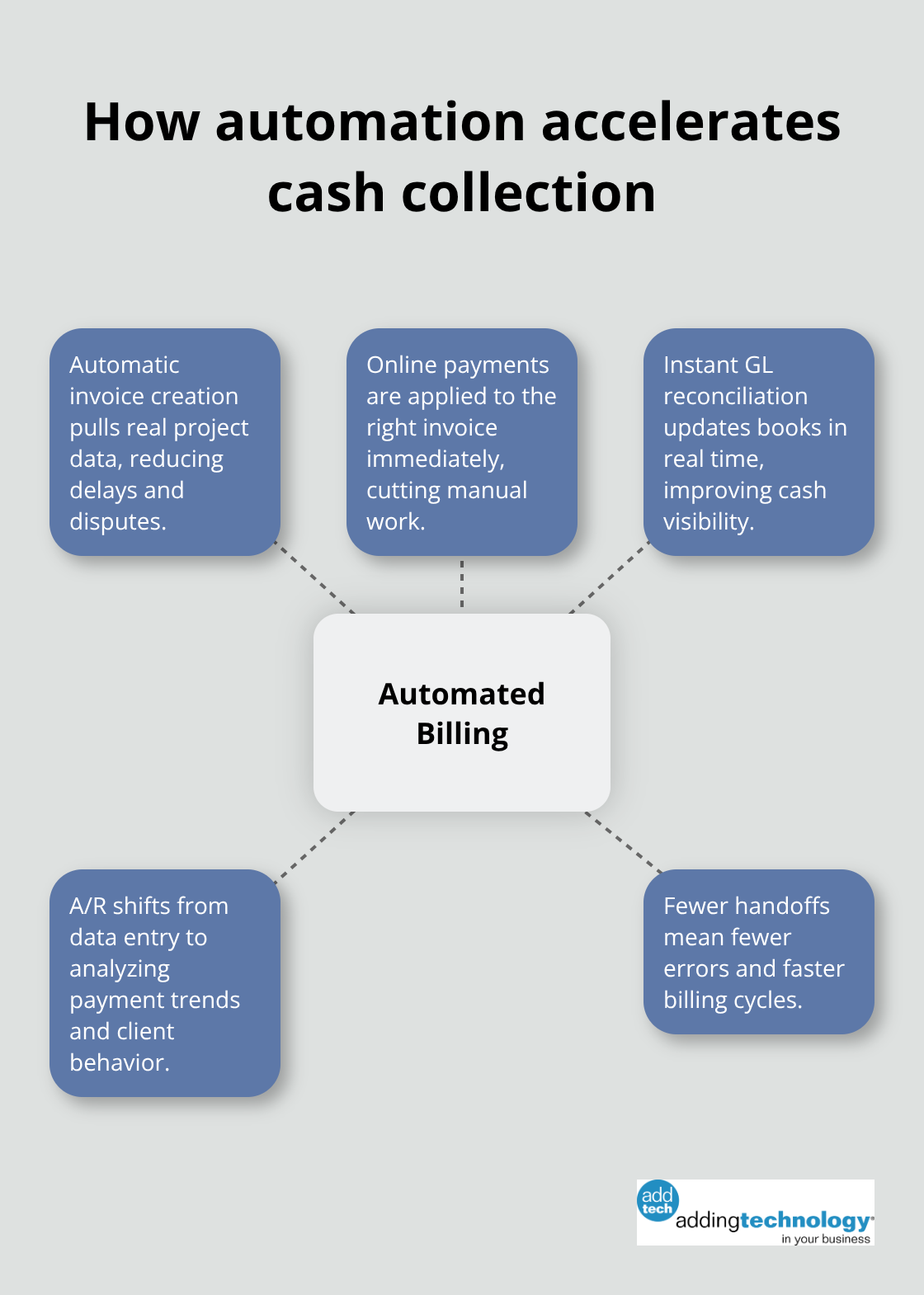
Payroll integration handles certified or union requirements automatically, reducing compliance risk and freeing your HR team from data entry. Equipment depreciation, asset allocation, and intercompany eliminations occur without spreadsheets or month-end scrambling. The financial visibility you gain from this integration reveals which projects actually generate profit and which ones hide losses in disconnected spreadsheets.
Your finance team stops chasing numbers across multiple systems and starts analyzing the patterns that drive your business forward. This shift from reactive data collection to proactive financial analysis positions you to make smarter decisions about resource allocation, pricing, and growth. The next step involves selecting the right integrated platform for your specific operation and company size.
Start by mapping exactly where your current pain lives. Most contractors discover their biggest friction points only after sitting down to document their actual workflows. Spend time with your finance team, project managers, and field supervisors asking where they waste the most time and where errors creep in. Does your accounting team spend hours each month reconciling payroll against the general ledger? Does your project manager manually enter labor costs into job costing because payroll and job costing don’t talk to each other? Does billing get delayed because invoices require data from three different systems? These specific pain points should drive your software evaluation, not generic feature lists. Write them down with rough time estimates-this becomes your baseline for measuring whether a new system actually delivers value.
Construction software ranges from QuickBooks Online enhanced with job costing modules to enterprise systems like Sage Intacct Construction or CMiC. Your company size and project complexity determine which tier makes sense. Small contractors managing fewer than five concurrent projects often succeed with QuickBooks Online paired with integrated job costing tools like Knowify, which provides AIA-style progress billing and real-time project controls without the overhead of a full enterprise system. Mid-market contractors running 10 to 30 projects simultaneously typically need deeper capabilities-Sage 300 CRE offers over 1,400 pre-built reports and handles complex payroll requirements, while Jonas Construction Software and Premier Construction Software deliver cloud-native platforms with real-time forecasting and KPI dashboards built for teams managing multiple concurrent jobs. Large contractors with 50-plus projects and multiple entities benefit from single-database systems like CMiC, where postings to project ledgers and the general ledger happen simultaneously, eliminating the reconciliation work that plagues fragmented operations. The wrong choice here wastes implementation time and money-overshooting with enterprise software when you need mid-market functionality creates unnecessary complexity, while undershooting leaves you outgrowing the system within two years.
Implementation projects for construction accounting software require a dedicated project manager, budget allocation, and realistic timelines-typically 3 to 6 months for mid-market systems. Start with your core financial foundation: general ledger, accounts payable, accounts receivable, and payroll. Once that foundation runs smoothly, layer in job costing and project management integrations.
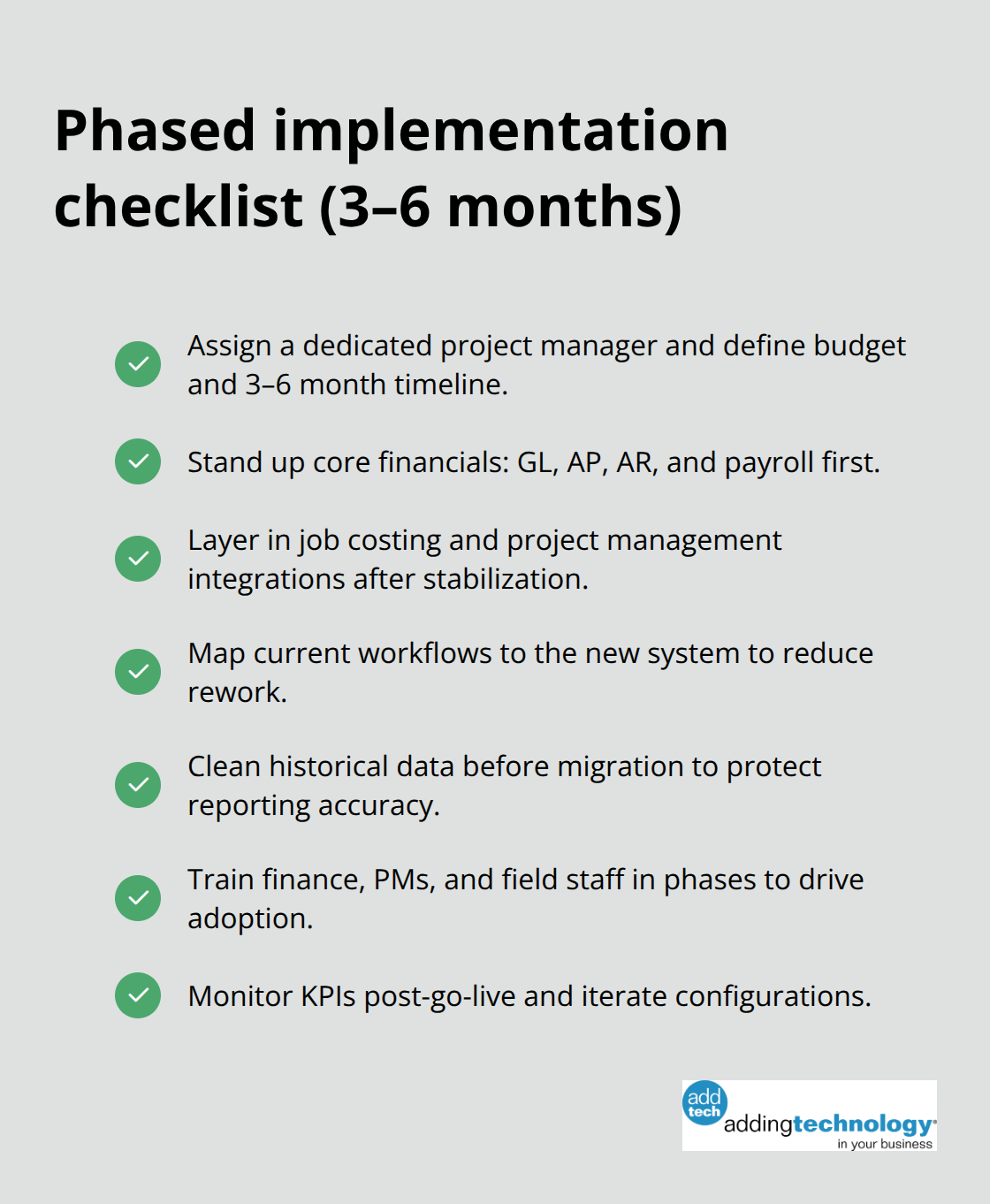
This phased approach minimizes disruption to your operations and lets your team learn the system without overwhelming them.
Data migration from legacy systems introduces risk, so allocate time for cleaning historical data before importing-incomplete or incorrect historical job costs will poison your reporting from day one. Many contractors underestimate the process re-engineering required; your current workflows likely depend on spreadsheets and manual steps that the new system eliminates or changes. Work with your software vendor to map your specific construction workflows before implementation begins, not after. This upfront work prevents costly surprises during go-live and accelerates user adoption when your team understands how the new system supports their actual work.
Fragmented financial systems drain your time, hide your margins, and slow your cash cycle. Integrated financial software eliminates these inefficiencies by bringing job costing, payroll, accounting, and invoicing into one unified system where data flows automatically instead of getting stuck in manual workflows. When your systems work together, your finance team stops chasing numbers and starts analyzing them, which means faster decisions about cost overruns, smarter resource allocation, and clearer visibility into which projects actually generate profit.
The right software investment pays for itself through better cash flow management and reduced reconciliation work. Contractors who move from fragmented systems to integrated platforms typically reduce their cash cycle by weeks, catch cost overruns before they spiral, and reclaim hours of monthly work that spreadsheets once consumed. That time and money translate directly into stronger margins and faster growth in a market where well-managed firms with clear financial visibility win more work.
Start by documenting your current pain points with your finance team and project managers, then evaluate integrated financial software that matches your company size and project complexity. We at adding technology help construction companies streamline their financial processes and implement real-time job costing so you can focus on your projects instead of chasing spreadsheets. Contact us to discuss how the right financial system can strengthen your operation.











At adding technology, we know you want to focus on what you do best as a contractor. In order to do that, you need a proactive back office crew who has financial expertise in your industry.
The problem is that managing and understanding key financial compliance details for your business is a distraction when you want to spend your time focused on building your business (and our collective future).
We understand that there is an art to what contractors do, and financial worries can disrupt the creative process and quality of work. We know that many contractors struggle with messy books, lack of realtime financial visibility, and the stress of compliance issues. These challenges can lead to frustration, overwhelm, and fear that distracts from their core business.
That's where we come in. We're not just accountants; we're part of your crew. We renovate your books, implement cutting-edge technology, and provide you with the real-time job costing and financial insights you need to make informed decisions. Our services are designed to give you peace of mind, allowing you to focus on what you do best - creating and building.
Here’s how we do it:
Schedule a conversation today, and in the meantime, download the Contractor’s Blueprint for Financial Success: A Step by-Step Guide to Maximizing Profits in Construction.” So you can stop worrying about accounting, technology, and compliance details and be free to hammer out success in the field.