Command financial management systems transform how organizations track, analyze, and control their financial operations. These specialized platforms go beyond traditional accounting by providing real-time visibility and centralized command over complex financial workflows.
At adding technology, we’ve seen businesses reduce financial processing time by up to 40% after implementing these systems. The key lies in proper planning and execution of the rollout process.
What Makes Command Financial Management Different
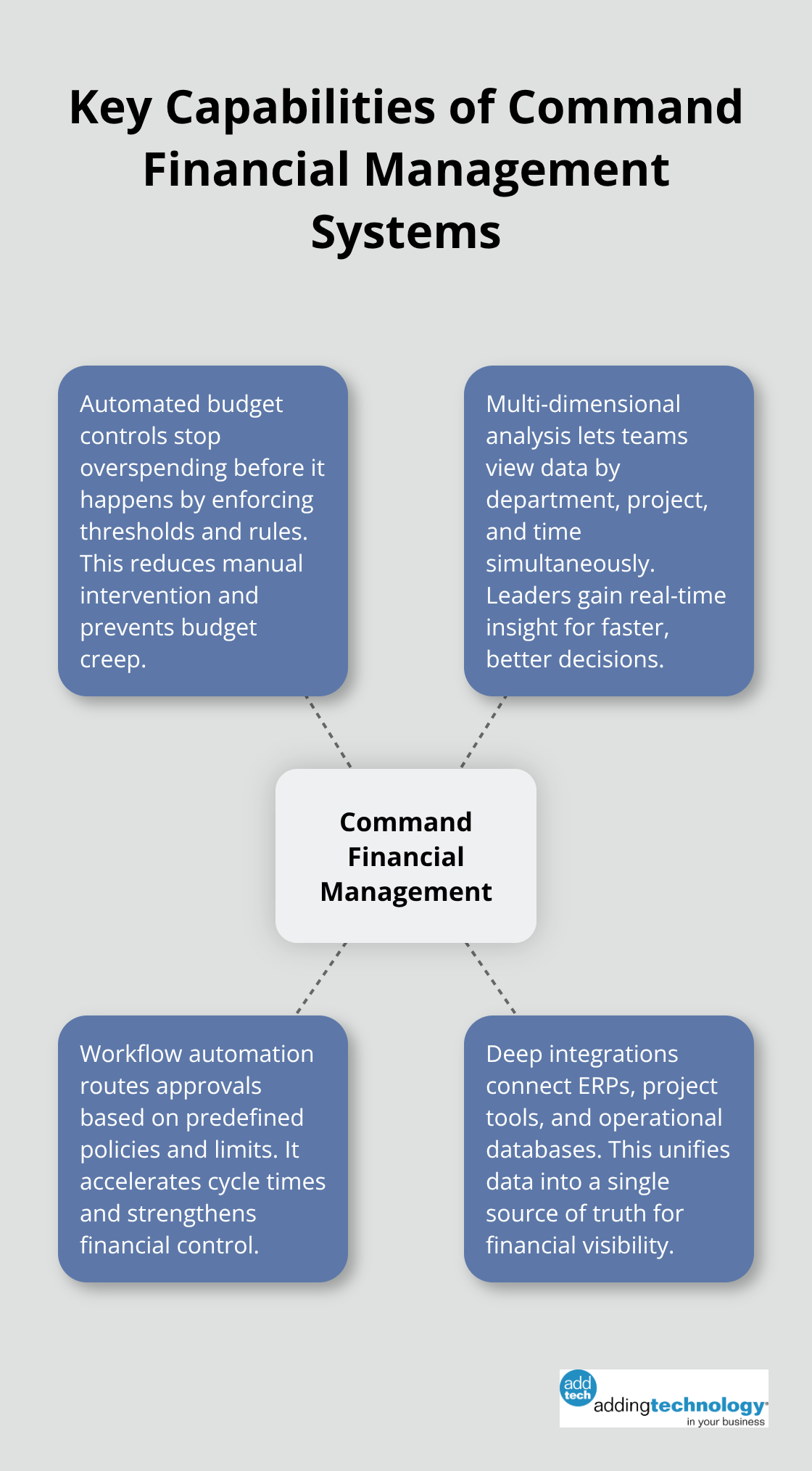
Command financial management systems operate as centralized control hubs that consolidate multiple financial functions into a single platform. Traditional accounting software focuses primarily on transaction records, while these systems provide real-time financial command and control capabilities. The core components include automated budget tracking, multi-dimensional reports, integrated compliance monitors, and predictive analytics that help organizations make proactive financial decisions rather than reactive ones.
Real-Time Financial Control vs Traditional Bookkeeping
Traditional accounting systems record yesterday’s events, while command financial management systems show current activity and predict future trends. These platforms integrate directly with operational systems to capture financial data as transactions occur. The federal government has seen significant progress in financial management since the passage of the CFO Act more than 30 years ago. Command systems also feature automated workflow approvals, exception-based alerts, and integrated risk management tools that traditional accounting software cannot match.
Organizations That Need Command-Level Financial Management
Large construction companies, government contractors, and multi-location businesses benefit most from command financial management systems. Organizations that manage complex project portfolios, multiple funding sources, or strict compliance requirements see the greatest impact. Companies with annual revenues above $50 million typically experience significant reduction in month-end closing time. Manufacturing companies with multiple cost centers, healthcare organizations that manage diverse revenue streams, and professional services firms that track billable hours across projects represent the primary beneficiaries.
Key Features That Set Command Systems Apart
Command systems deliver automated budget controls that prevent overspends before they occur. These platforms provide multi-dimensional analysis across departments, projects, and time periods simultaneously. Advanced workflow engines route approvals based on predefined rules and thresholds.
Integration capabilities connect with existing ERP systems, project management tools, and operational databases to create a unified financial view.
The implementation process requires careful assessment of current financial workflows to identify the gaps that command systems will address.
How Do You Execute Command Financial Management Implementation
Conduct Comprehensive Financial Process Audit
Start implementation with a thorough assessment of existing financial workflows, data sources, and reporting requirements. Document every manual process, approval chain, and data entry point that your organization currently uses. The U.S. Government Accountability Office reports that Congress and agencies had fully addressed 71 percent of identified matters and recommendations as of March 2025. Map current financial data flows from source systems to final reports and identify bottlenecks where staff spend excessive time on manual reconciliation or duplicate data entry.
Focus particularly on month-end procedures, budget approval workflows, and compliance requirements. Most organizations discover 3-5 major process gaps during this phase that command systems can address directly. This audit reveals exactly where your current system fails to meet operational demands.
Platform Selection and Resource Planning Strategy
Choose software based on integration capabilities with existing systems rather than feature lists alone. Command financial management platforms must connect seamlessly with your ERP, project management tools, and operational databases to deliver real-time visibility. The Federal Financial Management Improvement Act supports uniform financial systems that are focused on business and aim for shorter-term, lower-cost financial modernization.
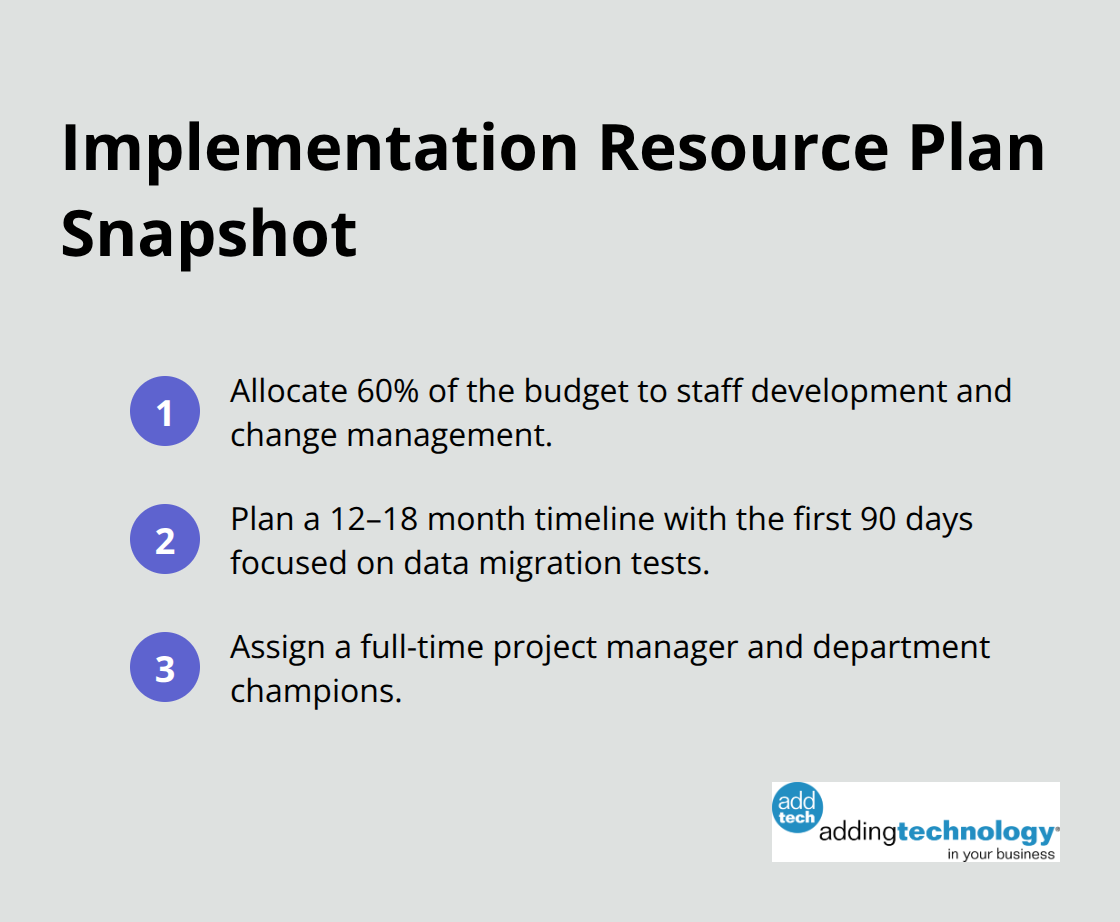
Allocate 60% of implementation budget to staff development and change management, not just software costs. Plan for 12-18 month implementation timeline for organizations with revenues above $100 million, with the first 90 days focused on data migration tests. Staff one full-time project manager and assign department champions who understand both current processes and desired future state workflows.
Data Migration and System Integration Framework
Test data conversion processes extensively before full migration begins. Command systems require clean, standardized data to function properly, which means addressing data quality issues in legacy systems first. Create parallel processing environments where both old and new systems run simultaneously for 30-60 days to verify accuracy.
Establish integration protocols that maintain data consistency across all connected systems. Most implementation failures occur during data migration phases when organizations rush this process. The complexity of financial data relationships demands careful validation at each step to prevent downstream reporting errors.
These technical foundations set the stage for the most challenging aspect of implementation: preparing your team for new workflows and system capabilities.
How Do You Execute Flawless Implementation
Staff Training That Drives Adoption
Staff training determines implementation success more than software features or technical specifications. Organizations that invest in comprehensive training programs see improved user adoption through proper correlation between training and user adoption practices. Schedule sessions in 2-hour blocks spread across 3-4 weeks rather than marathon sessions that overwhelm users.
Focus sessions on daily workflows each person will actually use instead of comprehensive system overviews. Department champions need advanced preparation 30 days before general rollout to become internal support resources and troubleshoot common issues. This approach builds confidence and reduces resistance to change.
Data Migration Protocols That Prevent Disasters
Data migration requires zero-tolerance validation at every checkpoint. Test processes with 20% of historical data first, then validate every account balance, transaction total, and reporting figure against source systems. The Federal Financial Management System Requirements emphasize that financial systems must produce timely, accurate, and reliable information.
Create automated validation scripts that flag discrepancies above $100 thresholds and require manual review for all variances. Run parallel systems for 60-90 days minimum (comparing daily reports between old and new platforms). Organizations that skip this validation phase face 6-12 months of data cleanup that destroys user confidence in the new system.
Performance Monitoring and Workflow Optimization
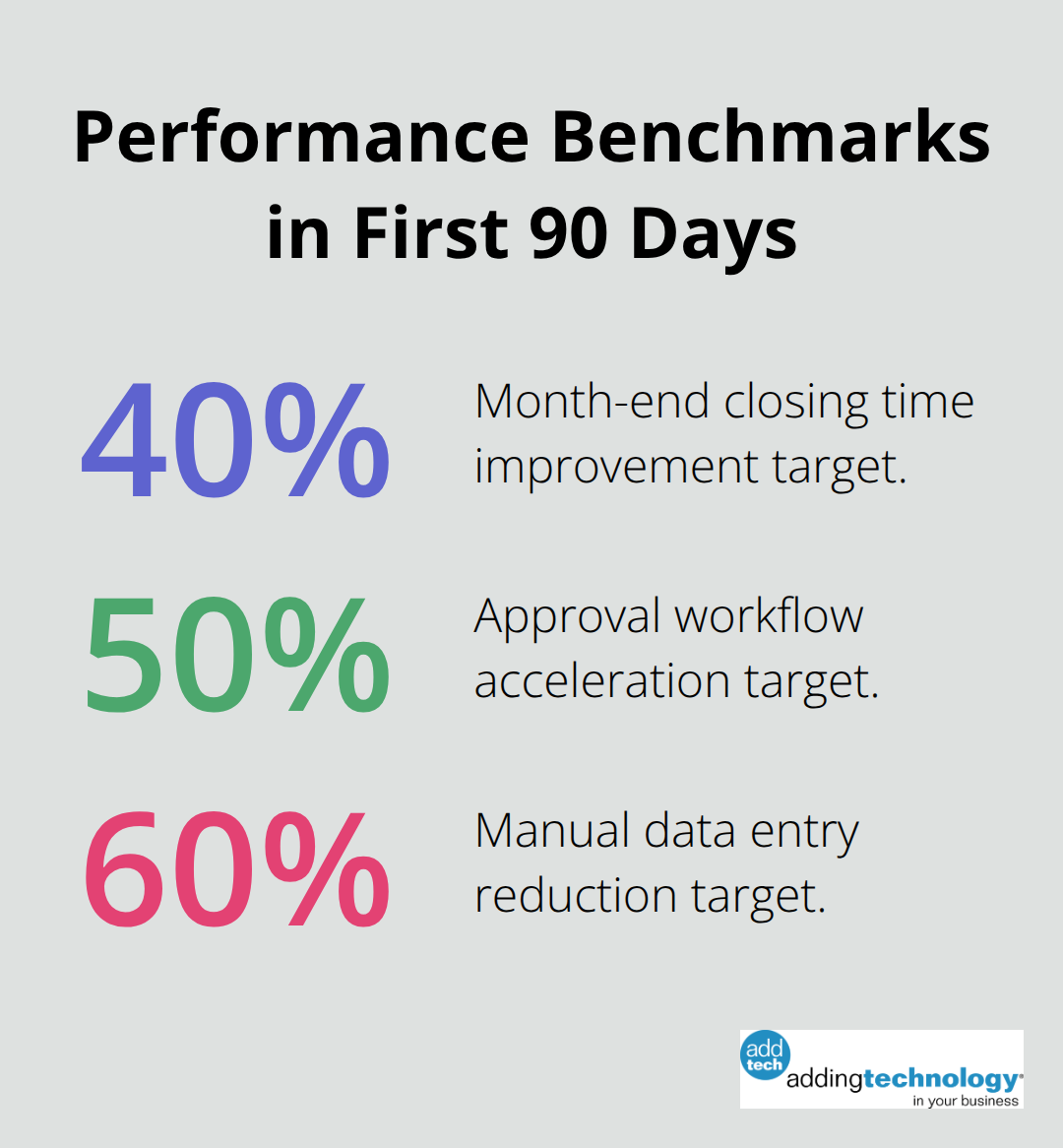
Track user adoption metrics daily during the first 90 days of deployment. Monitor login frequency, transaction processing times, and error rates by department to identify problems quickly. Set performance benchmarks based on pre-implementation baselines: month-end closing should improve by 40%, approval workflows should accelerate by 50%, and manual data entry should decrease by 60%.
Adjust workflows immediately when performance metrics decline rather than wait for quarterly reviews. The most successful implementations modify processes weekly during the first quarter based on actual usage patterns and user feedback. This proactive approach prevents small issues from becoming major obstacles.
Final Thoughts
Command financial management system implementation delivers measurable returns when you execute it properly. Organizations typically see 40% faster month-end closures, 50% reduction in manual data entry, and improved compliance scores within six months. The investment pays for itself through reduced processing costs and better financial visibility.
The biggest implementation mistakes include rushed data migration without proper validation, inadequate staff preparation, and skipped parallel system tests. Organizations that fail to allocate sufficient time for change management face prolonged adoption periods and user resistance. Poor data quality preparation creates ongoing accuracy issues that undermine system credibility.
Success requires ongoing optimization beyond initial deployment. Monitor performance metrics monthly and adjust workflows based on actual usage patterns (regular system updates and continued staff development maintain momentum and maximize your investment). We at adding technology help organizations implement these systems effectively through our expert accounting and financial management services, providing the specialized support needed for successful rollouts. Your command financial management system becomes more valuable as your team masters its capabilities and processes mature.