
Short Term Cash Reserves: Build a Financial Safety Net
Build short term cash reserves to protect your construction business from unexpected costs and keep projects on track.

Cash flow gaps between projects are one of the biggest challenges contractors face. When one job ends and the next hasn’t started generating revenue, your business can quickly run dry.
At adding technology, we’ve seen contractors lose thousands-or worse, their entire business-because they didn’t plan for these gaps. The good news is that with the right strategies and visibility tools, you can improve cash flow in your construction business and keep money flowing even during slow periods.
The timing of cash flow problems is rarely a surprise if you track your projects closely. Most contractors experience a predictable pattern: the final invoice from one job arrives weeks after work ends, while the next project hasn’t started billing yet. This gap is where cash flow dies. To manage it effectively, you need to know exactly when money stops coming in and how long your business can operate without it.
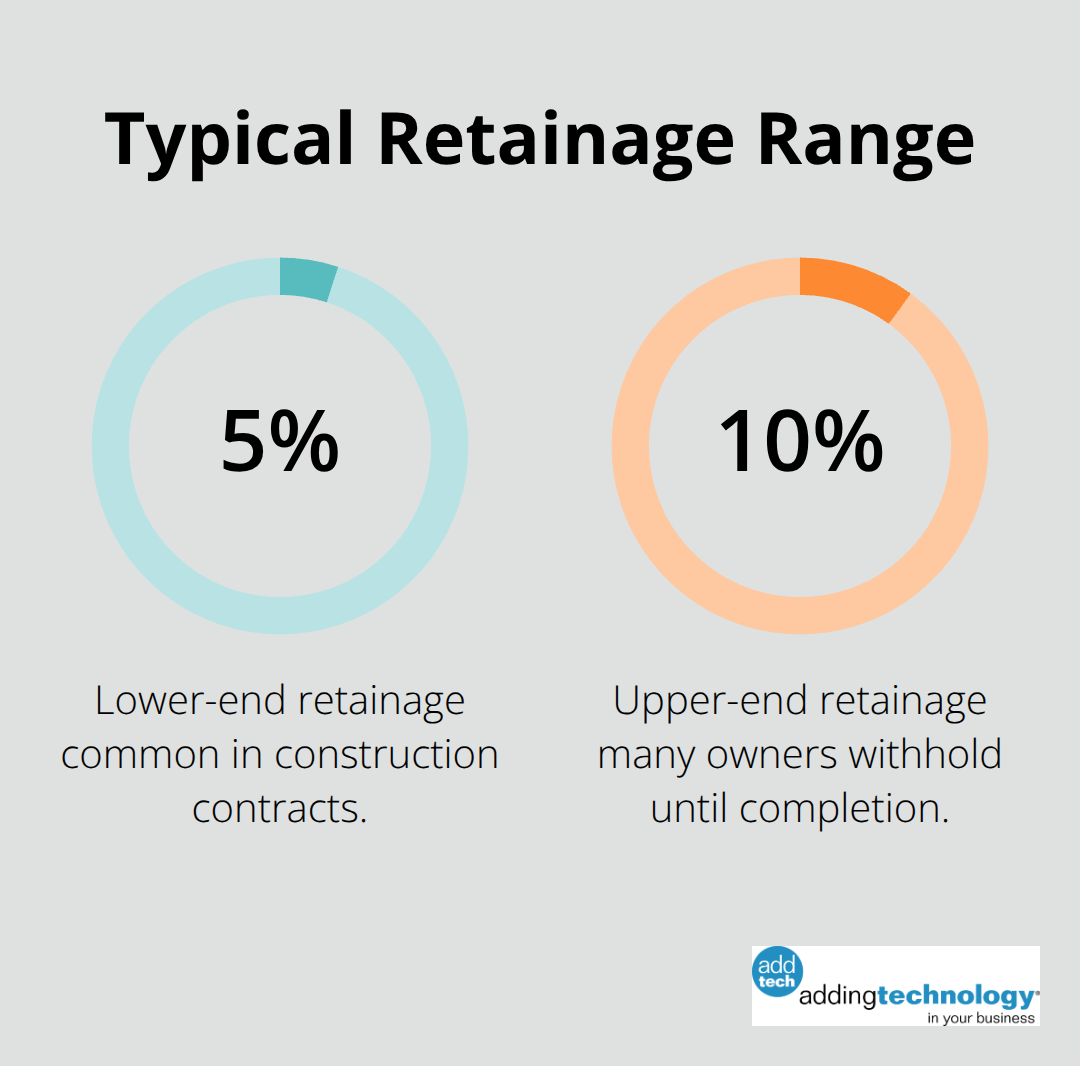
Start by mapping your project timeline against your billing cycle. If a project takes three months to complete but you don’t receive final payment until 45 days after substantial completion, that’s a real gap you must account for. Add in retainage, which typically runs 5 to 10 percent of contract value, and the shortfall grows larger.
Track your days sales outstanding, or DSO, which measures how many days pass before you collect payment after invoicing. If your DSO sits above 30 days, you’re already bleeding cash between projects. Construction companies with average gross receipts of $30 million or less have a tax advantage here: under the Tax Cuts and Jobs Act, you may use the cash method of accounting, which defers tax obligations until you actually receive payment. This approach preserves working capital during transition periods between jobs.
Your cash runway is the number of months your business can operate using existing cash reserves before running out of money. Calculate this by dividing your monthly operating expenses by your current cash balance. If you spend $75,000 monthly on payroll, overhead, and equipment and have $225,000 in the bank, your runway is three months.
That three-month window is your safety net, and it should be your minimum target. Try building a reserve equal to 9 to 12 months of operating expenses, which gives you real breathing room during seasonal slowdowns or project delays. This cushion separates contractors who survive gaps from those who don’t.
Seasonal fluctuations hit construction hard. Winter months typically bring lower project starts and slower work, while spring and summer generate higher revenue. Track which months historically produce the lowest cash inflows for your business, then front-load billing during profitable periods to build reserves.
If you know November through February will be slow, negotiate milestone payments and progress billing on summer projects to collect cash upfront. This strategy flips the timing problem: instead of waiting for payment after work ends, you receive money while work is happening. Progress billing aligns your cash inflows with actual project progress, not completion dates.
Retainage accelerates a major cash drain, so negotiate aggressively. Instead of accepting standard 5 to 10 percent retainage, propose phased releases: half at 50 percent project completion and the remainder at 75 percent. Some owners will accept a letter of credit or performance bond in place of retainage entirely.
Every percentage point you reduce retainage directly improves your cash position during project transitions. These negotiations happen at contract signing, not after work starts, so build retainage reduction into your bidding strategy from the beginning. With visibility into your cash gaps and a plan to bridge them, you’re ready to implement the specific strategies that turn cash flow from a crisis into a managed process.
Waiting for final payment after a project wraps is a luxury most contractors cannot afford. The solution is shifting your payment timing so cash arrives while work is still happening, not after it ends. Contractors who restructured how they handle payments between clients and suppliers discovered that small changes transformed their cash position from precarious to stable. The most effective approach combines three coordinated moves: frontloading supplier payments to negotiate better terms, restructuring client payments to arrive in stages tied to project milestones, and reserving profits from strong projects specifically to cover the gaps that will inevitably come.
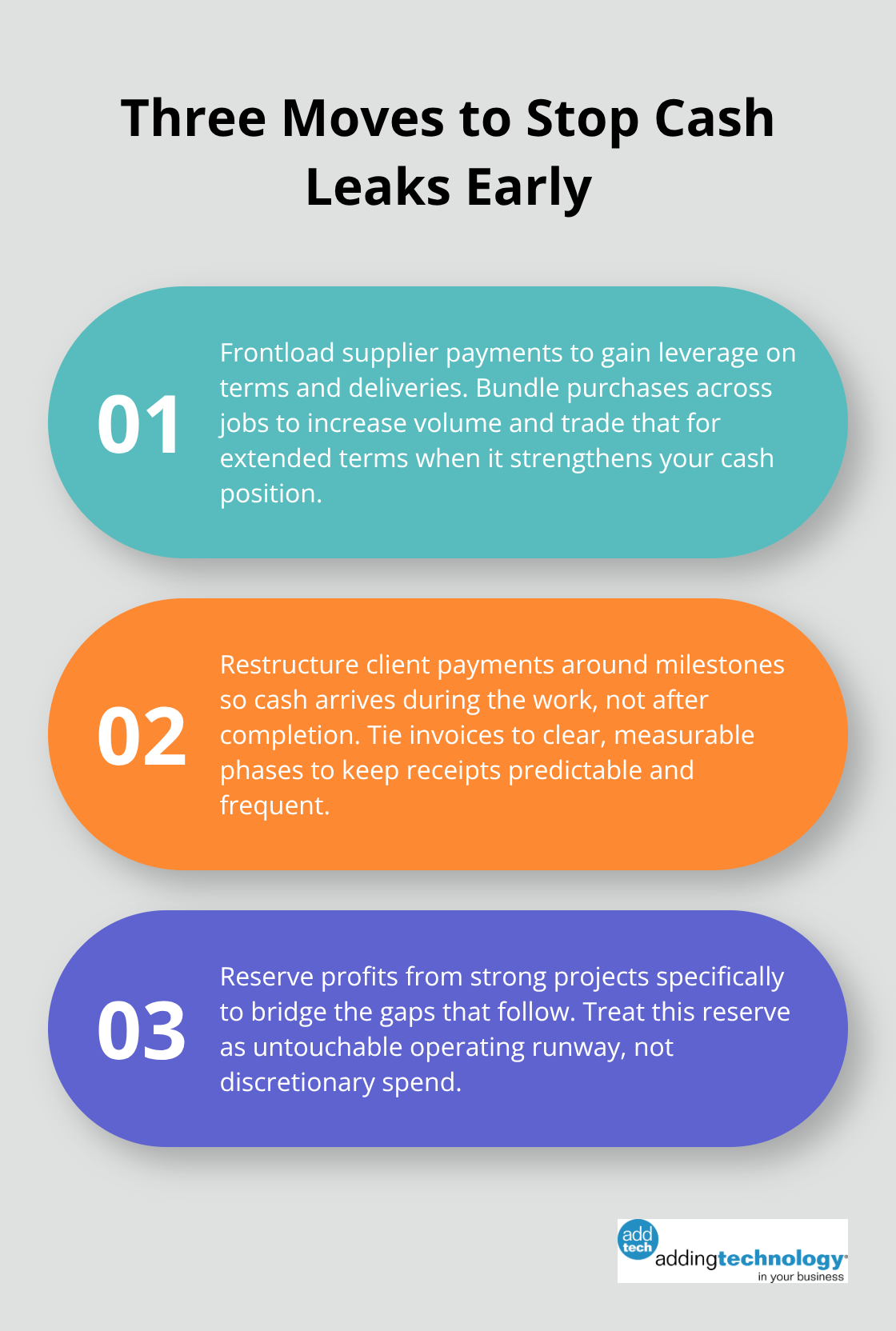
Most contractors pay suppliers on net 30 terms because they assume that is the only option. It is not. Suppliers care about volume and reliability far more than payment timing, which means you have negotiating power if you use it correctly. Start by identifying your top 3 suppliers by annual spend. If you spend $300,000 annually with a concrete supplier, that supplier wants to keep your business. Present a simple proposal: increase orders by bundling purchases across multiple jobs in exchange for extended net 45 or net 60 terms. This shift alone can free up $25,000 to $75,000 in working capital depending on your operation size. The key is timing the request during contract renewal or when you have a major project pipeline to show the supplier. Never ask for extended terms during a slow period when the supplier perceives lower risk of losing you.
Alternatively, negotiate cash discounts for early payment only after you confirm profitability on a project. If a supplier offers a 2 percent discount for payment within 10 days instead of 30, calculate whether that discount justifies accelerating your cash outflow. Most of the time it does not unless you are sitting on excess cash reserves. The math is straightforward: a 2 percent discount over 20 days equals roughly 36 percent annualized return, which sounds attractive until you factor in the opportunity cost of cash you need for payroll or material purchases on your next job.
Progress billing and milestone payments are not optional if you want healthy cash flow between projects. They are the difference between collecting 100 percent of your revenue after work finishes and collecting 60 to 70 percent while work is underway. Restructure your contracts so payment schedules align with specific project phases: 25 percent at mobilization and site setup, 25 percent at structural completion, 25 percent at systems installation, and final 25 percent at substantial completion. This approach means you are never more than a few weeks away from a payment, and retainage becomes a smaller percentage of your total contract value because most money has already arrived.
Owners understand this structure because it reduces their risk too. Document each milestone clearly in the contract with measurable criteria so disputes cannot delay payment. If you currently invoice monthly on time-and-materials projects, switch to invoicing every two weeks tied to specific deliverables. Weekly invoicing may seem excessive, but it dramatically reduces your days sales outstanding and keeps cash flowing consistently.
For fixed-price work, implement percentage-of-completion billing where you invoice based on the percentage of project budget spent or schedule completed. This method requires accurate job costing data, which means your accounting system must track costs by project in real time. If your current system cannot do this, that capability becomes your highest technology priority because it directly impacts cash flow. Many contractors resist frequent invoicing because it feels like more administrative work, but the alternative is funding your clients’ projects with your own cash for 60 or 90 days after work completes. That choice will eventually bankrupt you if projects are large enough.
Real-time job costing systems eliminate the guesswork from percentage-of-completion calculations. When your accounting system captures labor, materials, and equipment costs as they occur on each job, you know exactly how much of the project budget you have spent and can invoice with confidence. This visibility also prevents underbilling, which drains cash flow faster than almost any other mistake. With accurate cost tracking in place, you move from reactive cash management (hoping money arrives) to proactive cash management (knowing exactly when money will arrive and how much it will be). This shift in control is what separates contractors who survive gaps between projects from those who struggle through them.
The difference between contractors who manage cash flow gaps and those who fail is visibility. You cannot manage what you cannot see, and most contractors operate with a 30 to 60-day delay in understanding their true financial position. Their accounting systems capture costs weeks after they occur, invoices go out days after work completes, and cash flow forecasts rely on estimates rather than actual data. This pattern is why contractors struggle between projects. The solution is moving to real-time systems that show you exactly where your cash stands and where it will be in the next 90 days.
Real-time job costing is not a nice-to-have feature; it is the foundation of cash flow control. When your accounting system captures labor, materials, and equipment costs as they happen on each job, you know immediately how much of your project budget you have spent and how much remains. This means you can invoice accurately without guessing at percentage-of-completion, which prevents the underbilling that destroys cash flow between projects. More importantly, real-time cost data reveals budget overruns before they become catastrophic. If a project trends 15 percent over budget, you spot it at week four, not week twelve when the damage is done.
QuickBooks data shows that 25 percent of construction companies risk insolvency after just two or three unprofitable projects, which underscores how quickly cost visibility failures compound into cash emergencies. Automated invoicing tied to this cost data means you invoice every milestone or every two weeks rather than waiting for project completion. When invoicing happens more frequently, your days sales outstanding drops from 45 days to 20 days, which directly translates to cash arriving weeks earlier. That timing shift alone can close the gap between projects without requiring additional capital.
Cash flow forecasting tools transform guesswork into precision planning. These systems project your cash position 13 weeks forward by analyzing your project schedule, milestone payments, retainage timing, and operating expenses. You input your active projects and their expected billing dates, and the system calculates when cash arrives and when obligations are due. Most construction accounting software now includes this capability. The forecast alerts you when a shortfall is coming, which gives you 8 to 12 weeks to secure a line of credit, negotiate faster collections, or adjust project scheduling rather than discovering the problem when your payroll check bounces.
Federal Reserve rate hikes have pushed borrowing costs to 15-year highs, making that advance planning essential. A contractor drawing $1.5 million on a line of credit faces roughly $75,000 in additional annual interest when rates move from 3 to 8 percent. If forecasting tools give you three months’ notice to avoid that draw, the value is obvious.
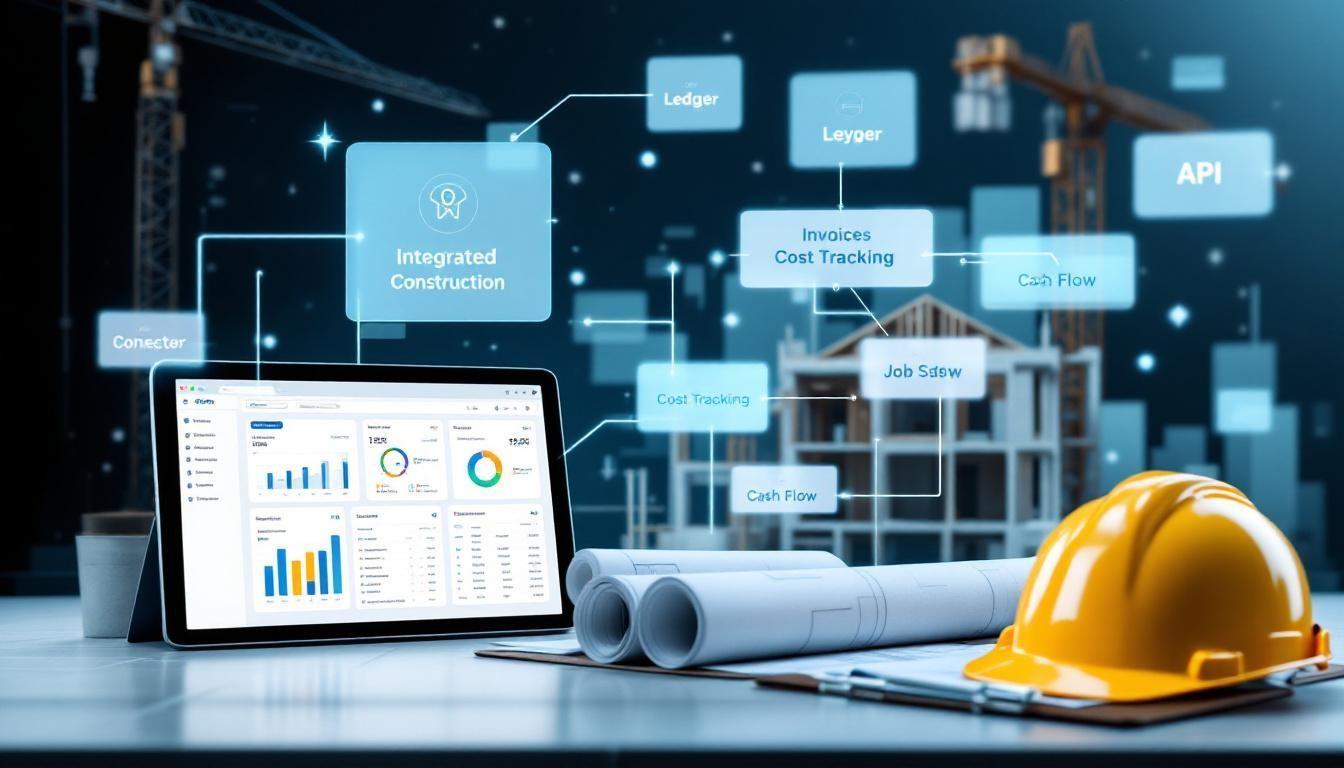
Integration between your job costing system, invoicing platform, and forecasting tool is critical. When these systems talk to each other automatically, your forecast updates in real time as costs occur and invoices post. Manual data entry between systems introduces delays and errors that defeat the entire purpose of visibility. Fragmented systems create the very gaps you are trying to eliminate.
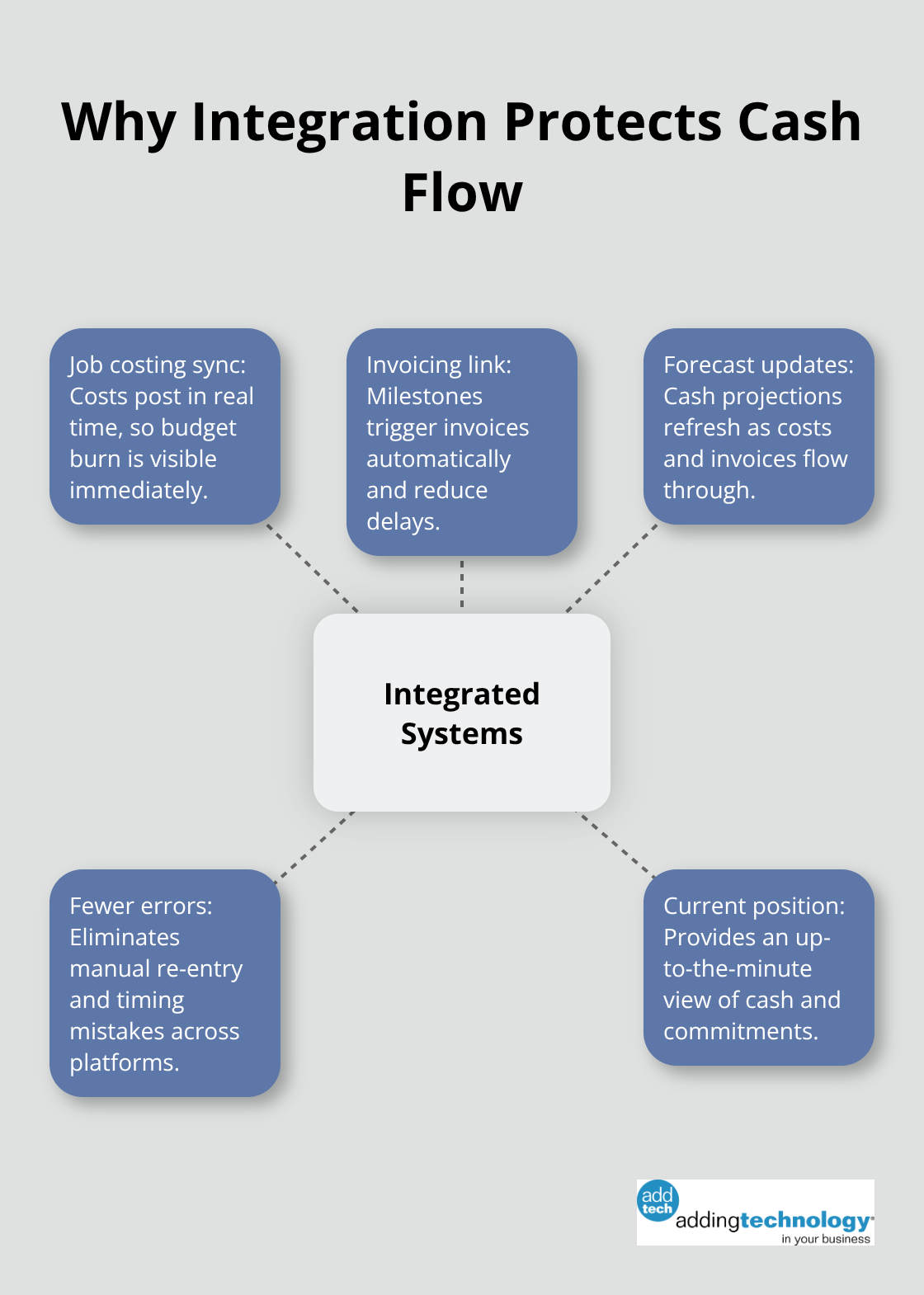
Construction accounting software that consolidates job costing, invoicing, and forecasting in one platform eliminates these handoffs and keeps your cash position current at all times.
Cash flow gaps between projects are predictable, manageable, and solvable. The contractors who thrive treat cash flow as a process, not a crisis. You now have three concrete strategies: map your project timeline and billing cycle to identify exactly when gaps occur, negotiate supplier terms and restructure client payments to shift cash inflows earlier, and implement real-time systems that show you where your cash stands today and where it will be in 90 days.
Technology eliminates the delays that make cash flow unpredictable. Real-time job costing, automated invoicing, and cash flow forecasting tools give you control over your construction business finances. When your accounting system captures costs as they happen and ties them to invoices automatically, you move from hoping money arrives to knowing exactly when it will arrive and how much it will be.
Adding Technology offers expert accounting and financial management services tailored for the construction industry, including real-time job costing and advanced technology integration designed specifically for your cash flow challenges. Audit your current invoicing and payment collection process, calculate your cash runway, and identify which strategy will have the biggest impact on your situation. Start with one change, measure the result, and watch small improvements in cash flow timing compound quickly across multiple projects as you improve cash flow in your construction business.









At adding technology, we know you want to focus on what you do best as a contractor. In order to do that, you need a proactive back office crew who has financial expertise in your industry.
The problem is that managing and understanding key financial compliance details for your business is a distraction when you want to spend your time focused on building your business (and our collective future).
We understand that there is an art to what contractors do, and financial worries can disrupt the creative process and quality of work. We know that many contractors struggle with messy books, lack of realtime financial visibility, and the stress of compliance issues. These challenges can lead to frustration, overwhelm, and fear that distracts from their core business.
That's where we come in. We're not just accountants; we're part of your crew. We renovate your books, implement cutting-edge technology, and provide you with the real-time job costing and financial insights you need to make informed decisions. Our services are designed to give you peace of mind, allowing you to focus on what you do best - creating and building.
Here’s how we do it:
Schedule a conversation today, and in the meantime, download the Contractor’s Blueprint for Financial Success: A Step by-Step Guide to Maximizing Profits in Construction.” So you can stop worrying about accounting, technology, and compliance details and be free to hammer out success in the field.