
Financial Reports Contractors Should Review to Track Construction Profitability
Review essential financial reports for bid profitability optimization and better construction project tracking and cash flow management.

Most construction and service businesses lose money without realizing it. Poor financial tracking, hidden project costs, and guesswork on pricing drain profits every single month.
At adding technology, we’ve seen firsthand how precise financial management transforms operations. When you track every expense by project, automate routine tasks, and use real data for pricing decisions, profitability follows.
Most construction and service businesses operate without a clear picture of their financial health. You might have invoices scattered across email, expense receipts in a shoebox, and bank transactions nobody reconciles. This isn’t unusual-it’s the norm. The first step toward precise financial management is brutally honest: document what systems you actually use today and identify what’s missing.
Pull together every tool your team touches-accounting software, spreadsheets, project management platforms, payment processors. Write down which financial tasks happen manually and which are automated. Look for data that lives in multiple places without syncing. Most businesses discover they track the same information three different ways, creating confusion and errors. The gaps become obvious once you examine them: payroll data that doesn’t connect to job costs, invoices recorded weeks after work completes, or material expenses categorized inconsistently.
Spend one afternoon documenting exactly how money moves through your business right now. This isn’t glamorous work, but it forms the foundation everything else sits on.
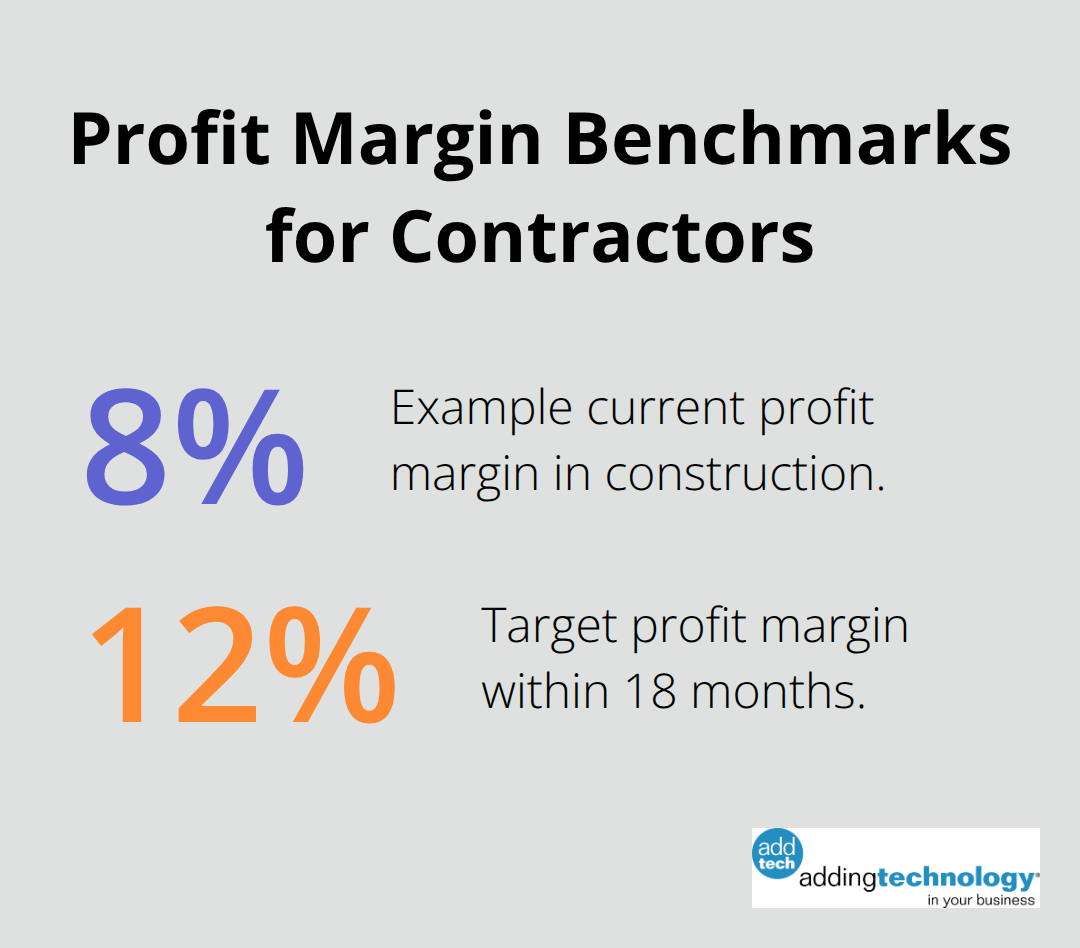
Financial goals must be specific and measurable, not vague aspirations. Instead of saying you want to be more profitable, calculate your current profit margin by dividing net profit by total revenue. If you’re running 8% margins in construction, your target might be 12% within 18 months.
Know your actual labor costs as a percentage of revenue-the industry standard hovers around 30-35% depending on your trade. Track overhead costs separately from direct project costs so you see which areas drain resources. Set a concrete cash flow target: How many days of operating expenses should you have in reserve? Industry practice suggests trying for 30-60 days of expenses in liquid savings.
Establish a specific timeline for implementing better systems-not someday, but Q2 or by June 15th. These benchmarks give your team something to chase and let you measure progress. Without them, financial management becomes reactive chaos instead of strategic action.
The gap between setting targets and hitting them widens when nobody connects those goals to actual work. Your team needs to understand how their daily decisions affect the numbers. When a project manager knows that labor costs should stay at 32% of that job’s revenue, they make different decisions about scheduling and staffing. When your accounting person sees that invoices delayed by two weeks hurt cash flow targets, they prioritize faster billing.
Share your benchmarks across the business. Post profit margin targets in the office. Include cash flow goals in team meetings. The more visible these numbers become, the more your team works toward them. This visibility transforms financial management from something the owner worries about into something the entire business owns.
Knowing your profit margin target means nothing if you cannot see which projects and phases actually generate that margin. Most construction and service businesses lump all costs together-labor, materials, overhead-then wonder why some jobs barely break even while others print money. The problem is visibility. You need to track expenses by project and phase so you can answer a simple question: what did this work actually cost to deliver?
Assign every expense to the specific job it belongs to. When your crew purchases materials, tag them to the project. When someone works on site, log their hours against that job code. When you pay a subcontractor, connect that invoice to the phase they completed.
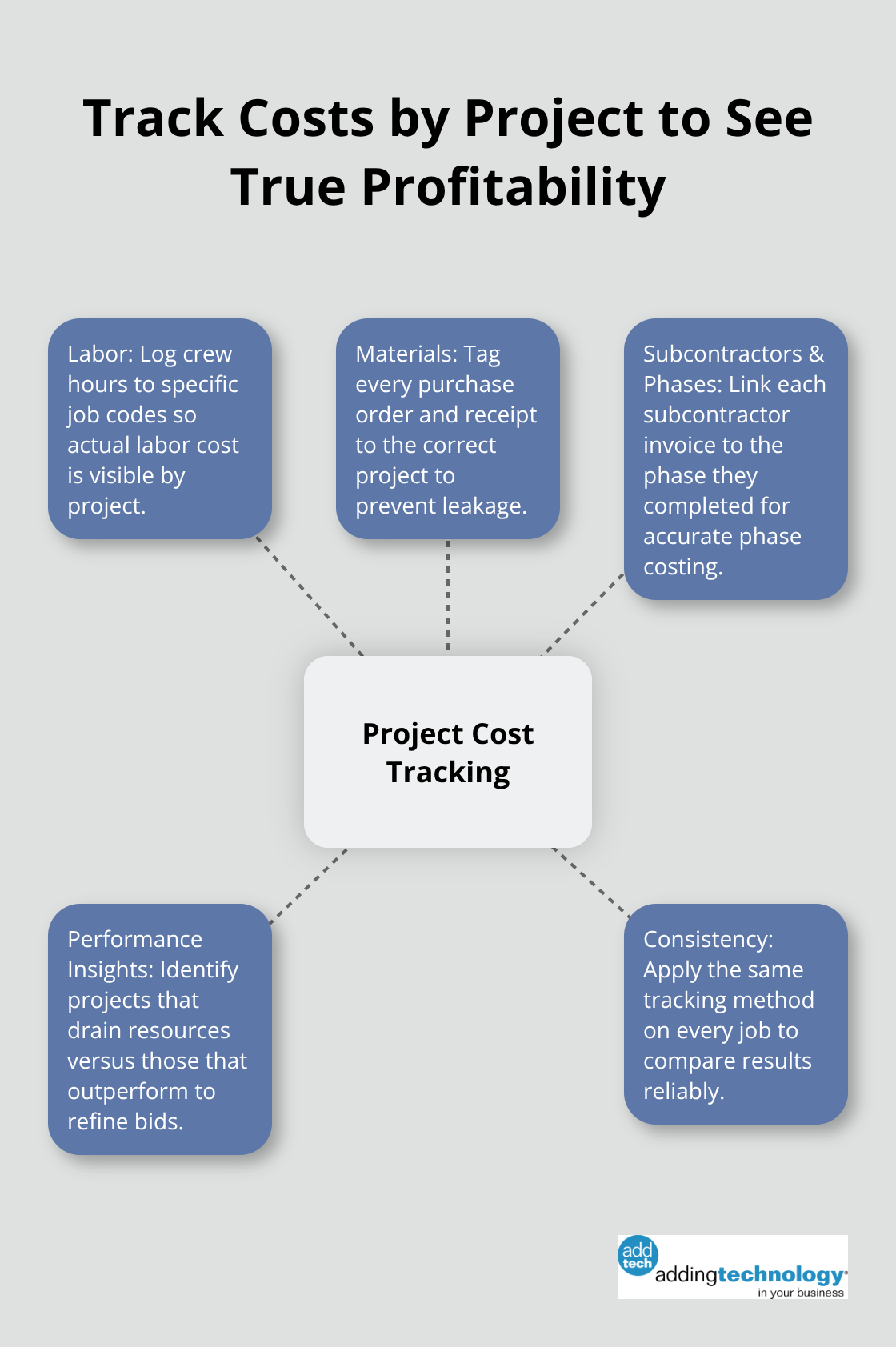
This granular tracking reveals which projects drain resources and which ones perform. A roofing contractor might discover that residential tearoffs consistently run over budget while new construction stays tight. A service business might find that certain client types require double the admin time. Without project-level cost data, you make pricing decisions blind.
The second layer is monitoring what actually moves the needle: labor, materials, and overhead allocation. Labor typically consumes a significant portion of revenue in construction, but your actual percentage might vary considerably by project. Materials vary wildly depending on job type and supplier relationships.
Overhead is the silent killer-office staff, insurance, equipment depreciation, utilities-costs that don’t show up on timesheets but still need to be paid. Allocate overhead to projects based on labor hours or revenue, not guesswork. Divide your overhead costs by your direct expenses to determine your overhead rate, then apply that consistently across projects so pricing reflects reality.
The contractors who win here obsess over the data. They pull weekly cost reports, compare actual labor hours to estimates, and adjust future bids accordingly. They negotiate material pricing based on volume trends they actually track. They catch cost overruns mid-project instead of discovering them at closeout.
Real-time visibility means your team can course-correct before a job turns unprofitable. That’s not luck-that’s discipline backed by numbers. Once you see where money actually goes, you’re ready to stop guessing on pricing and start using systems that automate this tracking so your team spends less time on spreadsheets and more time on the work that matters.
The spreadsheet era of financial management is over. Contractors who still rely on Excel for job costing, expense tracking, and reporting lose time and accuracy with every manual entry. We at adding technology see businesses lose thousands monthly because cost data arrives too late to influence pricing or because labor hours recorded in one system don’t match invoices in another. The solution isn’t better spreadsheet discipline-it’s replacing manual workflows with systems that capture data once and flow it automatically through accounting, job costing, and reporting.
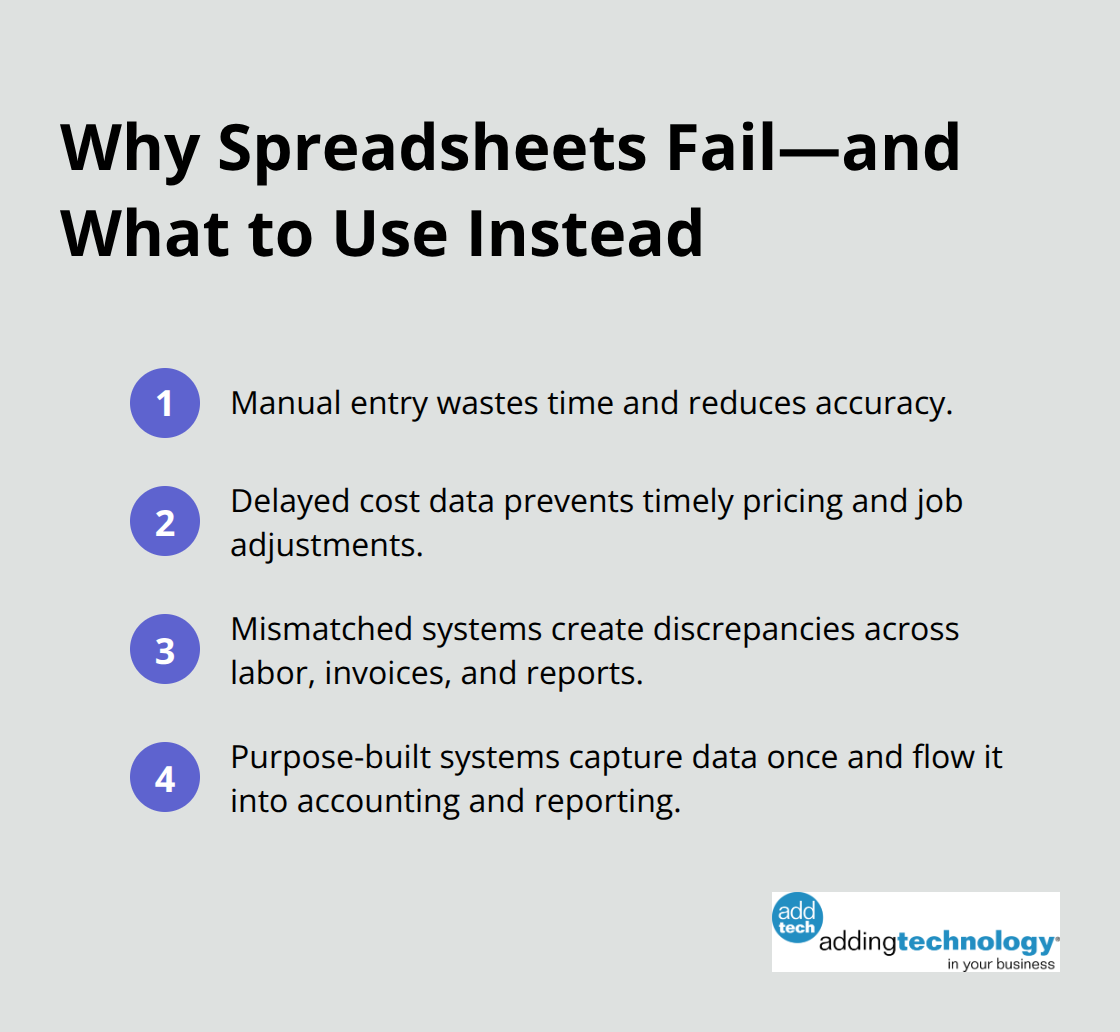
When you implement accounting software designed for construction, you eliminate data entry redundancy, sync project costs to financial statements in real time, and generate accurate reports without waiting for month-end reconciliation. Tools like construction-specific accounting platforms pull job data, material costs, and labor hours from the field and automatically allocate them to the correct cost codes and projects. This means your profit margins aren’t a mystery-they’re visible daily.
Automation reduces manual work significantly while improving cost visibility and control. Construction-specific accounting platforms connect your operations to your financials instead of pretending a spreadsheet can do both jobs well. The contractors winning right now aren’t smarter; they’re just using technology that works.
Real-time reporting transforms how you respond to cost overruns and pricing problems. Instead of discovering a project ran over budget at closeout, you catch it mid-phase when you can still adjust labor allocation or material sourcing. Set up dashboards that show labor costs as a percentage of revenue by project, material spend trends, and overhead allocation so you see exactly where money flows each week.
When your team sees labor trends toward overruns, they adjust scheduling and staffing immediately rather than accepting the problem. This visibility also sharpens your bidding. Contractors who track actual costs against estimates win because they bid future jobs based on what really happened, not what they hoped would happen.
Many construction businesses report that implementing job costing software cuts estimating time by reducing manual work because they pull historical data instead of guessing. Automated reporting also eliminates the reconciliation nightmare-your general ledger syncs with job costs automatically, so your financial statements reflect reality without weeks of manual matching. The contractors who resist this transition usually cite cost concerns, but the math is clear: one missed cost overrun on a mid-size project typically costs more than a year’s software subscription.
Precise financial management isn’t a one-time project-it compounds over months and years as you build discipline into your operations. The contractors who dominate their markets know exactly where their money goes and make decisions based on data instead of instinct. Start with your foundation: map your current systems, identify gaps, and set measurable targets for profit margins, labor costs, and cash flow. Connect those targets to daily operations so your team understands how their work affects the numbers.
Next, implement job costing discipline by tracking expenses by project and phase, monitoring labor and materials separately, and using that data to adjust pricing before cost overruns destroy profitability. The contractors who do this consistently outbid their competition because they know what work actually costs. Finally, replace manual processes with technology-spreadsheets create delays and errors, while construction-specific accounting systems sync your field operations to your financials automatically and give you real-time visibility into costs and margins.
We at adding technology help construction businesses build this foundation through expert accounting services, real-time job costing, and technology integration tailored to your operations. Audit your current financial systems this week and identify one area where manual work drains time or accuracy. That single decision starts the momentum toward financial mastery and long-term stability.












At adding technology, we know you want to focus on what you do best as a contractor. In order to do that, you need a proactive back office crew who has financial expertise in your industry.
The problem is that managing and understanding key financial compliance details for your business is a distraction when you want to spend your time focused on building your business (and our collective future).
We understand that there is an art to what contractors do, and financial worries can disrupt the creative process and quality of work. We know that many contractors struggle with messy books, lack of realtime financial visibility, and the stress of compliance issues. These challenges can lead to frustration, overwhelm, and fear that distracts from their core business.
That's where we come in. We're not just accountants; we're part of your crew. We renovate your books, implement cutting-edge technology, and provide you with the real-time job costing and financial insights you need to make informed decisions. Our services are designed to give you peace of mind, allowing you to focus on what you do best - creating and building.
Here’s how we do it:
Schedule a conversation today, and in the meantime, download the Contractor’s Blueprint for Financial Success: A Step by-Step Guide to Maximizing Profits in Construction.” So you can stop worrying about accounting, technology, and compliance details and be free to hammer out success in the field.