
Compliance Training for Contractors: Staying Ahead of Regulations
Master compliance training for contractors with essential regulations and best practices to protect your business and team.

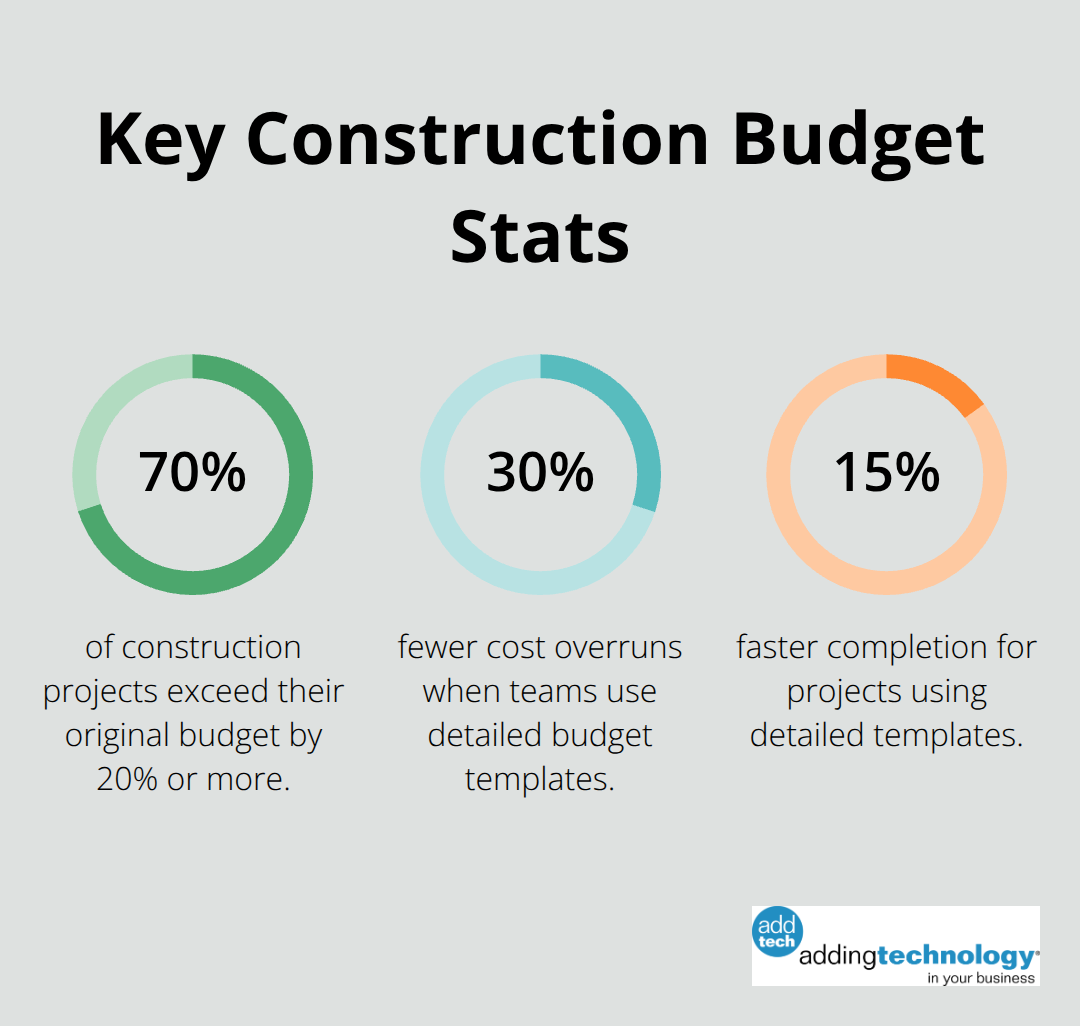
Construction projects fail when budgets spiral out of control. Poor financial planning leads to 70% of construction projects exceeding their original budget by 20% or more.
We at adding technology created this construction budget template to help contractors and project managers take control of their finances. This comprehensive guide walks you through every component needed for accurate project budgeting.
Labor expenses represent a significant portion of total construction costs, which makes workforce planning your most critical financial decision. Start with base hourly rates for each trade, then add 35-50% for benefits, workers’ compensation, and payroll taxes. Skilled electricians in major metropolitan areas command $45-65 per hour, while general laborers earn $18-25 per hour according to Bureau of Labor Statistics data.
Factor in overtime premiums of 1.5x regular rates when project deadlines tighten. Weather delays and rework can inflate labor costs by 15-20%, so build buffer time into your workforce calculations. Track productivity rates weekly to catch performance issues before they impact your bottom line.
Material prices fluctuate wildly, with lumber experiencing significant price variations in recent years and steel prices varying 40-60% annually. Lock in prices early for major materials like concrete, steel, and lumber through supplier contracts. Track commodity indices weekly to anticipate cost changes before they hit your project.
Material waste typically runs 5-10% of purchased quantities, but poor planning pushes waste above 15%. Order materials just-in-time to minimize storage costs while avoiding project delays from supply chain disruptions. Smart contractors negotiate price protection clauses (valid for 30-60 days) to shield against sudden market spikes.
Equipment costs split between rentals and purchases based on project duration and frequency of use. Renting excavators costs $3,000-5,000 monthly, while purchasing requires $200,000-400,000 upfront. The break-even point typically occurs at 12-18 months of continuous use.
Include operator wages, fuel consumption of 5-8 gallons per hour for heavy machinery, and maintenance reserves of 10-15% of equipment value annually. Transportation costs add $2-5 per mile for heavy equipment moves between job sites. Smart equipment scheduling can reduce idle time by 25-30%, directly improving your profit margins.
Project overhead includes site supervision, temporary utilities, and safety equipment that don’t appear in direct cost categories. These expenses typically run 10-20% of direct costs but can balloon without proper tracking. Insurance premiums, permits, and inspection fees vary by location but average 3-5% of total project value.
Administrative costs (office rent, accounting, project management software) should be allocated proportionally across active projects. Many contractors underestimate these indirect expenses, leading to profit erosion even when direct costs stay on target. Effective job costing helps track these expenses by breaking down costs into categories such as labor, materials, and overhead.
Now that you understand the core budget components, the next step involves setting up your template to capture these costs accurately and track them throughout your project lifecycle.
Define your project scope with specific deliverables and timeline boundaries. Enter your project name, start date, completion deadline, and total square footage into the header fields. Set your contingency percentage between 5-10% for renovation projects and 8-15% for new construction based on project complexity. Include your general contractor license number and project address for documentation purposes.
Organize expenses into four primary categories: direct labor, materials, equipment, and overhead costs. Break down labor into specific trades with separate line items for carpenters, plumbers, and electricians according to current prevailing wage rates. Create material subcategories for concrete, lumber, electrical supplies, and finishing materials.
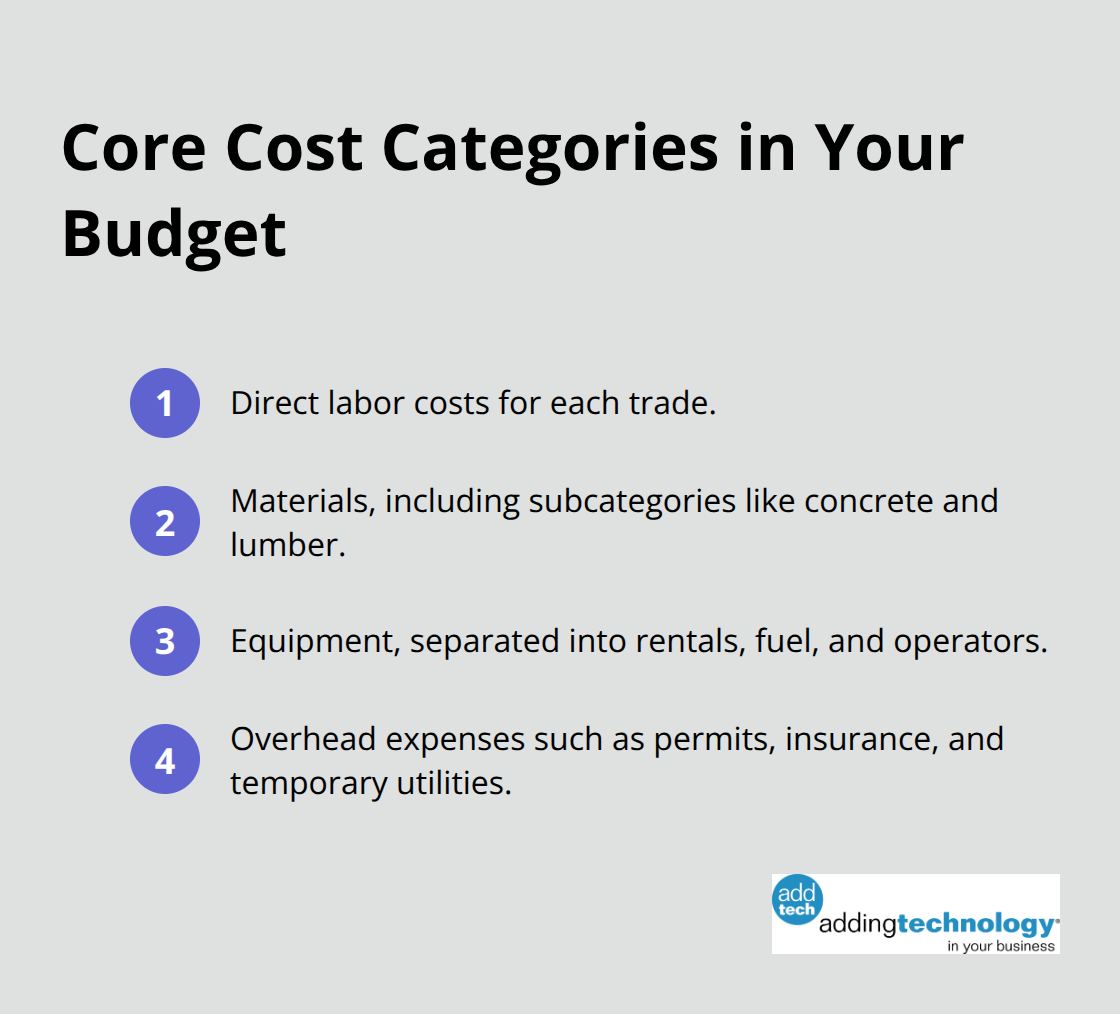
Equipment costs should separate rental fees, fuel consumption, and operator wages. Overhead expenses include permits (averaging $1,200-3,500 for residential projects), insurance premiums, and temporary utilities running $200-500 monthly.
Enter detailed cost estimates for each category using current market rates. List specific quantities, unit costs, and total amounts for materials. Include vendor names and contact information for quick reference during procurement. Add labor hours and rates for each trade, factoring in productivity rates and potential overtime needs. Input equipment rental periods and daily rates to calculate total equipment expenses.
Update actual costs weekly to catch budget deviations before they become major problems. Enter vendor invoices within 48 hours of receipt to maintain accurate cost tracking. The template automatically calculates variance percentages, highlighting items that exceed budget by more than 10% in red. Monitor your cost per square foot weekly and compare against building costs of $125-300 per square foot based on location, materials, and project specifications. Set alerts when any category reaches 80% of budgeted amounts to trigger corrective action.
Export monthly reports that show budget performance for stakeholder meetings and financial reviews. Even with proper template setup and diligent tracking, construction projects face common budgeting pitfalls that can derail financial success.
Material price volatility catches contractors off guard more than any other budget factor. Steel prices fluctuate significantly, with recent data showing steel fell to 3,029 CNY/T on November 7, 2025, down 0.33% from the previous day and 6.22% year-to-date. Lumber costs doubled in 2021 before they crashed 70% the following year. Most contractors budget materials with current prices without they account for these dramatic shifts.
Smart project managers lock in prices for major materials through 60-day supplier contracts and track commodity indices weekly. When copper jumped 25% in three months during 2022, contractors with price protection saved thousands while others absorbed massive losses. Contractors who ignore market trends face cost overruns that can eliminate entire profit margins within weeks.
Construction projects demand contingency reserves of 10-15% for new builds and 15-20% for renovations. Most contractors set aside only 5% and pay dearly when unexpected costs hit. Change orders alone average significant percentages of original contract values according to Construction Industry research data.
Weather delays cost projects $3,500-8,000 per day, while permit revisions add 2-4 weeks to schedules. Foundation issues in existing structures can trigger $15,000-50,000 in additional costs. Projects without adequate reserves face three choices: absorb the costs, fight with clients, or abandon jobs mid-stream.
Poor change order documentation kills profit margins faster than any other mistake. Verbal approvals lead to payment disputes that drag on for months while legal fees mount. Document every scope change with written approvals, material cost increases, and labor hour adjustments within 24 hours.
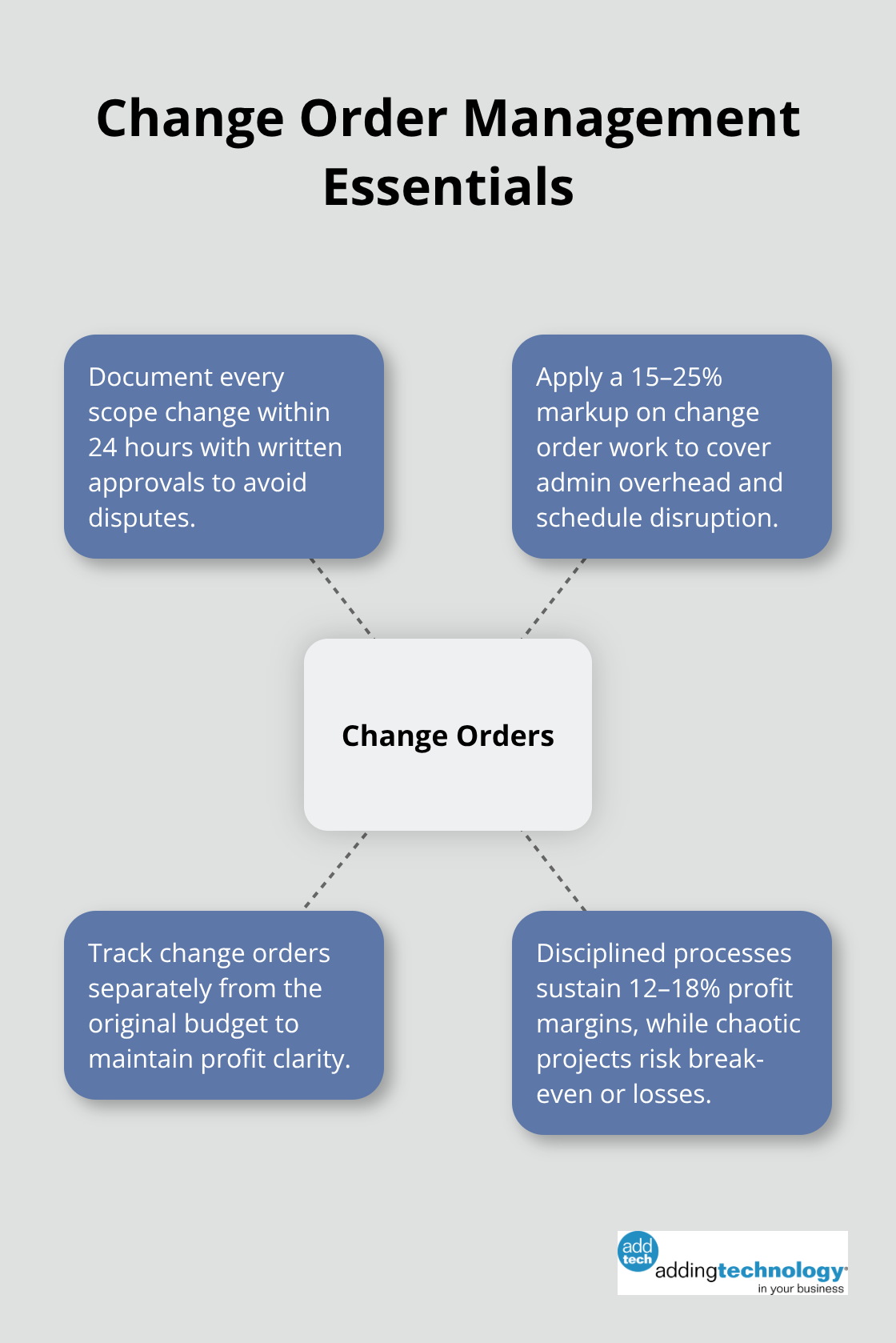
Charge 15-25% markup on change order work to cover administrative overhead and schedule disruption. Track change orders separately from original budgets to maintain clear profit visibility. Projects with disciplined change management processes maintain 12-18% profit margins while chaotic projects often finish at break-even or losses.
A structured construction budget template transforms chaotic project finances into manageable, profitable operations. Projects that use detailed templates experience 30% fewer cost overruns and complete 15% faster than those that rely on informal methods. The template provides real-time visibility into labor, materials, equipment, and overhead expenses while it flags budget deviations before they become major problems.
Proper financial planning directly correlates with project success rates. Contractors who track actual versus budgeted costs weekly maintain profit margins of 12-18%, while those with poor financial controls often finish at break-even or losses. The template’s automated calculations and variance reports eliminate guesswork from budget management.
Construction financial management requires ongoing attention beyond project completion. Regular budget reviews, vendor relationship management, and cost trend analysis build long-term profitability. We at adding technology offer expert accounting and financial management services tailored for the construction industry (including real-time job costing and advanced technology integration that streamlines financial processes while maintaining compliance). Download our free construction budget template today and take control of your project finances.













At adding technology, we know you want to focus on what you do best as a contractor. In order to do that, you need a proactive back office crew who has financial expertise in your industry.
The problem is that managing and understanding key financial compliance details for your business is a distraction when you want to spend your time focused on building your business (and our collective future).
We understand that there is an art to what contractors do, and financial worries can disrupt the creative process and quality of work. We know that many contractors struggle with messy books, lack of realtime financial visibility, and the stress of compliance issues. These challenges can lead to frustration, overwhelm, and fear that distracts from their core business.
That's where we come in. We're not just accountants; we're part of your crew. We renovate your books, implement cutting-edge technology, and provide you with the real-time job costing and financial insights you need to make informed decisions. Our services are designed to give you peace of mind, allowing you to focus on what you do best - creating and building.
Here’s how we do it:
Schedule a conversation today, and in the meantime, download the Contractor’s Blueprint for Financial Success: A Step by-Step Guide to Maximizing Profits in Construction.” So you can stop worrying about accounting, technology, and compliance details and be free to hammer out success in the field.