Construction Tax Planning: Minimize Liabilities, Maximize Cash Flow
Optimize your construction tax planning strategy to reduce liabilities and improve cash flow. Learn actionable tactics for contractors.

The construction industry stands at a technological turning point. Construction technology trends are reshaping how projects get built, managed, and delivered across the globe.
We at adding technology see artificial intelligence, IoT sensors, and advanced BIM platforms driving unprecedented efficiency gains. These innovations are cutting project delays by up to 20% while reducing costs significantly.
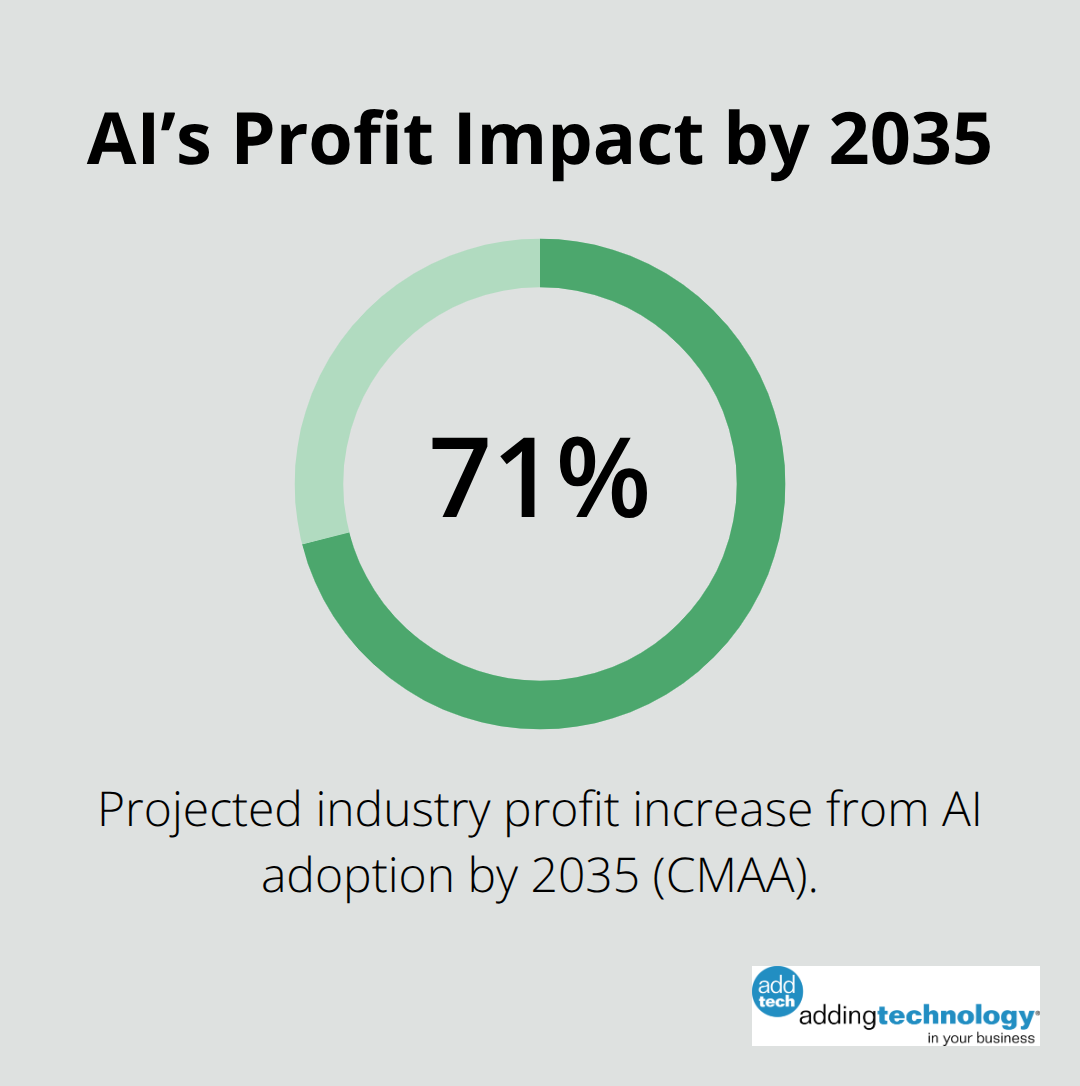
Artificial intelligence transforms construction operations through three game-changing applications that directly impact project success rates. The Construction Management Association of America estimates that AI could increase industry profits by 71% by 2035, making this technology adoption essential for competitive survival.
AI-powered scheduling platforms analyze historical project data to generate realistic timelines and resource allocation plans. These systems process thousands of variables simultaneously, from weather patterns to material delivery schedules. They create dynamic project plans that adapt to real-world conditions.
Construction companies using AI and machine learning are 7 times more likely to leverage effective data strategies (according to recent industry research). Modern AI tools automatically detect scheduling conflicts before they occur. The systems send alerts when subcontractor availability conflicts with material deliveries or when weather forecasts threaten outdoor work phases.
Machine learning algorithms analyze project data to predict potential delays, cost overruns, and safety incidents before they happen. These systems examine patterns from completed projects and identify risk factors that human planners often miss.
Predictive analytics can forecast labor shortages up to six weeks in advance. This capability allows project managers to secure additional resources or adjust schedules proactively. The technology proves particularly valuable given that project abandonment rates rose by 88.2% year-over-year in August 2025, making risk prediction tools vital for project survival.
Computer vision technology transforms construction site safety by continuously monitoring worker behavior and equipment operation. These AI systems detect unsafe practices in real-time, from workers not wearing proper protective equipment to equipment operating outside safe parameters.
Automated quality control systems use image recognition to identify construction defects during the building process. They catch issues that would cost significantly more to fix after project completion. IoT sensors connected to AI platforms monitor environmental conditions like air quality and noise levels (automatically alerting site managers when conditions become hazardous for workers).
While AI revolutionizes individual construction sites, the next wave of innovation connects entire projects through smart technology networks that monitor every aspect of construction operations.
Internet of Things technology creates intelligent construction ecosystems where every piece of equipment, material shipment, and environmental condition generates actionable data streams. Investment in construction structures is projected to pivot from a 2025 decline to modest growth, making connected construction sites increasingly important for operational efficiency.
Connected sensors on construction equipment track operational metrics like fuel consumption, engine temperature, and hydraulic pressure continuously. These IoT devices report equipment status every few minutes, which enables proactive maintenance that prevents costly breakdowns.
Equipment downtime represents a significant cost for construction companies, making predictive maintenance through IoT sensors a financial necessity. Modern IoT platforms automatically schedule maintenance when sensors detect performance degradation patterns, often preventing failures weeks before they would occur naturally.
Smart construction sites deploy environmental monitoring networks that track air quality, noise levels, temperature fluctuations, and dust concentrations across work zones. These systems automatically alert site managers when conditions exceed safety thresholds or regulatory compliance limits.
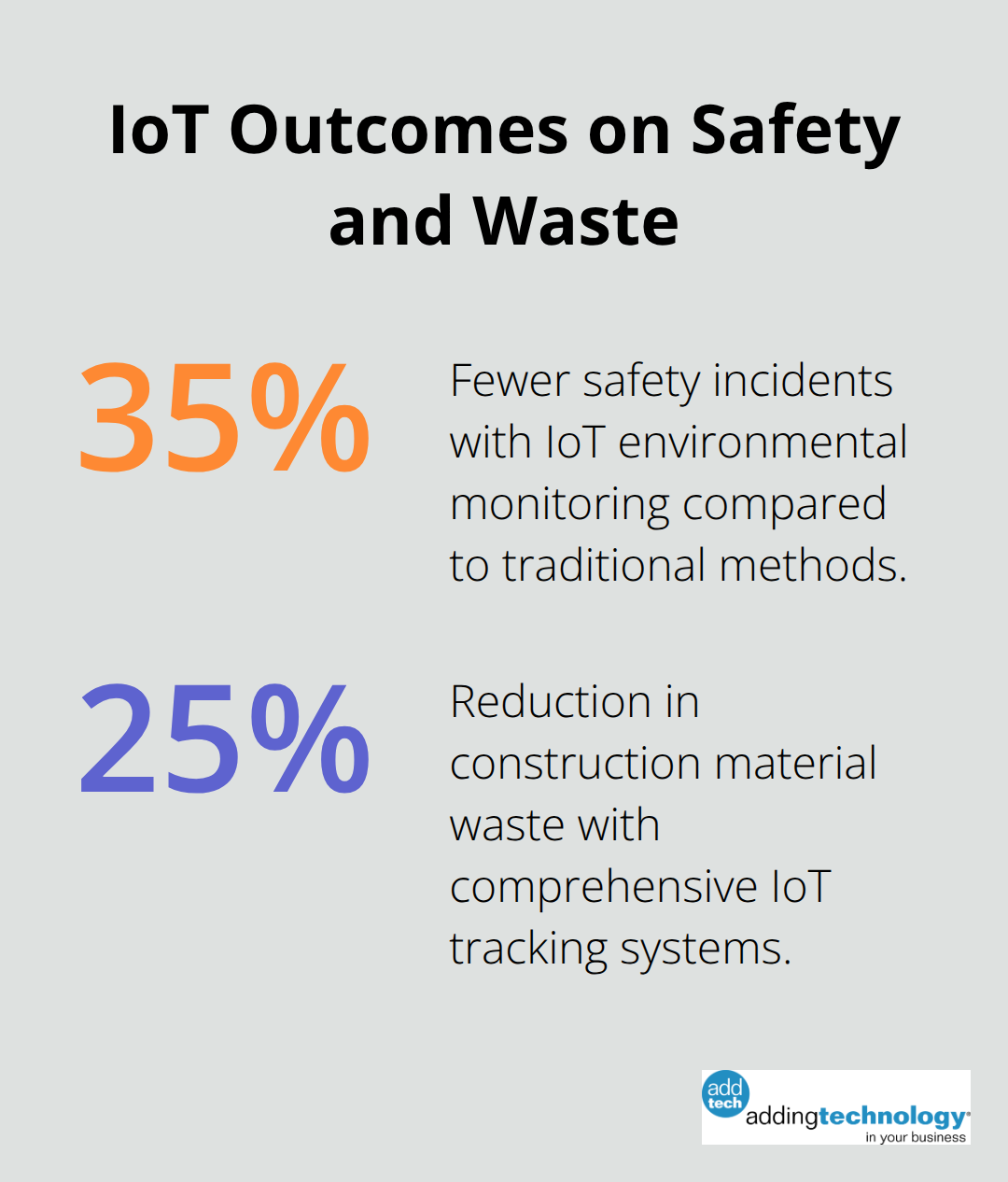
Construction sites using IoT environmental monitoring report 35% fewer safety incidents compared to traditional monitoring methods. The sensors provide continuous documentation for regulatory compliance (eliminating manual monitoring tasks that consume significant labor hours).
IoT-enabled material tracking systems use RFID tags and GPS sensors to monitor supply deliveries, storage locations, and consumption rates automatically. These networks eliminate material shortages through automatic reorder alerts when inventory levels drop below predetermined thresholds.
Construction material waste decreases by up to 25% when companies implement comprehensive IoT tracking systems. Project managers gain precise visibility into material usage patterns and can adjust ordering accordingly (reducing both waste and storage costs).
These connected construction sites generate massive amounts of data that require sophisticated platforms to transform raw information into actionable insights for project teams.
Building Information Modeling platforms have evolved from simple design tools into comprehensive project intelligence systems that integrate every aspect of construction workflow. Cloud-based BIM platforms now process project data in real-time and allow teams across multiple locations to collaborate simultaneously on complex designs and modifications. These platforms automatically sync changes across all project stakeholders within minutes, which eliminates the version control issues that previously caused costly rework and delays.
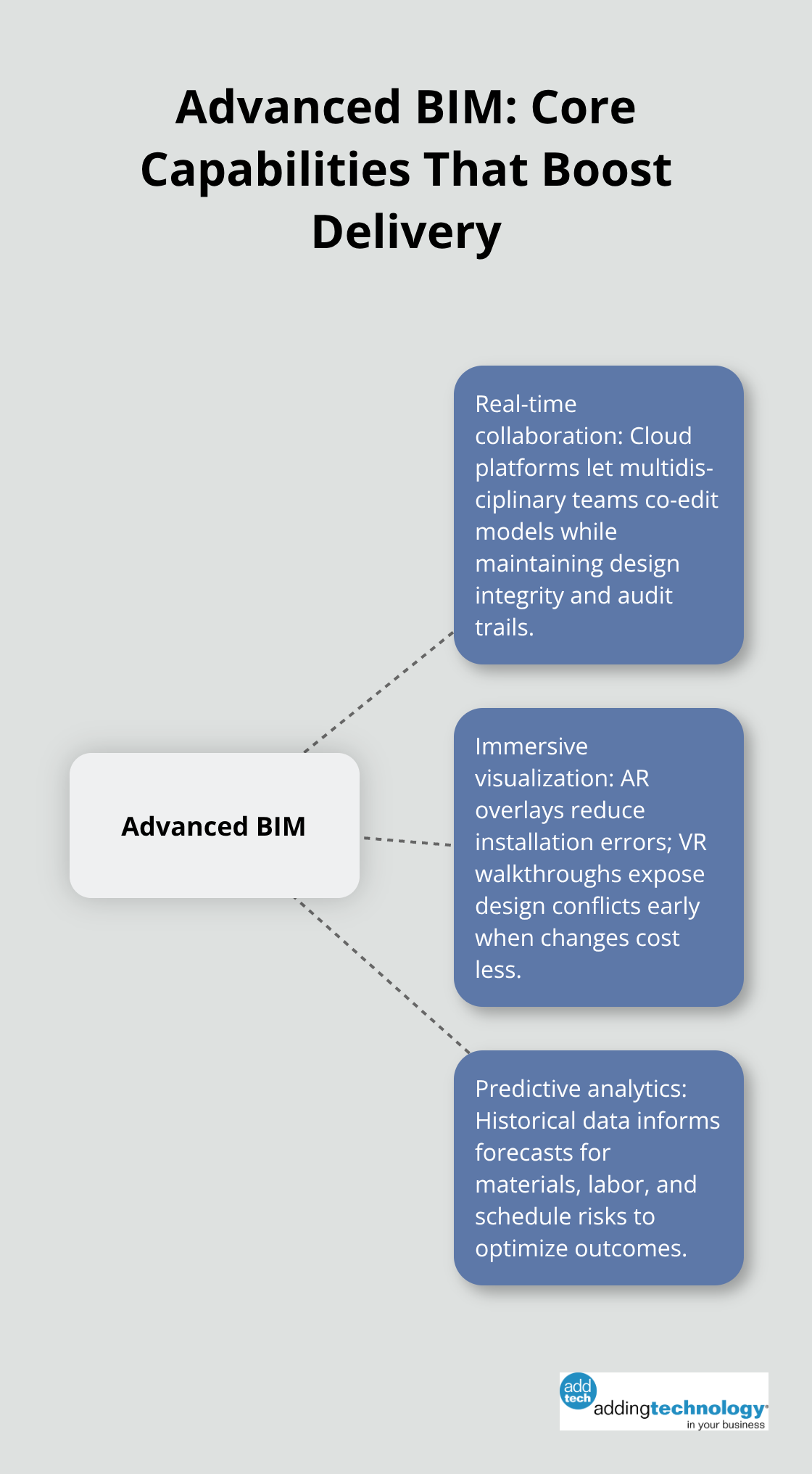
Modern BIM systems integrate augmented reality and virtual reality capabilities directly into project workflows and enable construction teams to visualize complex assemblies before physical construction begins. Workers on job sites use AR headsets to overlay digital models onto physical spaces, which reduces installation errors according to recent industry studies. Virtual reality walkthroughs allow project stakeholders to identify design conflicts and spatial issues during the planning phase (when changes cost significantly less than field modifications).
Cloud-based BIM platforms eliminate the traditional file-sharing bottlenecks that slow project coordination between architects, engineers, and contractors. Teams can modify designs simultaneously while the platform automatically resolves conflicts and maintains design integrity across all disciplines. These systems track every design change with timestamp data and user attribution, which creates audit trails that support project accountability and regulatory compliance requirements.
Augmented reality integration with BIM models allows field teams to visualize underground utilities, structural elements, and mechanical systems through mobile devices and AR headsets. Construction workers can identify conflicts between installed systems and planned work before they begin installation tasks. Virtual reality project reviews enable stakeholders to experience spaces at full scale during design phases and catch spatial issues that traditional 2D drawings often miss.
Advanced BIM platforms analyze historical project data to generate predictive models that forecast material requirements, labor allocation, and potential schedule risks. These analytics systems identify patterns in successful projects and recommend optimization strategies for current work. Data-driven insights help project managers allocate resources more effectively and adjust schedules proactively based on real performance metrics rather than estimated timelines (which often prove inaccurate in complex construction environments).
Construction technology trends reshape the industry’s financial landscape and operational efficiency in measurable ways. Companies that implement AI, IoT, and advanced BIM platforms report profit increases of up to 71% while they reduce project delays by 20%. These technologies transform construction from reactive problem-solving to predictive project management.
The financial benefits extend beyond immediate cost savings to long-term competitive advantages. Firms rated as digitally savvy outperform competitors by 48% on revenue and 15% on net margins. IoT systems reduce material waste by 25%, while automated safety systems cut incident rates by 35% (creating direct bottom-line improvements and stronger competitive positions).
Successful technology adoption requires robust financial management systems to track ROI and optimize technology investments. We at adding technology help contractors implement real-time job costing and advanced technology integration while they maintain compliance and operational efficiency. Companies that invest in AI-powered project management, connected construction sites, and collaborative BIM platforms position themselves for sustained growth in an increasingly competitive market.









At adding technology, we know you want to focus on what you do best as a contractor. In order to do that, you need a proactive back office crew who has financial expertise in your industry.
The problem is that managing and understanding key financial compliance details for your business is a distraction when you want to spend your time focused on building your business (and our collective future).
We understand that there is an art to what contractors do, and financial worries can disrupt the creative process and quality of work. We know that many contractors struggle with messy books, lack of realtime financial visibility, and the stress of compliance issues. These challenges can lead to frustration, overwhelm, and fear that distracts from their core business.
That's where we come in. We're not just accountants; we're part of your crew. We renovate your books, implement cutting-edge technology, and provide you with the real-time job costing and financial insights you need to make informed decisions. Our services are designed to give you peace of mind, allowing you to focus on what you do best - creating and building.
Here’s how we do it:
Schedule a conversation today, and in the meantime, download the Contractor’s Blueprint for Financial Success: A Step by-Step Guide to Maximizing Profits in Construction.” So you can stop worrying about accounting, technology, and compliance details and be free to hammer out success in the field.