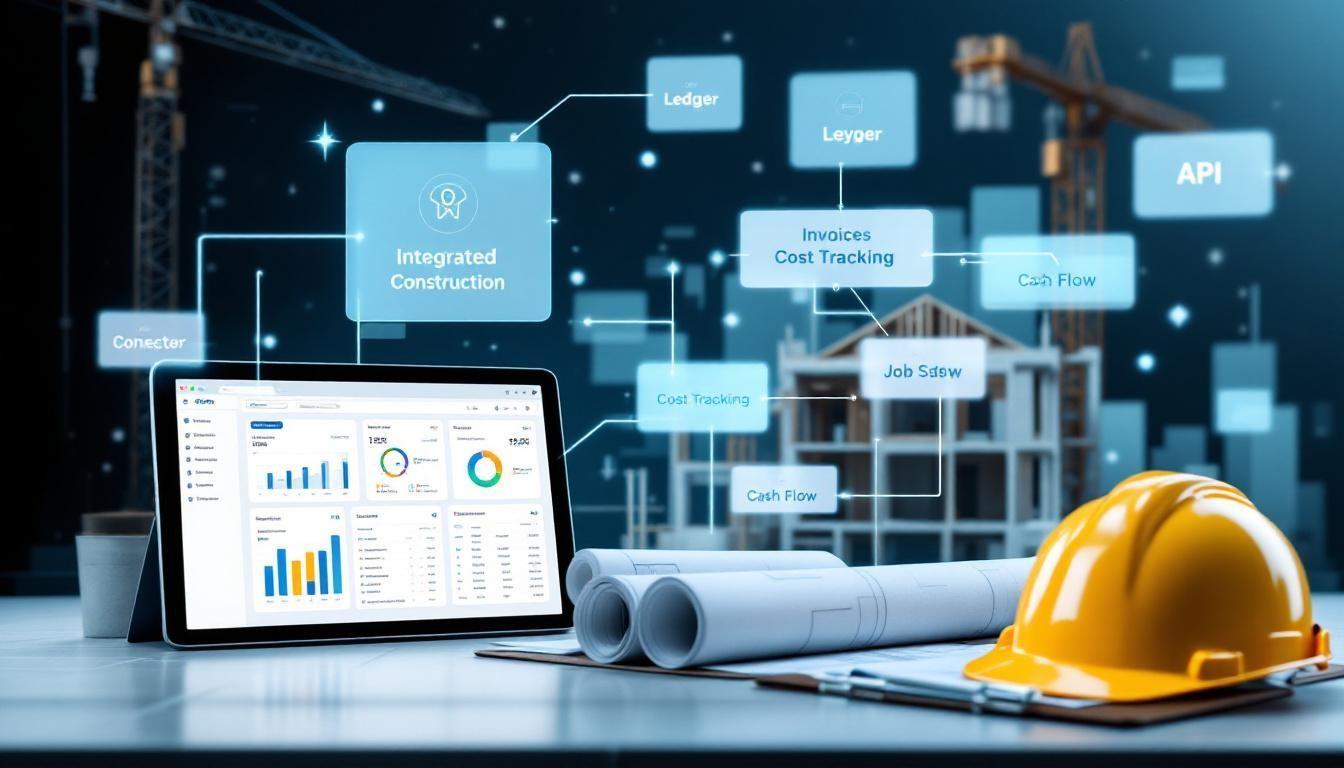
Integrated Financial Software: Unifying Your Construction Finances
Streamline your construction finances with integrated financial software. Unify accounting, job costing, and cash flow in one platform for better control.

Most construction projects lose money in the margins-not because of big disasters, but because of small leaks nobody catches until it’s too late. Material waste, labor inefficiencies, and hidden costs add up fast, and by the time you see the damage, your profit is already gone.
At adding technology, we’ve seen contractors transform their bottom line by getting real visibility into cost control for projects. The difference isn’t complicated: it’s about knowing what’s actually happening on your jobs while there’s still time to fix it.
Material waste hits your margin harder than most contractors realize. On a typical construction project, waste accounts for 10–15% of material costs, according to industry studies. This isn’t just scrap lumber or leftover drywall-it’s ordering too much because you lack visibility into spending, buying from vendors without comparing multiple quotes, and failing to track material usage against your estimates.
When you order materials without real-time data on consumption, you’re essentially guessing. A contractor ordering for three concurrent projects without centralized tracking might purchase the same materials from different vendors at different prices, or worse, duplicate orders entirely. The fix requires knowing exactly what materials you’ve committed to, what’s arrived, and what’s been used-information that typically lives scattered across email, spreadsheets, and job-site notes.
Labor inefficiencies drain margin just as quietly. Construction labor typically represents 20–40% of project costs, making scheduling and allocation decisions critical. When you don’t track how hours are actually spent versus your estimate, you miss the moment a task that should take two days stretches to four.
Overtime creeps in because crews sit idle waiting for materials or instructions, then rush to catch up. Subcontractors bill for time that overlaps with your crews, or they start work before you’re ready, creating rework and confusion. Poor visibility into labor allocation means you can’t spot these problems until the time sheet arrives-long after the damage is done.
Change orders that aren’t tracked against your original budget disappear into project files without anyone calculating the true cost impact. Overhead allocation (the time your project manager spends on administrative work) often goes unmeasured, so you don’t know if a project that looks profitable actually covers all the effort it demanded.
Small cost leaks multiply across multiple projects. Without a system that connects budgets, expenses, and actual progress in real time, you fight yesterday’s problems instead of preventing tomorrow’s. This is where real-time job costing changes everything.
Real-time job costing stops the bleeding because it shows you what’s actually happening on your projects the moment it happens, not three weeks later when invoices land on your desk. The difference between contractors who stay profitable and those who watch margins disappear comes down to this single capability: immediate visibility into cost performance against your estimate. When material arrives, when labor hours are logged, when change orders get approved, your system reflects the true financial position of that job. This eliminates the guessing game that kills so many projects.
Most contractors track costs in arrears, which means they’re always fighting yesterday’s fire. A crew runs into a material shortage and works overtime to compensate, but you don’t see that cost impact until the timesheet arrives. A subcontractor bills for extra days, but you’re comparing it to an estimate written months ago without knowing whether scope changed in between.
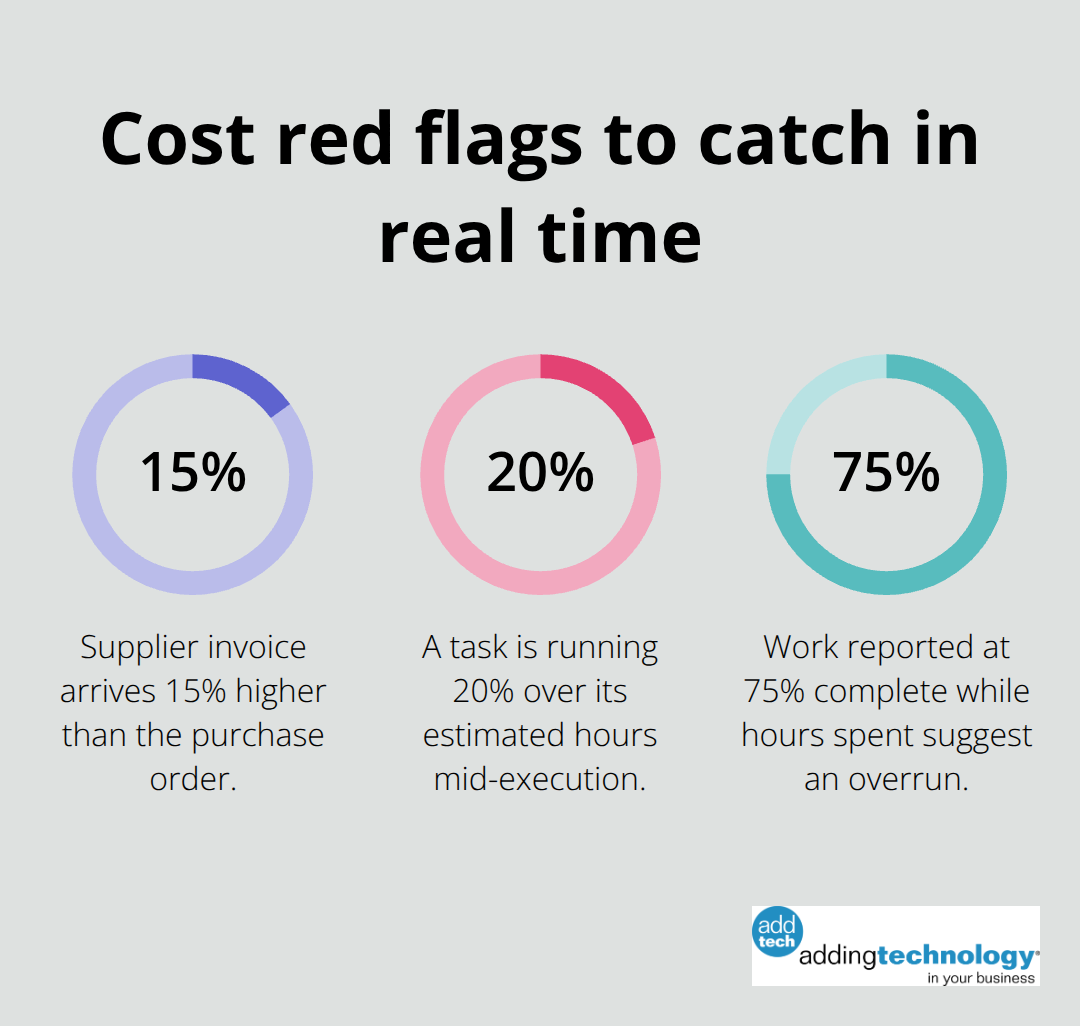
A supplier invoice comes in 15% higher than the purchase order, but the material is already installed. Real-time job costing flips this around. When you see costs flowing into your system as work happens, you catch variances while you can still respond.
The practical impact shows up in your forecast-at-completion calculation, which is your single most important number. Instead of waiting until a project is 80% complete to realize you’re headed for a loss, you recalculate this number weekly or even daily, comparing what you’ve actually spent and committed against what remains in your budget. When labor hours start running high on a particular task, you see it immediately and can adjust staffing, schedule, or approach before the whole job goes sideways. When material costs spike, you know whether to absorb it, pursue a change order, or find an alternative.
This weekly discipline of reviewing actual costs against estimates gives you the control that prevents projects from becoming disasters. The contractors who do this consistently report catching problems when they still have options; those who don’t are stuck explaining losses to ownership after the fact.
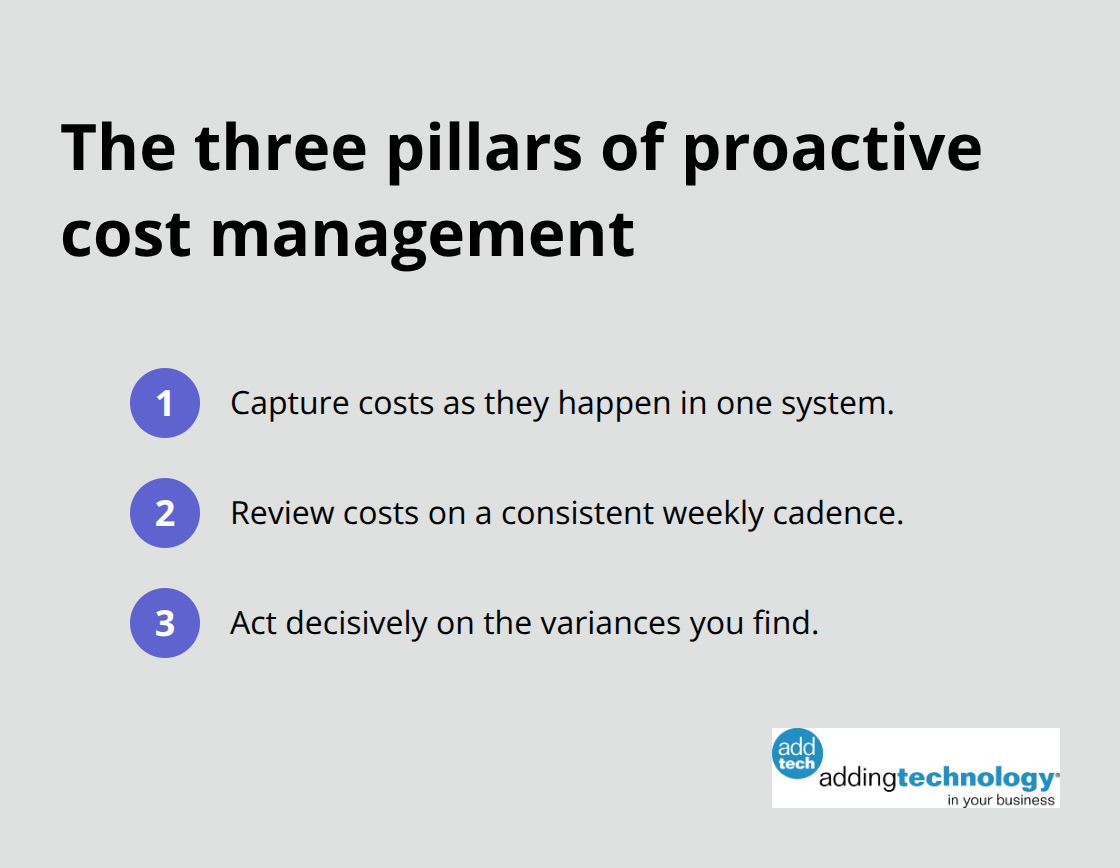
The shift from reactive to proactive cost management requires three things: a system that captures costs as they happen, a regular cadence for reviewing those costs (weekly works for most projects), and the discipline to act on what you find. When you have real-time visibility into material consumption, labor allocation, and change-order impact, you stop managing by surprise. You manage by choice. This foundation of accurate, timely cost data is what separates contractors who control their margins from those who hope their margins survive the project.
Material waste starts with visibility into what you order and what actually gets used on site. Most contractors operate with fragmented data: purchase orders in one system, material receipts scattered across job sites, and consumption tracked through informal notes or memory. This gap is where 10–15% of material costs disappear. Connect your purchasing, receiving, and usage data so you know exactly what you’ve committed to, what has arrived, and what the crew has consumed against your estimate.
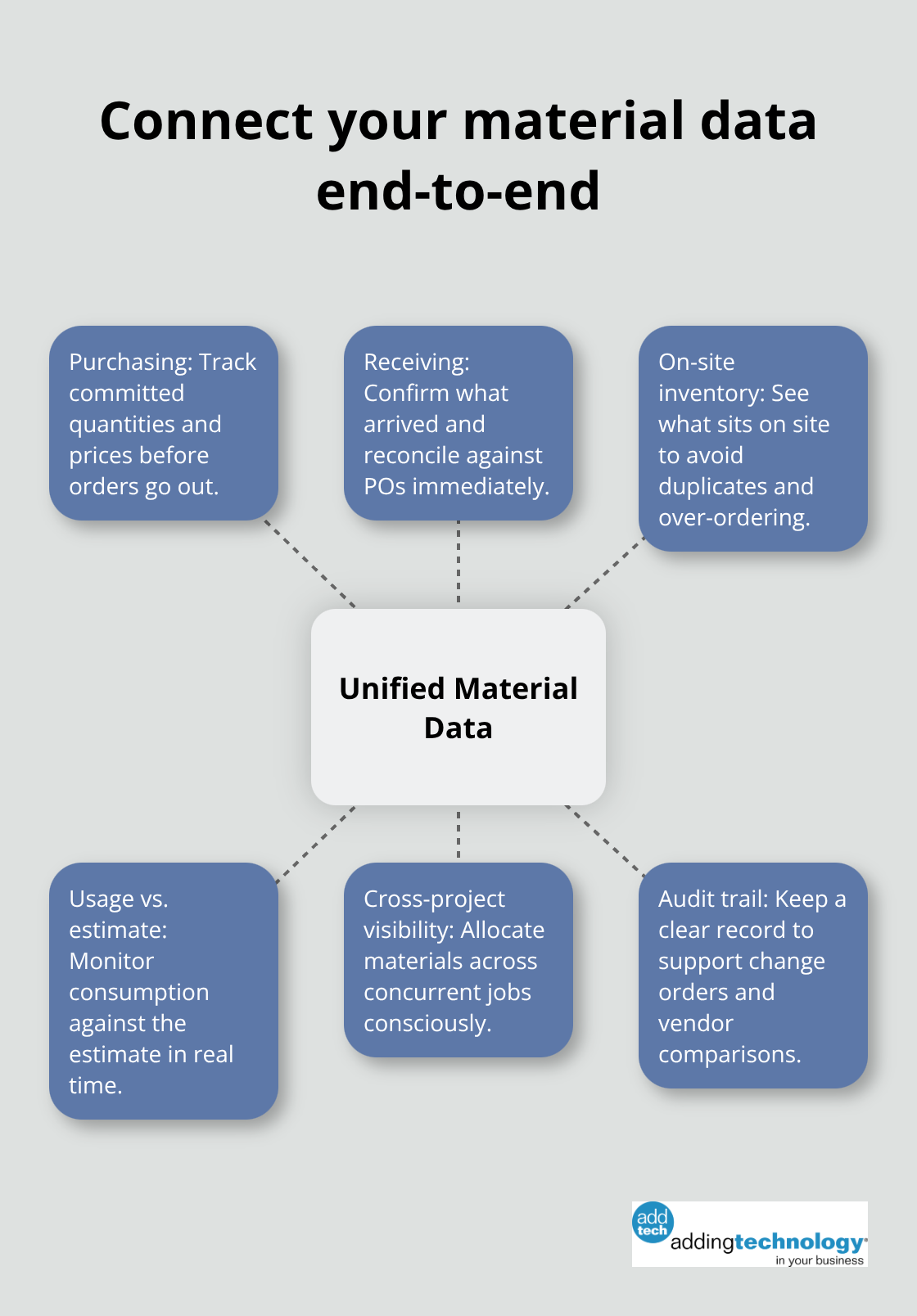
When a crew needs drywall, your system should show how much you budgeted, how much you’ve already purchased, how much sits on site, and how much remains available before you trigger a new order. This eliminates duplicate purchases, prevents over-ordering, and forces conscious decisions about material allocation across concurrent projects. Audit your last three completed projects: calculate what you actually spent on materials versus what you estimated, then ask yourself whether you had real-time visibility into that spending. Most contractors find gaps of 8–12% that they could have caught and corrected mid-project.
Labor waste operates differently but with equally painful results. Your labor costs represent 20–40% of project expenses, yet most contractors discover labor overruns only when timesheets arrive. Track actual hours spent against the estimate for each task on a daily or weekly basis, combined with visibility into whether crews stay allocated efficiently or sit idle waiting for materials or instructions.
When you see a task running 20% over the estimated hours halfway through, you have time to adjust your approach, reallocate crews, or communicate with the client about scope clarification. Without that visibility, the task finishes 40% over budget and you’re left explaining the loss. Establish a simple weekly labor review where you compare estimated hours remaining against actual hours spent to date, then calculate the productivity rate. If a task should complete in 40 hours and you’ve already spent 30 hours at 75% completion, you’re headed for an overrun-act immediately.
Change orders present a third control point where contractors consistently leak money. Many contractors approve change orders verbally, implement the work, then struggle to track the actual cost impact because the original budget remains unchanged in their system. Never start work on a change order until you’ve documented the scope change, calculated the cost impact, obtained written approval, and updated your budget and forecast-at-completion.
When a client requests extra work, your response should include a clear scope description, the cost to complete that work, and how it affects the project timeline. This forces the conversation about value and prevents scope creep disguised as change orders. Contractors who implement disciplined change-order management and accounting software for construction contractors recover 3–5% of project margin, which translates directly to bottom-line profitability across your project portfolio.
The contractors who protect their margins work smarter with better information, not harder. Every percentage point you recover through cost control for projects compounds across your entire portfolio, and when you eliminate material waste, catch labor overruns early, and track change orders with discipline, those gains stack up fast. A contractor managing five concurrent projects that each recovers 3–5% of margin through real-time cost visibility achieves meaningful profit improvement without cutting prices or taking on additional work.
Building better financial systems requires connecting the data that already exists on your projects-purchase orders, timesheets, invoices, and change orders-so you see the complete financial picture while there’s still time to act. Most contractors have this information scattered across email, spreadsheets, and job-site notes, but centralizing that data into a system that shows actual costs against estimates in real time transforms how you manage projects. You move from explaining losses after the fact to preventing them before they happen.
Start with an honest assessment of where your cost leaks are today by reviewing your last three completed projects and calculating the gap between estimated and actual costs on materials, labor, and change orders. That gap represents your opportunity, and we at adding technology help construction companies build the financial foundation that makes cost control sustainable. Explore how adding technology can strengthen your financial systems and keep your projects profitable.













At adding technology, we know you want to focus on what you do best as a contractor. In order to do that, you need a proactive back office crew who has financial expertise in your industry.
The problem is that managing and understanding key financial compliance details for your business is a distraction when you want to spend your time focused on building your business (and our collective future).
We understand that there is an art to what contractors do, and financial worries can disrupt the creative process and quality of work. We know that many contractors struggle with messy books, lack of realtime financial visibility, and the stress of compliance issues. These challenges can lead to frustration, overwhelm, and fear that distracts from their core business.
That's where we come in. We're not just accountants; we're part of your crew. We renovate your books, implement cutting-edge technology, and provide you with the real-time job costing and financial insights you need to make informed decisions. Our services are designed to give you peace of mind, allowing you to focus on what you do best - creating and building.
Here’s how we do it:
Schedule a conversation today, and in the meantime, download the Contractor’s Blueprint for Financial Success: A Step by-Step Guide to Maximizing Profits in Construction.” So you can stop worrying about accounting, technology, and compliance details and be free to hammer out success in the field.