Contractor licensing requirements aren’t optional-they’re the foundation of a legitimate, profitable business. Operating without proper licenses exposes you to fines, project shutdowns, and damaged reputation.
At adding technology, we’ve helped hundreds of contractors stay compliant while managing the paperwork that comes with it. This guide walks you through the licenses you need, how to get them, and the mistakes that cost contractors thousands every year.
Which License Type Does Your Business Actually Need
The license you need depends on three factors: what work you perform, where you perform it, and how much you charge. Contractors who choose the wrong license type face thousands in fines and project delays. General contractor licenses let you manage multiple trades on a single project, but they don’t automatically qualify you to perform specialized work like electrical or plumbing installations. If you plan to do both general construction and electrical work, you need both licenses in most states.
General vs. Specialty Licenses
Specialty licenses are trade-specific and require separate applications. Project value thresholds matter because crossing them without the right license triggers severe penalties.
Residential and commercial work often require separate licenses even within the same trade. Some states like Tennessee use six distinct contractor classifications based on project scope and value. Florida distinguishes between registered and certified contractor tracks, with different eligibility paths for each. If you bid residential remodeling work in Tennessee, you may need a home improvement license separate from your general contractor license. This layered approach exists because residential work involves different safety standards, consumer protection rules, and lien rights than commercial projects.
Washington state requires universal registration with the Department of Labor & Industries for all contractors, then adds separate state licenses for plumbing, electrical, and asbestos work. Texas leaves most licensing to local jurisdictions but the Texas Department of Licensing & Regulation governs electricians, HVAC, and plumbers. Before you apply for any license, map every project location where you plan to work and verify requirements on official state boards like California’s Contractors State License Board or Oregon’s Construction Contractors Board.
The Cost of Licensing Mistakes
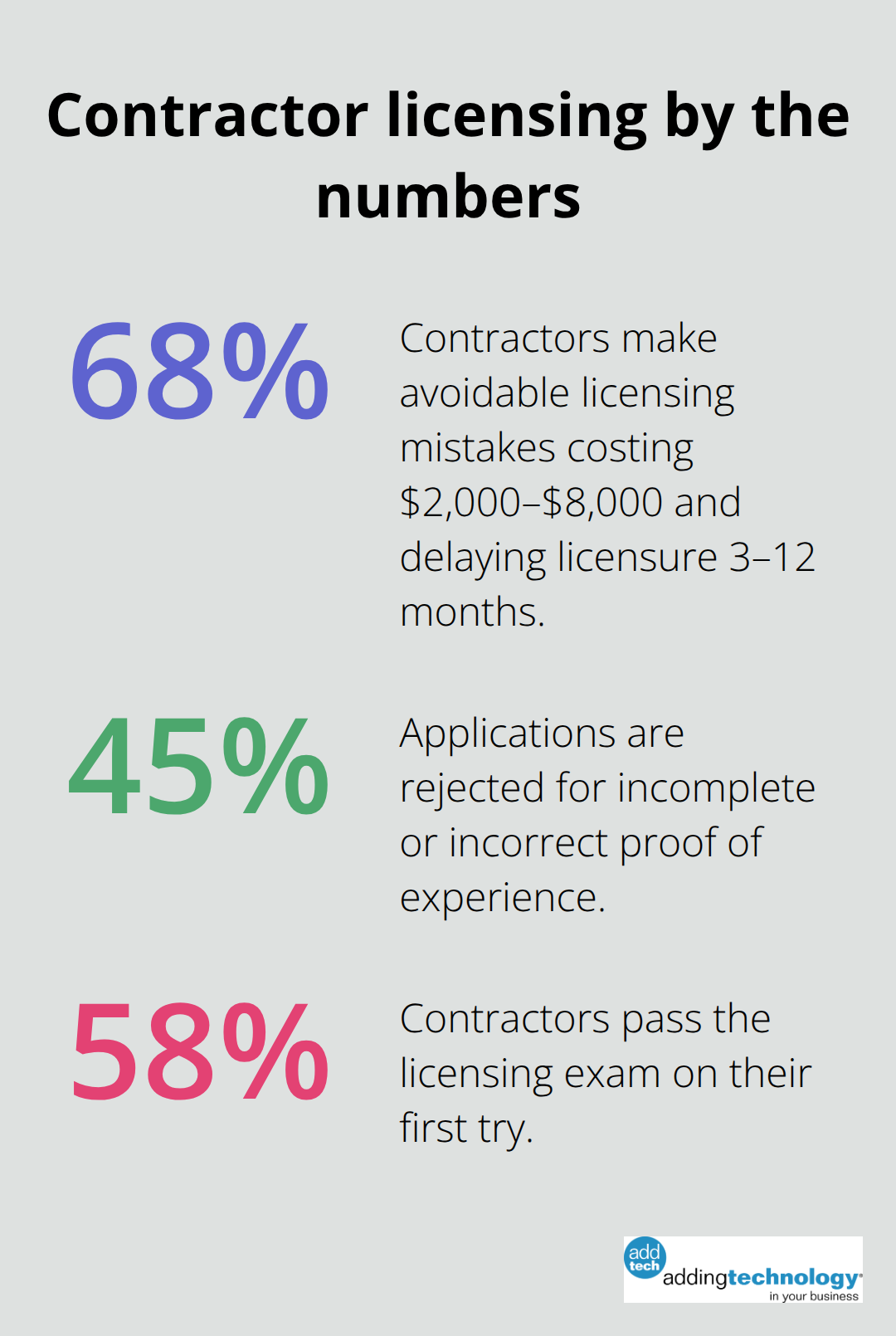
About 68% of contractors make avoidable licensing mistakes that cost between $2,000 and $8,000 and delay licensure by three to twelve months. The most common mistake is assuming your general contractor license covers specialty work or vice versa. It doesn’t.
This single error wastes months of effort and thousands of dollars in application fees, exam retakes, and lost project opportunities.
Documentation That Determines Your Approval
Your experience documentation determines whether your application gets approved or rejected. About 45% of applications are rejected for incomplete or incorrect proof of experience. Licensing boards want specific details: exact dates, types of work performed, and your specific responsibilities on each project. Generic letters fail because boards need concrete evidence of your qualifications.
Provide detailed letters that include dates, work descriptions, and your role, then back them up with experience documentation like payroll records and project photos or contracts. Don’t exaggerate your experience because licensing boards verify information and misrepresentation leads to rejection or penalties. Plan ahead by organizing this documentation before you apply. Keep project files with contracts, invoices, and photos that prove what you built and when you built it.
Moving to the Application Process
This documentation foundation sets you up for success in the next phase. Once you understand which license you need and have your experience records organized, the actual application process becomes straightforward-if you know what to expect and how to avoid the common pitfalls that trip up contractors at the submission stage.
Getting Licensed Without the Costly Detours
Master the Exam on Your First Attempt
Exam preparation separates contractors who pass on the first attempt from those who fail and burn through retake fees. Only about 58% of contractors pass the contractor exam on their first try, which means nearly half face another $300 to $500 in exam fees plus additional study time. The reason most fail isn’t lack of knowledge-it’s underestimating how heavily the exam weights local laws and regulations. Local content comprises 30 to 40% of the exam, yet contractors often study generic national materials that skip the specific building codes and permit rules for their state.
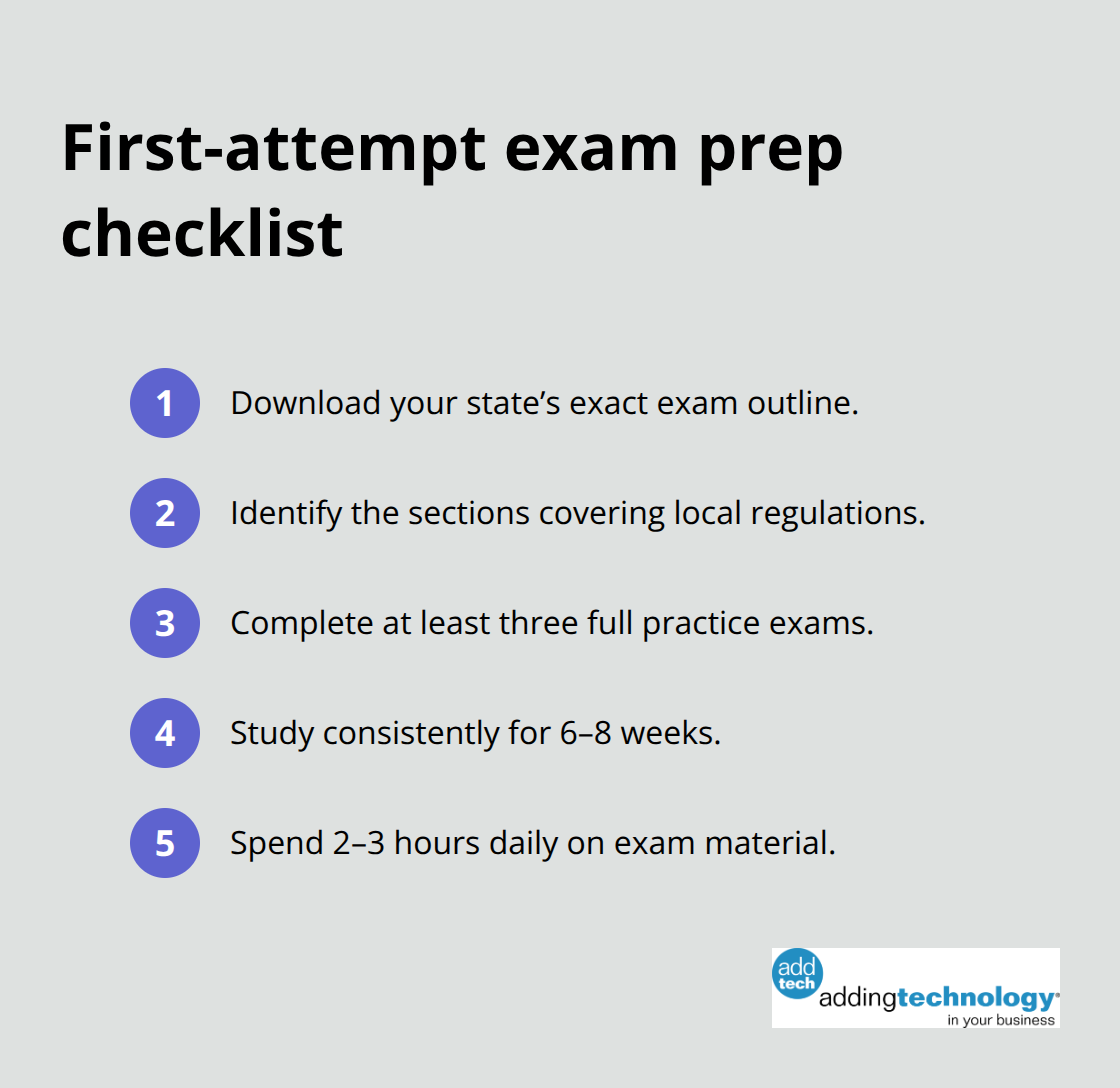
Start your study plan by downloading the exact exam outline from your state licensing board, then identify which sections cover local regulations. Commit to at least three full practice exams spaced across 6 to 8 weeks of study, spending 2 to 3 hours daily on material. Contractors who follow this schedule pass at significantly higher rates than those who cram or skip practice exams.
Organize Your Experience Documentation First
Your application success depends entirely on how you present your experience documentation and handle the insurance and bonding requirements before you submit anything. Licensing boards verify every claim you make, so provide specific dates, project names, and your exact responsibilities for each job. Include payroll records, W-2s, and project photos alongside your experience letters because boards want concrete evidence, not generic descriptions.
Don’t exaggerate your qualifications. Licensing boards investigate applications thoroughly, and misrepresentation leads to rejection or penalties that damage your credibility far more than a delayed application.
Secure Insurance and Bonding Early
Start shopping for liability insurance and surety bonds 2 to 3 months before submitting your application because your credit score directly affects bond rates-the better your credit, the lower your premium. Compare at least three insurance providers to avoid overpaying; many contractors accept the first quote and waste hundreds annually on coverage they don’t need.
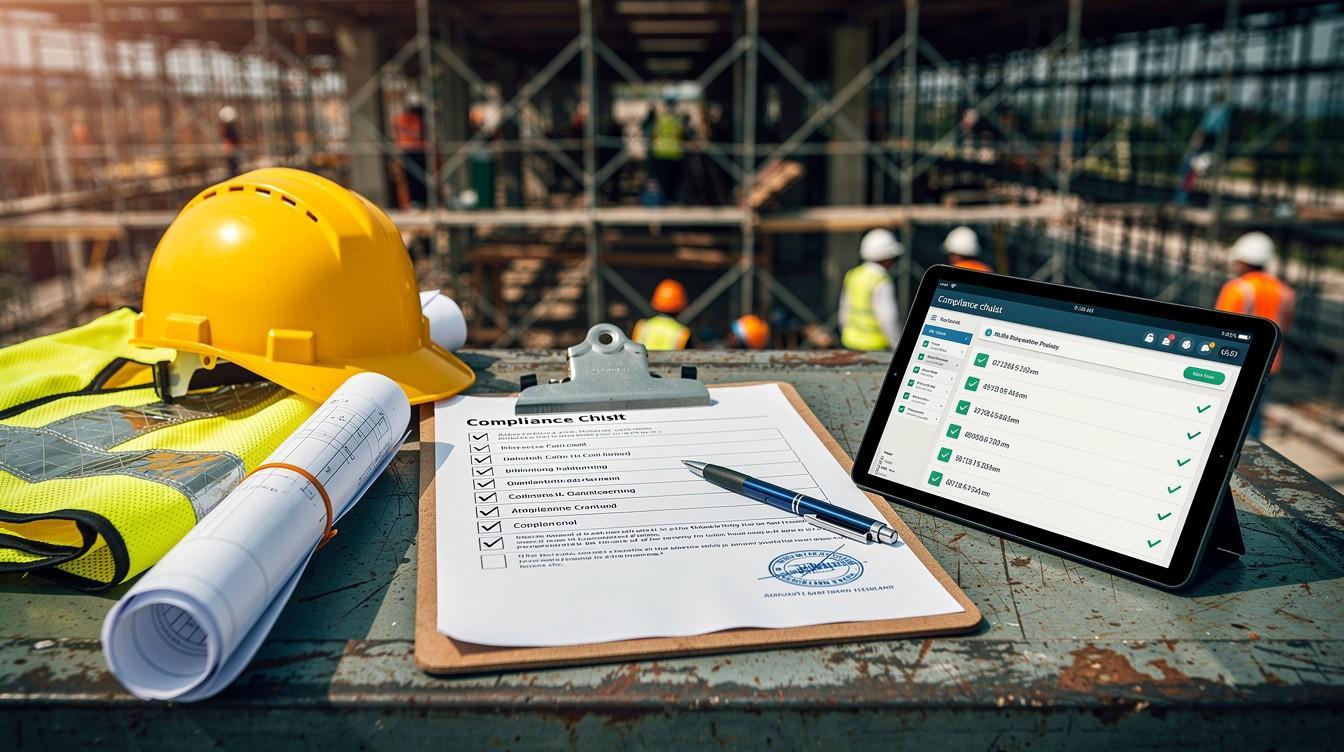
Apply with a detailed checklist that catches mismatched dates, incorrect fees, wrong contact information, and missing signatures before submission. If your application gets rejected, expect a 30 to 90 day waiting period before you can reapply, so fixing every identified issue on the first rejection matters.
Plan Your Total Investment
Plan total costs upfront by adding exam fees, licensing fees, insurance, bonding, and application fees, then build in a 20% contingency for unexpected costs or retakes. The data shows 78% of solo applicants make at least three mistakes during the process, costing around $4,500 on average in wasted fees and delays.
Renewal deadlines arrive fast, so set calendar reminders at least 90 days before expiration and confirm your state’s continuing education requirements before your renewal window opens. Many states require continuing education covering building code updates and safety regulations, with some states imposing additional requirements for specific trades. Track these deadlines in a single system-spreadsheet or software-because missing even one renewal date can result in operating illegally and facing fines that dwarf the cost of staying current.
What Happens When You’re Licensed
Once you hold an active license, your business gains access to larger projects, higher contract values, and client confidence that unlicensed competitors simply cannot match. Licensed contractors typically earn 40 to 60% more than unlicensed ones because clients trust their qualifications and many project bids explicitly require proof of licensure. Your next challenge shifts from obtaining the license to managing the financial and operational systems that support it-which is where many contractors stumble when they scale.
Where Contractors Lose Thousands in Compliance Gaps
The gap between holding a license and maintaining it costs contractors far more than the initial licensing process. You passed the exam, paid the fees, and got your license. Now the real compliance work starts, and this is where most contractors fail. California’s Contractors State License Board reports that unlicensed contractors face civil fines plus potential jail time. Ohio imposes up to $1,000 per day for unlicensed work, and Rhode Island fines contractors $5,000 to $10,000 for non-registration. Beyond fines, unlicensed work voids your mechanics lien rights in states like California, meaning you cannot legally collect payment for work performed. This single consequence destroys cash flow for contractors who discover mid-project that their license status doesn’t cover the work they’re performing.
The Insurance and Bonding Trap
Contractors often secure insurance and bonding to obtain their license, then neglect renewal dates and coverage gaps that emerge as their business grows. Your liability insurance must stay current, and your bond amount must match your project values. A contractor holding a $1 million bond while bidding $2 million projects creates a compliance violation that clients catch during pre-qualification. Insurance lapses happen silently until a claim arrives and the carrier denies coverage because your policy expired two months prior. Set automatic renewal reminders 120 days before expiration, not 30 days, because processing delays and premium adjustments consume time. Verify your bond amount aligns with your current project pipeline at least quarterly because growth sneaks up on contractors operating without financial oversight.
Renewal Deadlines and Continuing Education
Missing renewal deadlines ranks as the single most expensive compliance mistake because the penalties apply retroactively. Once your license expires, every project you work on becomes unlicensed work, exposing you to fines and lien complications even if you renew the next day. States vary in their continuing education requirements, with most demanding hours annually covering building codes, safety regulations, and trade-specific updates. Oregon requires 16 hours of Responsible Managing Individual training plus an open-book exam for renewal. Contractors who treat continuing education as an afterthought scramble during renewal windows and often miss deadlines because they haven’t completed required courses.
Multi-State Compliance Complexity
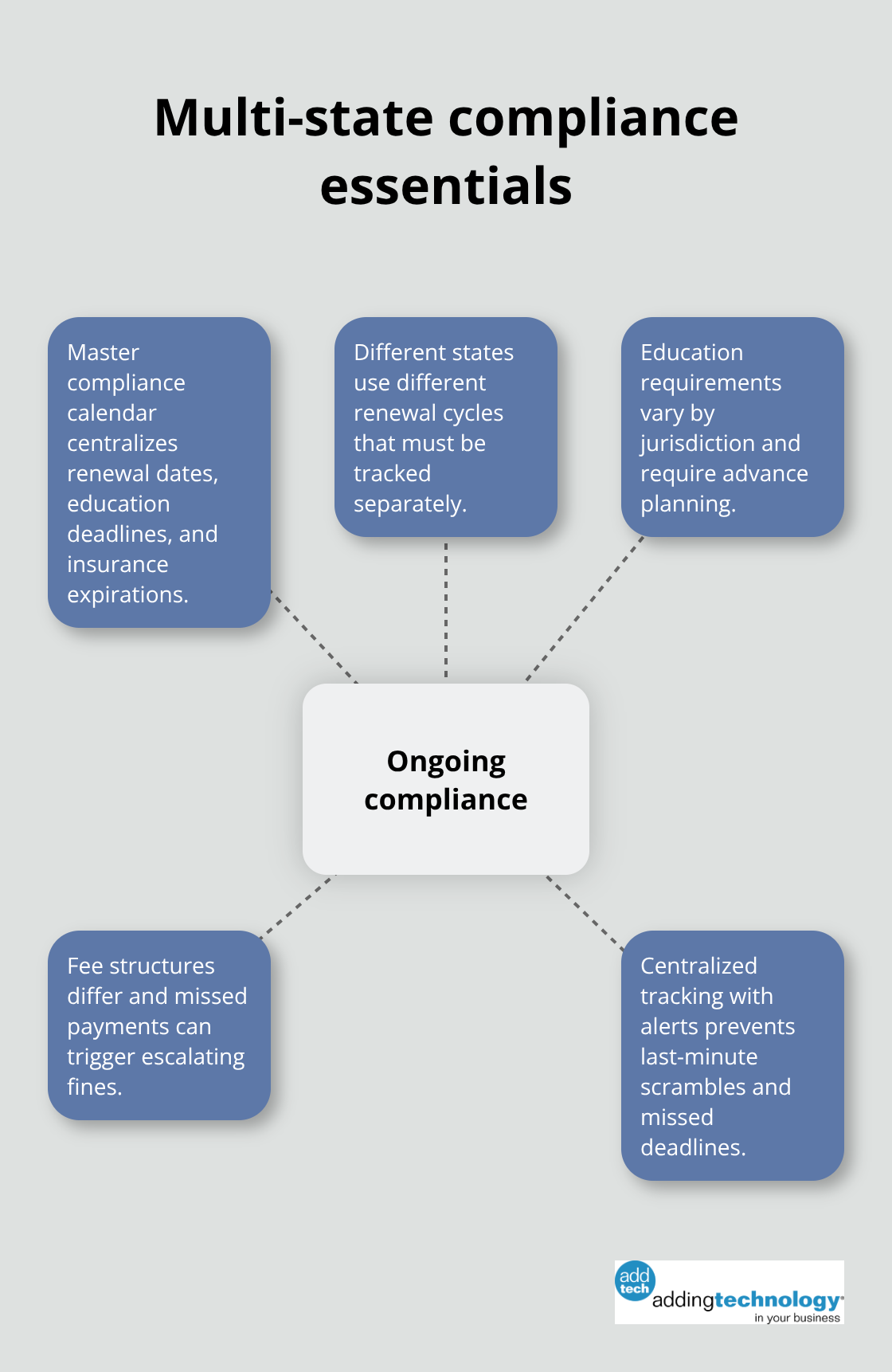
Create a master compliance calendar that documents every renewal date, continuing education deadline, and insurance expiration for every license your business holds. If you operate across multiple states, this calendar becomes essential because each jurisdiction has different renewal cycles and education requirements. Contractors operating in California, Texas, and Florida simultaneously face three different renewal schedules, three different education requirements, and three different fee structures. A single missed deadline in any state jeopardizes your ability to work in that jurisdiction and triggers fines that compound daily.
Contractors managing multiple licenses benefit from centralized tracking systems that flag expiration dates and alert you months in advance, preventing the costly scramble that accompanies last-minute renewals.
Final Thoughts
Contractor licensing requirements form the backbone of a legitimate, profitable business, and the contractors who maintain compliance without constant stress share one trait: they separate licensing obligations from their core business operations. They use centralized systems to track renewal dates, continuing education requirements, and insurance expiration across multiple states. They treat compliance as a financial responsibility, not an afterthought.
This is where proper financial management intersects with licensing compliance. When your accounting systems track project values, insurance requirements, and bonding thresholds in real time, you catch compliance gaps before they become expensive problems. You know instantly whether your bond amount matches your current project pipeline, and you see which licenses expire months in advance.
At adding technology, we help contractors build financial systems that support compliance without consuming your time. Streamlined accounting and real-time job costing give you visibility into the financial health of your business while meeting every regulatory obligation.